







On August 31, 2026, Runway published Introducing Solaris : the first model in a family it calls Interface World Models . The question posed in the announcement is straightforward: what happens when an operating system generates apps and websites as it uses them?
Instead of translating a design into HTML, CSS, or a UI engine and then running it, Solaris synthesizes the interface frame in real time. Every click, drag, or gesture influences the next frame. There are no static screens waiting to be deployed: the visible image is the application itself.
That sounds like completely skipping front-end development. Runway doesn't market it that way. The post itself specifies early access, 720p quality, and strict limits on text, trust, long sessions, and accessibility. This article focuses on what the company documented and what that means for a team currently building digital products in Mexico or Latin America.

Runway juxtaposes two worlds that until now lived separately:
A World Interface Model, says Runway, has to be both things at once: understand the user's intent and continuously render an interactive world. Solaris treats user input (clicks, drags, other interactions) as conditioning the next frame, just as it treats text or images. A language model interprets the request, decides whether to modify the scene or switch to another, and Solaris renders how that change looks and responds accordingly.
The system relies on Gen-4.5 (its video model) and the open line with GWM-1. To achieve interactive speeds, Runway describes three steps: autoregressive frame generation, a few-step denoising distillation, and fast model training on its own outputs to stabilize long sessions. The reported visual quality remains at 720p .

Runway summarizes three properties:
It also positions Solaris as a training environment for agents: current LLMs, trained on hardcoded interfaces, fail when the layout changes even slightly. By collapsing visual action and response, the model can be trained against interfaces that mutate or that never existed.
What the announcement doesn't include: public release date, API, pricing, hardware requirements, or open weights. Runway is soliciting early access through a form on the same page and says it's working with partners for a public release. Any "available now for your SMB" figures you see outside of that page are not from the official post.
In the evaluation section, Runway compares Solaris to a coded interface generated by a cutting-edge language model (Claude Opus 5 in their writing). Both started from the same image and received the same interaction requests. They then conducted a study with 250 participants , 30 examples , and nearly 7,500 peer reviews .
These figures are published by Runway based on their own study. They are not an independent production benchmark, nor do they demonstrate that Solaris can replace a checkout, a banking dashboard, or a CMS. They serve to illustrate the product's central thesis: that a generated interface can feel more coherent with the scene than a UI patch written from a screenshot.
Separately, they measure how much information multimodal LLMs lose when reconstructing interfaces from a capture (SSIM and regional similarity with DINOv3 across 30 interfaces). The message: the translation from design to intermediate representation to screen degrades fidelity; Solaris attempts to operate directly on the visual.

The post itself lists current limits. It's advisable to read them with the same seriousness as the demos.
For a startup or SME, the useful takeaway isn't "we no longer need front-end development." It's this: live interface demos will accelerate prototyping and brand experiences, but checkout, regulated forms, SEO, performance, and compliance still rely on deterministic, measurable, and auditable software. Anyone who confuses a research preview with a production stack will waste time on the wrong demo.

Solaris is not on their list of priorities. Even so, the announcement is pushing for concrete decisions about how to prototype in 2026.
If you're building an MVP or a store that needs to load, respond, and not invent prices, Presticorp works on that approach in startups , SMEs , and e-commerce : first a usable product, then generative interface experiments.
Solaris is a clear sign of where the industry wants to go: less "design → code → screen" and more "intention → interactive frame." The announcement date is August 31, 2026; the status is research/early access; the reported resolution is 720p; the preference study (61%/71%) is from Runway, not a market standard.
This week, do just one thing: take the most critical flow of your product (sign up, quote, or pay) and note which parts require stable text, auditing, and accessibility. Don't delegate those parts to a world model yet. Demos can live in a design sandbox. When Runway (or another platform) opens real access with SLAs, you'll already know which surfaces you can experiment with and which should remain code.
Editorial note: Dates, Interface World Model definition, 720p resolution, study figures (250 participants, ~7,500 trials, 61%/71%), and the list of limitations (text, trust, long sessions, accessibility) are taken from the official Runway announcement consulted on September 1, 2026. Prices, GA dates, and enterprise adoption percentages are not fabricated.
Enviando comentario…
 EmiteDocs
Diplomas en lote: 3/semana gratis, hasta 1000 por $500. Contratos: desde $199, hasta 100.
EmiteDocs
Diplomas en lote: 3/semana gratis, hasta 1000 por $500. Contratos: desde $199, hasta 100.
 CrearPlantillas
Editor visual. 2 gratis/mes, 5/semana con cuenta, o 20 descargas por $69 MXN.
CrearPlantillas
Editor visual. 2 gratis/mes, 5/semana con cuenta, o 20 descargas por $69 MXN.
 TuRSVP
Invitaciones con RSVP. Desde $299 MXN, pago único.
TuRSVP
Invitaciones con RSVP. Desde $299 MXN, pago único.
 Minitareas
Tableros con Google. Libre: 1 tablero. Pro: $249 MXN al mes.
Minitareas
Tableros con Google. Libre: 1 tablero. Pro: $249 MXN al mes.
 Cotización de páginas web
Arma tu sitio por módulos y cotiza en MXN. Usarlo no tiene costo.
Cotización de páginas web
Arma tu sitio por módulos y cotiza en MXN. Usarlo no tiene costo.
 Convertidor de formatos
Convierte Excel, Word, PDF e imágenes. $150 MXN al mes, hasta 200.
Convertidor de formatos
Convierte Excel, Word, PDF e imágenes. $150 MXN al mes, hasta 200.
 Monitor Global
Clima, sismos, huracanes y tsunamis. Consulta gratis.
Monitor Global
Clima, sismos, huracanes y tsunamis. Consulta gratis.
 Promo a la vista
Catálogo gratis. Resumen gratis o desde $200/mes. Comida destacada: $500/mes.
Promo a la vista
Catálogo gratis. Resumen gratis o desde $200/mes. Comida destacada: $500/mes.
 Ravicom
Restaurantes y platillos. Buscar y registrar es gratis.
Ravicom
Restaurantes y platillos. Buscar y registrar es gratis.

Si tu proyecto requiere una solución más enfocada, entra directo a la landing ideal para tu negocio y envíanos tu información en el formulario correspondiente.
Ofertas vigentes del catálogo, de la más nueva a la más antigua.
Ver promociones SaaS Shopify MX: 3 días gratis + USD 1/mes × 3 (−≈93%)
Suscripción SaaS Shopify (planes Basic/Grow/Advanced) con precio introductorio en México
SaaS Shopify MX: 3 días gratis + USD 1/mes × 3 (−≈93%)
Suscripción SaaS Shopify (planes Basic/Grow/Advanced) con precio introductorio en México
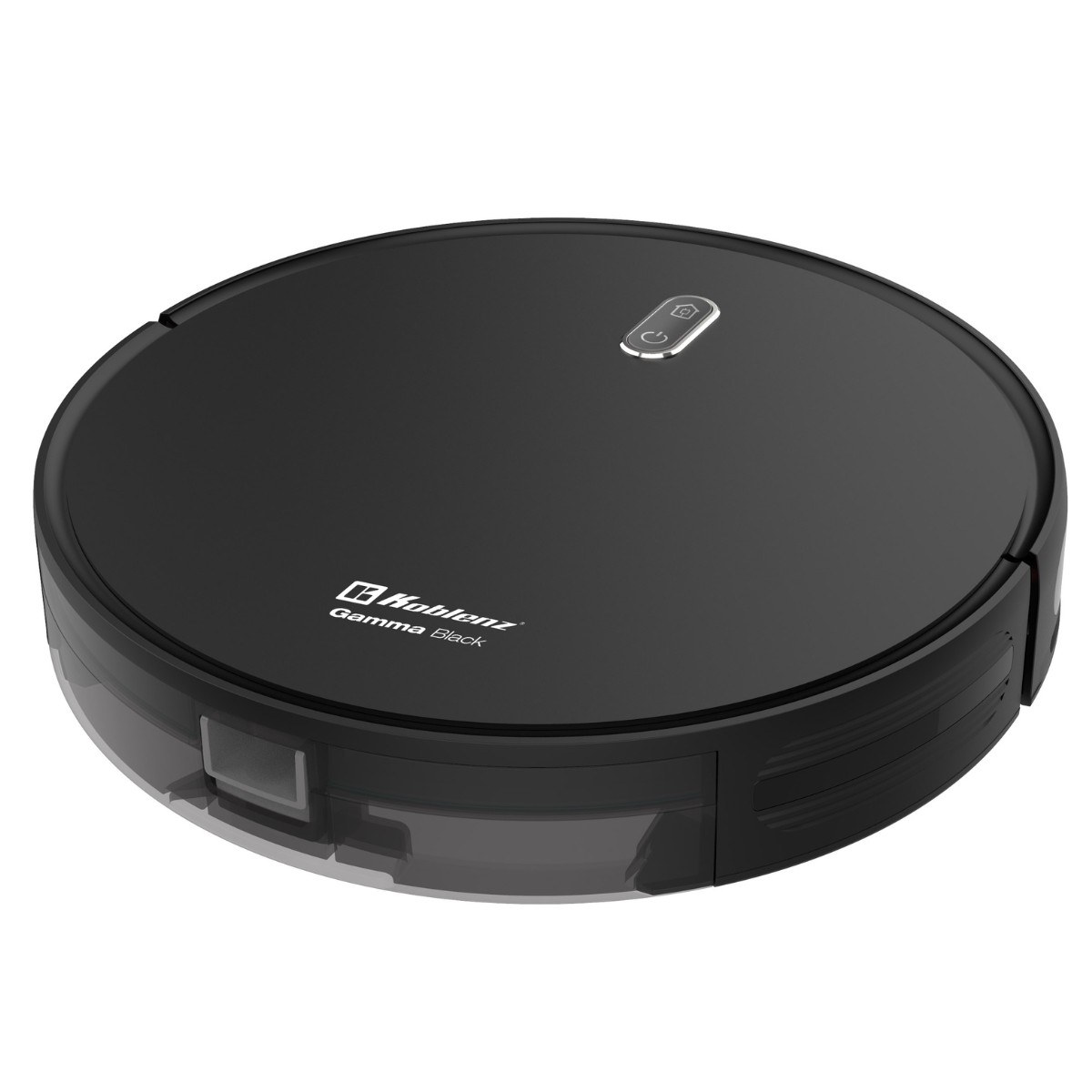 Koblenz Devoradora Robot DE R-601 Gamma Black
Aspiradora robot Koblenz Devoradora DE R-601 Gamma Black con Wi-Fi y mapeo inteligente
Koblenz Devoradora Robot DE R-601 Gamma Black
Aspiradora robot Koblenz Devoradora DE R-601 Gamma Black con Wi-Fi y mapeo inteligente
 Mini servidor NAS Synology DS223J 2 bahías (−$1,845)
Servidor NAS Synology DiskStation DS223J de 2 bahías (hasta 32 TB)
Mini servidor NAS Synology DS223J 2 bahías (−$1,845)
Servidor NAS Synology DiskStation DS223J de 2 bahías (hasta 32 TB)
 Samsung Mini LED 65" M70H 4K Vision AI (2026)
Pantalla Smart TV Samsung Mini LED 65 pulgadas M70HAF 4K Vision AI 2026
Samsung Mini LED 65" M70H 4K Vision AI (2026)
Pantalla Smart TV Samsung Mini LED 65 pulgadas M70HAF 4K Vision AI 2026











0 Comentarios