
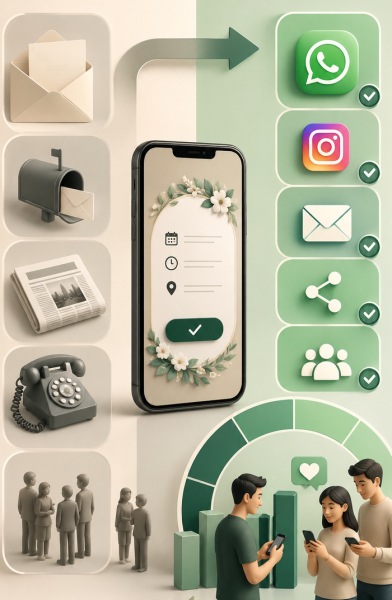

That contradiction haunted me for years. Today, after analyzing dozens of platforms and hundreds of events, I can say it without fear: the freemium model of digital invitations is an emotional scam disguised as technological democratization.
The problem isn't that free options exist. The problem is that these options have lowered quality expectations, convincing an entire generation that a digital invitation is, by definition, functional but disposable. And that's false. Or at least, it should be.
The narrative of freemium platforms is seductive. "Create professional digital invitations in minutes, for free." It sounds like financial inclusion, like technology that levels the playing field. But the reality is more complex. When something is free, you are the product. And in this case, the product is your event, your data, and the attention of your guests.
Free digital invitation platforms operate on a brutal volume logic. They need millions of users to compensate for the lack of direct revenue per invitation. This means that the design can't be truly personalized, because personalization requires human creative time. It means that templates must be generic, reusable, and safe. It means that aesthetic innovation is a risk they can't afford. The result is a sea of invitations that all look alike, using the same safe fonts, the same pastel gradients, the same confetti animations that no one even remembers anymore.
In 2024, the digital invitation market in Mexico grew by 32 percent, according to data from the events industry. But that growth didn't translate into better experiences. It resulted in more mediocre invitations sent out faster. Speed replaced intention. Minimum viable functionality replaced emotion.
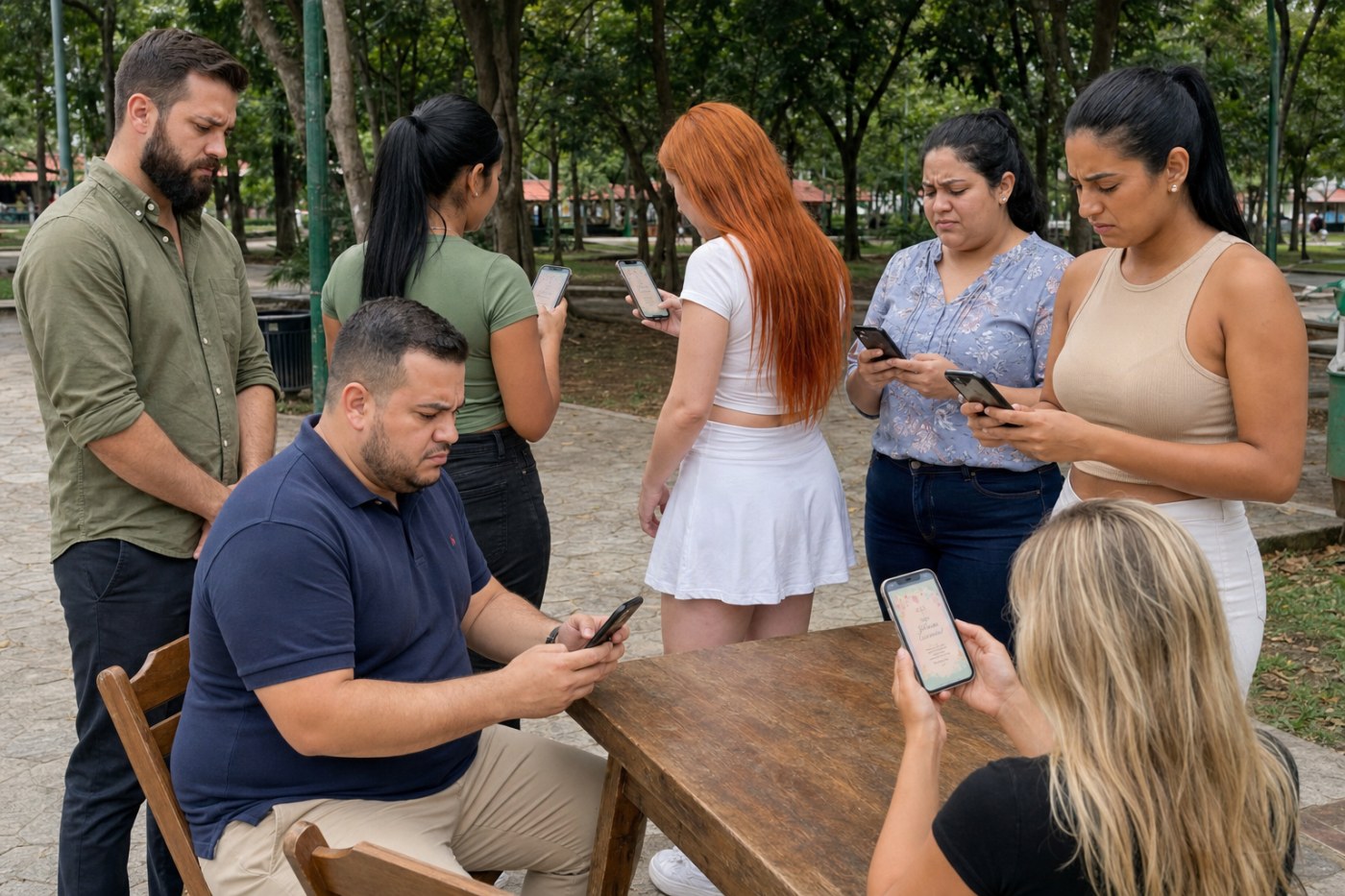
Opening a free digital invitation often feels the same: the same template, the same confetti, and the sense of being added to an automated list.
There's something particularly cruel about how the freemium model stifles creativity. It doesn't do it explicitly, by prohibiting original design. It does it through choice-based architecture. When you open a free platform, you're faced with hundreds of templates. It seems like abundance. But it's an illusion. Those templates were selected by algorithms that prioritize conversion, not expression. They were tested with control groups to maximize the rate of users who complete an invitation, not the rate of invitees who feel something upon receiving it.
A graphic designer who works on high-end physical invitations told me something revealing: "In the digital world, clients no longer come with an idea. They come afraid of making a mistake. They choose the safest template because they don't want to risk their event on something the platform doesn't guarantee." That fear is the business. Free platforms don't sell invitations; they sell aesthetic certainty. And aesthetic certainty is the mortal enemy of creativity.
The situation worsens when we consider the Mexican cultural context. In Mexico, invitations were never just logistical information. They were ceremonial objects. They were the first tangible contact with an important moment. Grandmothers kept them in a drawer. The couple signed them. There was a ritual surrounding their delivery. The forced digitization of free templates has disconnected invitations from that ceremonial value without replacing it with anything equivalent. It has created an emotional void that the advertisements for these platforms call "practicality."
-20-11-46-0524211235.png)
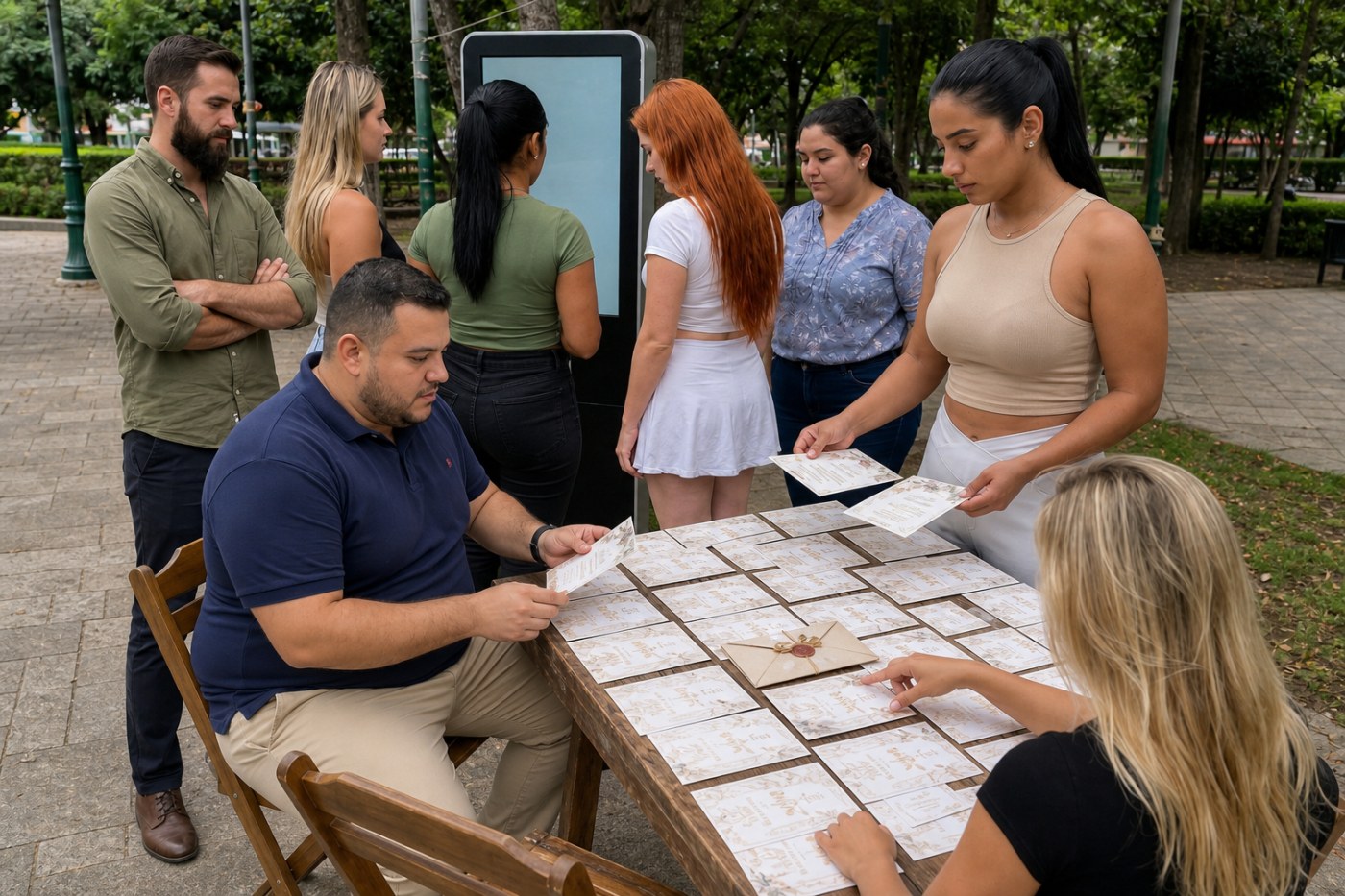
The apparent variety hides an algorithmic homogeneity that limits personal expression.
No free platform can survive without alternative monetization. The strategies vary, but they share a common denominator: exploiting the event as an advertising space or a means of data collection.
Some platforms insert third-party advertising into invitations. Your wedding, sponsored by a beer brand. Your quinceañera, with a department store banner. It's obscene, but legal. Others sell aggregated guest behavior data to marketing companies. They know who opens which type of invitation, at what time, from which device, and how often they share the information. This profiling isn't transparent. The terms and conditions that nobody reads authorize it, but the ethics are questionable.
The most serious cost, however, is the one the host pays in terms of perception. A free digital invitation sends an unconscious signal: this event doesn't warrant any aesthetic investment. It's not a conscious statement, but it operates on a subliminal level. Guests don't analyze the invitation; they sense it. And what they sense, all too often, is that they were included on a list through an automated process, not selected for a unique and unforgettable moment.
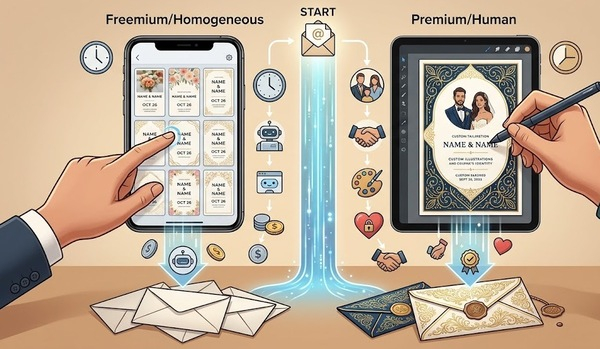
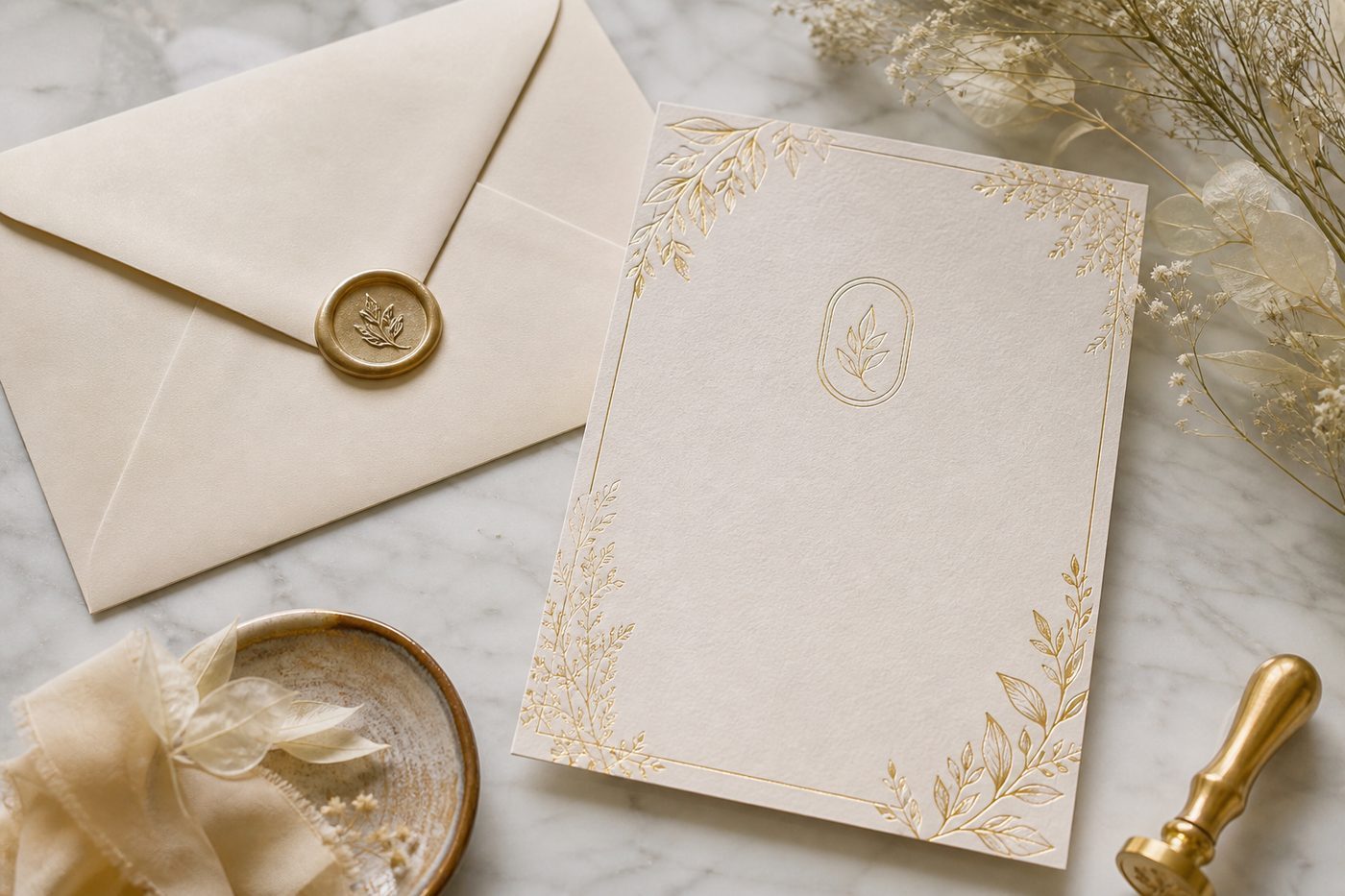
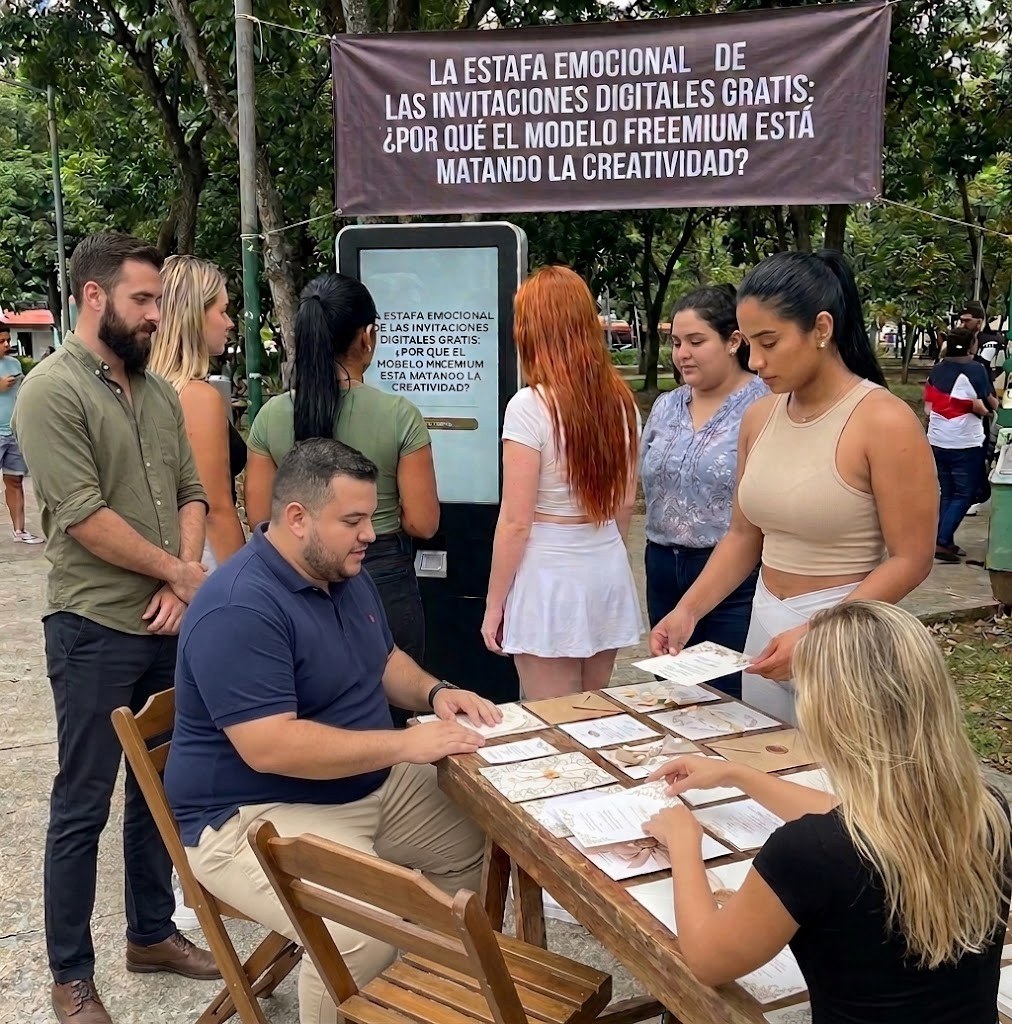
The article's previous cover: the contrast between the physical invitation and the digital promise the freemium model fails to keep.
Freemium platforms love the word "customization." They allow you to change colors, upload photos, and edit text. But that's not customization; it's parameterization. It's the illusion of control within a very well-defined enclosure.
True personalization requires understanding the context. It requires knowing that this wedding is between two people from different cultures and that the invitation must reflect that fusion. It requires understanding that this corporate event is for a product launch that needs to generate anticipation, not just RSVP. It requires conversation, iteration, and human sensitivity. No free template algorithm can offer that, because it doesn't scale.
I've seen premium digital invitations that cost about the same as a couple of movie tickets. The difference isn't in the technology; it's in the process. There's a designer asking questions. There's a proposal that's tailored to the needs of the guests. There's a visual narrative that's crafted. That invitation doesn't just inform; it communicates identity. And guests perceive that difference, even if they can't articulate it.
Proponents of the freemium model argue that it democratizes access. That without free options, only the wealthy would have decent digital invitations. It's an argument I respect, but I don't entirely agree with it. True democratization doesn't happen when everyone has access to mediocrity. It happens when everyone has access to tools that allow them to express themselves authentically.
In the software world, the open source model has shown that free software can coexist with excellence. But that requires communities of volunteer developers, not venture capital-backed startups that need exponential returns. Free digital invitations aren't Wikipedia. They're mass-market products disguised as gifts.
Furthermore, this much-touted democratization ignores a perverse effect: by normalizing mediocrity, it has raised the cost of quality. Now, having a truly well-designed digital invitation doesn't just cost money; it costs explanation. The host must justify why they "went to so much trouble." In a world where free is the norm, attention to detail is perceived as unnecessary ostentation. It's a social investment, not just an economic one.
I'm not advocating for eliminating free options. I'm advocating for honesty in what they offer. A free digital invitation should be advertised as what it is: a basic logistical solution, not an aesthetic experience. And users should understand that difference before making a decision.
What I do propose is that we reconsider the hierarchy of values. Do we really want the first impression of our most important events to be managed by an algorithm optimized for user retention, not for human emotion? Do we accept that practicality is the supreme value, above intention, beauty, or meaning?
There are signs of change. Small design studios are offering digital invitations at affordable prices, but with a genuine creative process. Hybrid platforms allow you to buy templates from independent, non-corporate designers. It's an emerging market, but it represents an alternative to the free versus expensive duopoly.
The emotional scam isn't just the fault of the platforms. It's our fault, the users', for accepting that "good enough" replaces "memorable." It's the fault of the events industry, which has outsourced pre-event communication to technology providers without demanding quality. It's the fault of a culture that confuses access with value.
Digital invitations have extraordinary potential. They can be interactive without losing elegance. They can integrate multimedia without becoming noise. They can simplify logistics without sacrificing emotion. But that potential will not be realized as long as the dominant model prioritizes speed over intention, and volume over sensitivity.
When I received that first digital invitation in 2018, my disappointment wasn't technophobia. It was the recognition of a broken promise. Seven years later, the promise remains unfulfilled. And worse: we no longer expect it to be.
| Feature | Free platform (Freemium) | Premium platform / Creative process |
|---|---|---|
| Direct cost | Zero | Variable (generally 500 - 3,000 MXN) |
| True personalization | Limited to predefined parameters | Custom design tailored to the event |
| Advertising included | Frequent (banners, watermarks) | None |
| Use of guest data | Collection for monetization | Protected, not for sale to third parties |
| Production time | 10-30 minutes | 3-7 days (includes iterations and changes) |
| Perceived emotional value | Functional, disposable | Ceremonial, memorable |
| Design scalability | Massive, homogeneous | Limited, unique |
| Human support | Bots and Frequently Asked Questions (FAQs) sections | Personalized advice and support |
| Integration with the event | Generic | Visual narrative consistent with the identity |
Want to see what a digital invitation looks like when design prioritizes emotion over speed? At TurSVP.com , we create invitations your guests will remember. Not templates. Experiences. Visit us and tell us about your event.
-20-13-35-0524211419.png)
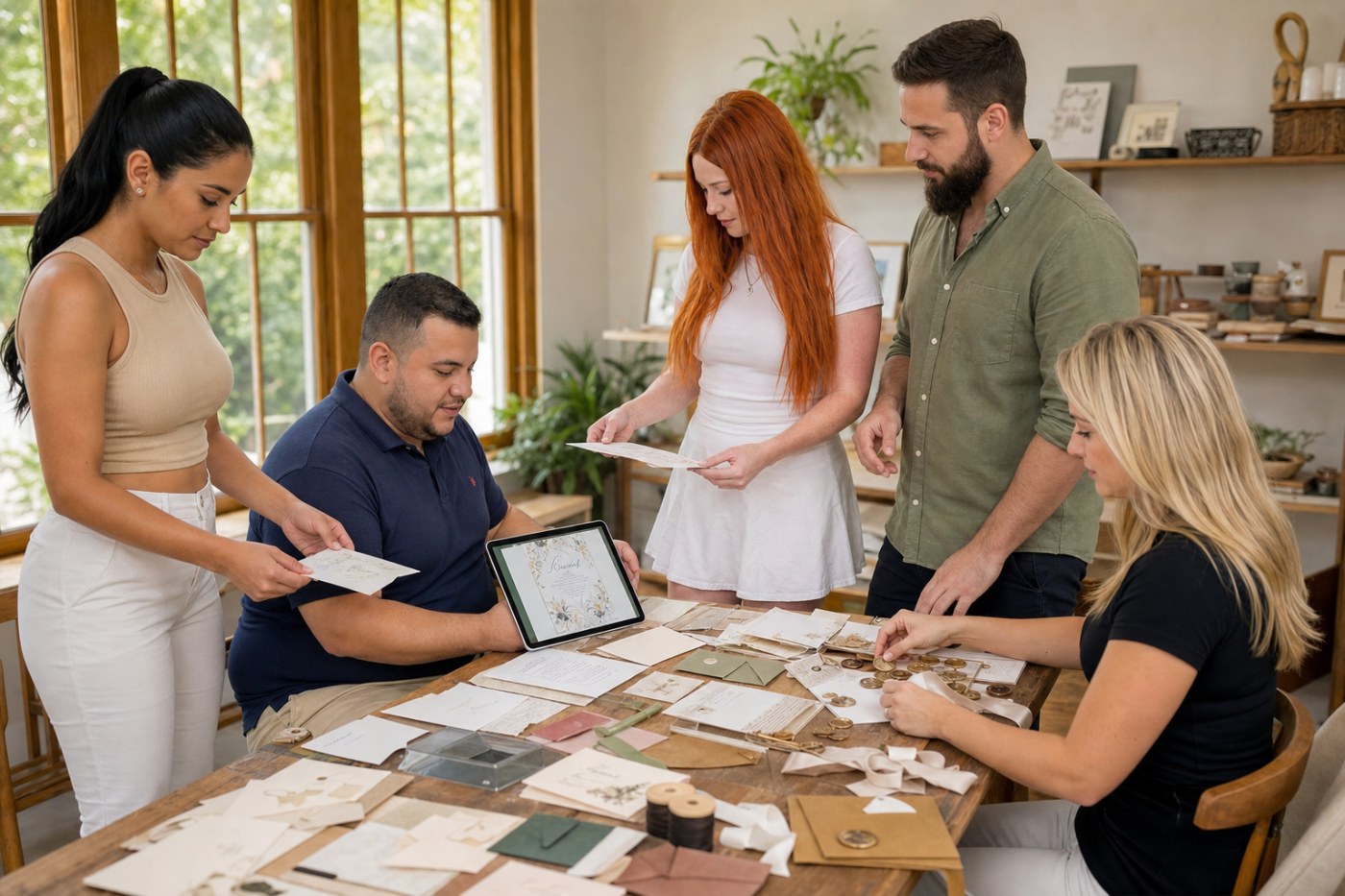
Example of a premium digital invitation with a custom design for a corporate event. The difference lies not in the technology, but in the human creative process that preceded it.
If you're organizing an event and are torn between a free option and a modest investment in design, try this exercise: write down what you want your guests to feel when they open the invitation. Not what information they need, but what emotion should precede the event. If the answer is "practicality," the free option is probably fine. But if the answer includes words like "excitement," "anticipation," "honor," or "magic," then investing in a real creative process isn't a luxury. It's about consistency between what the event stands for and how it's advertised . My specific suggestion: try both options. Create an invitation on a free platform and ask a designer for a basic conceptual proposal. Compare the reactions of two close friends. The difference in emotional response will tell you more than any cost analysis.
A second suggestion is aimed directly at those who already have a digital invitation business or are considering starting one. The freemium model seems attractive because it scales quickly, but it's a competitive trap. When your differentiator is zero price, you have no defense against the next competitor who also offers zero. The race to the bottom is inevitable. On the other hand, if your value proposition is the creative process, understanding the client, or visual storytelling, you have something that can't be copied by simply changing the price. I've observed that the small studios that survive in this market aren't the cheapest, they're the most specialized. Focus on a type of event, an aesthetic, an emotion. Be the best at something specific instead of being mediocre at everything. That allows you to charge what it costs to create something valuable, and you'll find clients who prefer to pay for intention rather than accept the leftovers for free.
Finally, for those who receive digital invitations and feel that strange mix of gratitude for being included and mild disappointment at the impersonal nature of the experience, I propose something radical: respond honestly. When a friend sends you a generic digital invitation, don't lie by saying "how nice." Say, "I'm so glad you invited me, the invitation serves its purpose, but you know, it could be something that truly reflects how special this moment is for you." It's a social risk. But if no one calls out normalized mediocrity, mediocrity remains. Event organizers need to hear that their guests notice the difference, that intention does matter, that the first impression of an event shouldn't be a technological afterthought. Quality improves when the audience demands better, not when they accept what they receive out of habit. Be the guest who helps their friends create more memorable events, even if it means an awkward thirty-second conversation.
The difference between an invitation that's simply opened and one that's truly felt lies in the process. Discover at TuRSVP.com how we transform the first impression of your event into a truly memorable moment. Your event deserves more than just a free template.
-
-
-
-
-
-
-
-
- Mexican Association of Social Event Suppliers. "Digital Invitation Market Trends 2024-2025." Available in industry sector reports.
-Statista. "Digital invitations market size and growth in Latin America." 2024.
- Interview with a graphic designer specializing in stationery for luxury events, Mexico City, March 2025. (Anonymous at the interviewee's request.)
- Terms and conditions of use of leading free digital invitation platforms, revised January 2025.
- OpenAI. "Impact of language models on the personalization of digital communications." Technical Blog, 2024.
If «The emotional scam of free digital invitations: why the freemium model is killing creativity?» leaves the thread open, the natural next reads are «Why digital invitation platforms are failing in user experience and how events in Mexico are paying the price» and «NULL». . On TuRSVP that lands in «NULL».
Enviando comentario…
 EmiteDocs
Diplomas en lote: 3/semana gratis, hasta 1000 por $500. Contratos: desde $199, hasta 100.
EmiteDocs
Diplomas en lote: 3/semana gratis, hasta 1000 por $500. Contratos: desde $199, hasta 100.
 CrearPlantillas
Editor visual. 2 gratis/mes, 5/semana con cuenta, o 20 descargas por $69 MXN.
CrearPlantillas
Editor visual. 2 gratis/mes, 5/semana con cuenta, o 20 descargas por $69 MXN.
 TuRSVP
Invitaciones con RSVP. Desde $299 MXN, pago único.
TuRSVP
Invitaciones con RSVP. Desde $299 MXN, pago único.
 Minitareas
Tableros con Google. Libre: 1 tablero. Pro: $249 MXN al mes.
Minitareas
Tableros con Google. Libre: 1 tablero. Pro: $249 MXN al mes.
 Cotización de páginas web
Arma tu sitio por módulos y cotiza en MXN. Usarlo no tiene costo.
Cotización de páginas web
Arma tu sitio por módulos y cotiza en MXN. Usarlo no tiene costo.
 Convertidor de formatos
Convierte Excel, Word, PDF e imágenes. $150 MXN al mes, hasta 200.
Convertidor de formatos
Convierte Excel, Word, PDF e imágenes. $150 MXN al mes, hasta 200.
 Monitor Global
Clima, sismos, huracanes y tsunamis. Consulta gratis.
Monitor Global
Clima, sismos, huracanes y tsunamis. Consulta gratis.
 Promo a la vista
Catálogo gratis. Resumen gratis o desde $200/mes. Comida destacada: $500/mes.
Promo a la vista
Catálogo gratis. Resumen gratis o desde $200/mes. Comida destacada: $500/mes.
 Ravicom
Restaurantes y platillos. Buscar y registrar es gratis.
Ravicom
Restaurantes y platillos. Buscar y registrar es gratis.

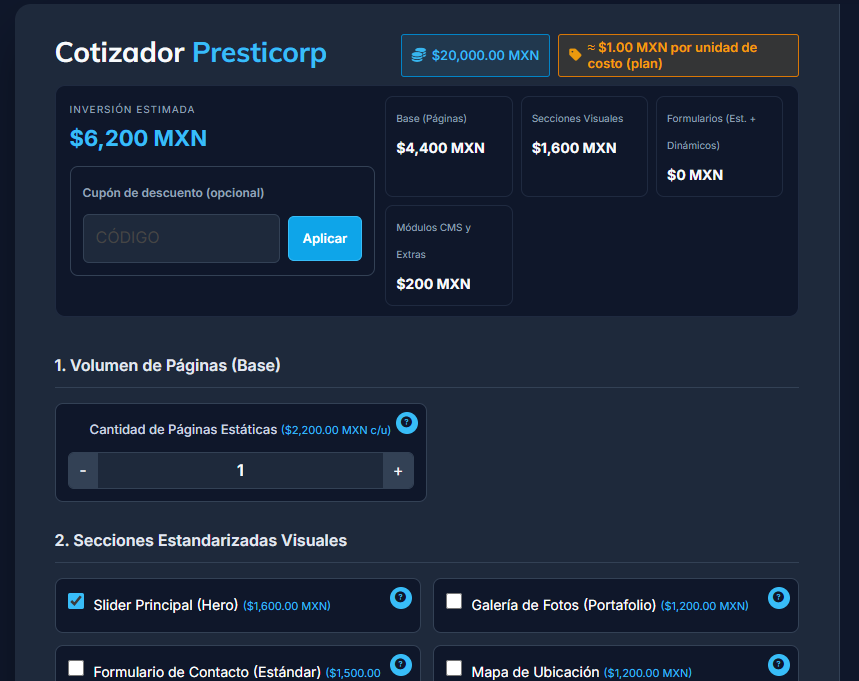
Si tu proyecto requiere una solución más enfocada, entra directo a la landing ideal para tu negocio y envíanos tu información en el formulario correspondiente.
Ofertas vigentes del catálogo, de la más nueva a la más antigua.
Ver promociones SaaS NEUBOX WordPress Master: hosting WordPress administrado −30% ($587.30 el primer año, antes $839)
Plan anual WordPress Master de NEUBOX: hosting WordPress administrado en la nube (1 sitio, 48 GB SSD, SSL y dominio gratis el primer año)
SaaS NEUBOX WordPress Master: hosting WordPress administrado −30% ($587.30 el primer año, antes $839)
Plan anual WordPress Master de NEUBOX: hosting WordPress administrado en la nube (1 sitio, 48 GB SSD, SSL y dominio gratis el primer año)
 LEGO One Piece Batalla en Arlong Park 75638 (−40%)
Set de construcción LEGO One Piece Batalla en Arlong Park 75638 (929 piezas)
LEGO One Piece Batalla en Arlong Park 75638 (−40%)
Set de construcción LEGO One Piece Batalla en Arlong Park 75638 (929 piezas)
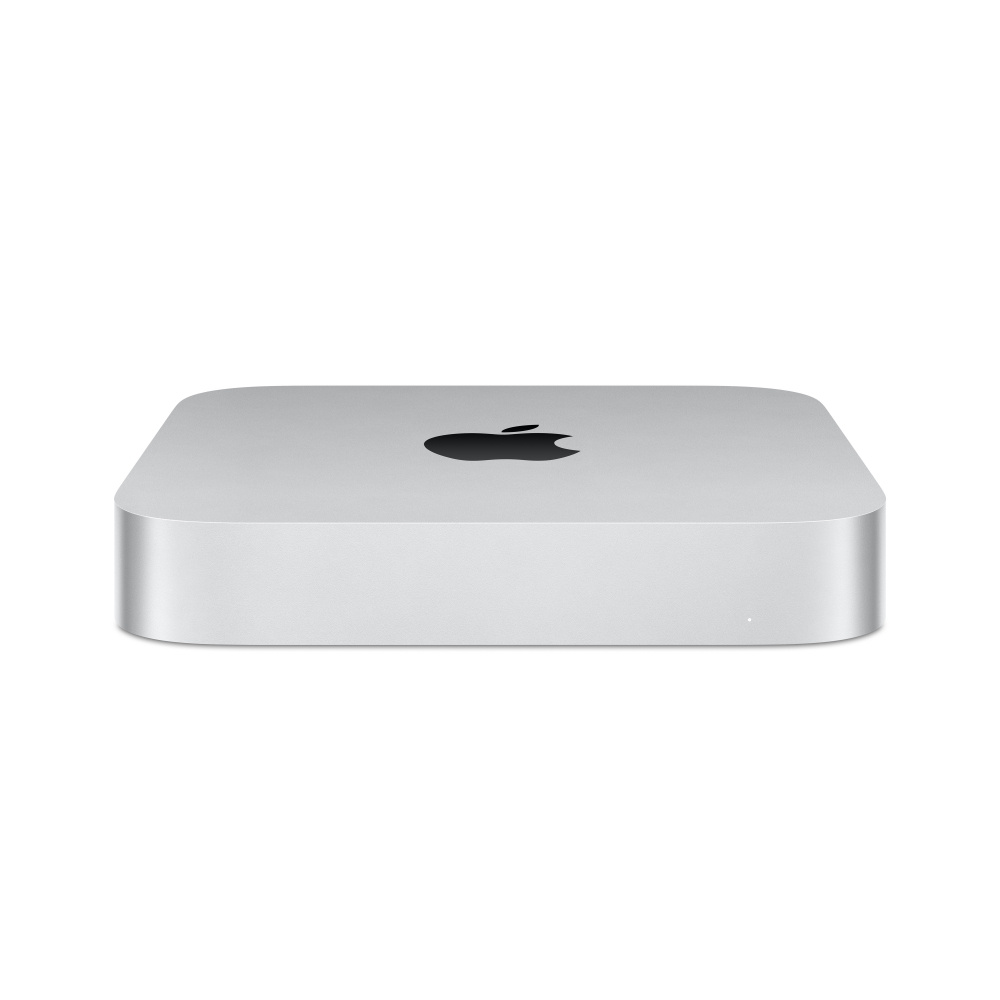 Mini servidor / Mini PC Apple Mac mini M2 Pro 16GB RAM 512GB SSD a $22,479 (−30%, antes $31,999)
Apple Mac mini con chip M2 Pro (CPU de 10 núcleos y GPU de 16 núcleos), 16GB de memoria unificada, 512GB SSD, Gigabit Ethernet, plata (MNH73E/A)
Mini servidor / Mini PC Apple Mac mini M2 Pro 16GB RAM 512GB SSD a $22,479 (−30%, antes $31,999)
Apple Mac mini con chip M2 Pro (CPU de 10 núcleos y GPU de 16 núcleos), 16GB de memoria unificada, 512GB SSD, Gigabit Ethernet, plata (MNH73E/A)
 Audífonos Sony WH-1000XM6 con noise cancelling (−48%)
Audífonos inalámbricos Sony WH-1000XM6 (serie 1000X) con noise cancelling
Audífonos Sony WH-1000XM6 con noise cancelling (−48%)
Audífonos inalámbricos Sony WH-1000XM6 (serie 1000X) con noise cancelling



0 Comentarios