








If your page is slow to display the product, doesn't respond to the first tap, or moves when the customer is about to click "Submit," the visit is lost. Google summarizes this experience in three field metrics called Core Web Vitals: Largest Contentful Paint (LCP), Interaction to Next Paint (INP), and Cumulative Layout Shift (CLS). These don't replace your sales analytics. They do, however, tell you, with publicly available and stable thresholds, whether the page feels usable for the majority of those who visit it.
INP replaced First Input Delay (FID) as the interactivity metric. A previous article on this blog stated that INP "should be greater than 200 ms." That's the opposite. According to web.dev/articles/vitals (updated October 31, 2024) and the definition of thresholds , a good INP is 200 milliseconds or less . This text adheres to those official figures. We don't invent conversion or traffic percentages.
Core Web Vitals measure load, interactivity, and visual stability. Google evaluates them at the 75th percentile of actual visits, separately for mobile and desktop. A page "passes" only if all three are rated "good" at that percentile. The official cutoffs are:
The same threshold applies to mobile and desktop. In practice, the mobile report is usually the most demanding: that's where most of the traffic for a Mexican SME is concentrated.
These metrics aren't a secret ranking. They're documented in web.dev and in the Core Web Vitals report in Search Console . They help you and your team speak the same language: "the catalog's LCP on mobile is poor" is an actionable phrase; "the site feels slow" isn't.

LCP reports the moment the largest visible element in the window is rendered: a cover image, a block of text, or a video. It's not the browser's load or the first pixel (that's FCP). It's the signal that the page is now displaying what the visitor came to see.
For a small or medium-sized business, a bad LCP ( Local PageSpeed Insights ) problem is usually a heavy homepage without dimensions, a server that's slow to deliver HTML, or resources that block rendering (CSS and JavaScript in the <head> ` section). web.dev recommends measuring in the field with CrUX, PageSpeed Insights, Search Console, and the web-vitals JavaScript library. In a lab environment, Lighthouse and DevTools are useful for reproducing the problem, not for declaring that "it's fixed now."
An LCP of 2.5 seconds or less at the 75th percentile, on both mobile and desktop, is the "good" benchmark. Above 4 seconds, Google labels it as poor.

INP observes clicks, taps, and keystrokes throughout the entire visit—not just the initial gesture, which is what FID measured—and reports the slowest interaction, ignoring some outliers. Latency is measured from when the user initiates the gesture until the browser can render the next frame. An INP of 200 ms or less is considered good responsiveness; between 200 and 500 ms needs improvement; above 500 ms is poor.
On a small business website, the INP (Information Point) breaks down in contact forms, mobile menus, catalog filters, and "get a quote" buttons that trigger excessive JavaScript on the main thread. The user taps, sees no change, taps again, and the menu opens and closes repeatedly. This isn't just a "front-end issue": it's the reason they abandon the form.
If someone tells you that the INP "has to be greater than 200 ms," correct them: ≤ 200 ms is acceptable. FID is no longer part of the stable set.

CLS counts unexpected jumps between visible elements. An ad that pushes a button, an image without a declared height, a font that changes size, or a cookie banner that pushes the content: the user intended to tap one thing and taps another. The acceptable threshold is 0.1 or less ; above 0.25 is poor. The percentile remains at 75, on both mobile and desktop.
Not every movement counts. A scroll that occurs very close to a user click (the API flags hadRecentInput if there's interaction within 500 ms) isn't treated the same as an unannounced jump. What does hurt is content that arrives late and scrolls across the rest of the page.
width and height (or aspect-ratio ) in images and videos.transform , not changing top / left or the height of neighboring boxes. Google emphasizes that Core Web Vitals are, first and foremost, field metrics. The Chrome User Experience Report (CrUX) feeds PageSpeed Insights and the Search Console report. The web-vitals library allows you to send LCP, INP, and CLS to your own analytics. DevTools and Lighthouse are used for diagnostics during development; Lighthouse does not report INP and uses TBT as a proxy.
web-vitals library.Search Console groups similar URLs and assigns the group's status to the worst metric. If CLS is poor and LCP is good, the group is considered poor. A small origin may not have enough data: in that case, PageSpeed Insights still provides a lab test and, if available, displays the CrUX field for that URL.
If you need a website that loads, responds, and doesn't crash—catalog, form, or store—Presticorp works on that streamlining in pages for SMEs , and the same criterion applies to a startup MVP or an e-commerce checkout : first the HTML and images, then the extras.

Fourteen days isn't enough time to completely rebuild the site. It is enough time, however, to determine its current status and address the most common issues. Use this plan as a work order, not as a guarantee of passing the report: Crunchyroll and Search Console operate within a specific timeframe (approximately 28 days in the Search Console report).
<head> that don't render content. If the TTFB is high, talk to your hosting or caching provider before tweaking the CSS.Passing the Core Web Vitals isn't a sales certificate. It's the minimum requirement for the customer to view, interact with, and submit content without struggling with the page.
The three metrics can be summarized in a single sentence that you can stick next to your monitor: LCP ≤ 2.5 s, INP ≤ 200 ms, CLS ≤ 0.1 , 75th percentile, mobile and desktop. INP has already replaced FID. The 200 ms threshold is a ceiling, not a floor.
This week, do just one thing: open PageSpeed Insights with the URL that matters most to you (homepage or business page) and note the three field numbers. If INP or LCP are poor, don't start with a redesign: start with the LCP image and the JavaScript that runs on the first touch of the form. The 14-day checklist is for that purpose. If you want someone else to refine that area—template, homepage, forms, store—the published entry point is Presticorp's SME landing page .
Editorial note: The thresholds (LCP ≤ 2.5 s / poor > 4 s; INP ≤ 200 ms / poor > 500 ms; CLS ≤ 0.1 / poor > 0.25) and the 75th percentile criterion are taken from the cited web.dev pages, accessed on August 31, 2026. Conversion and traffic percentages are not attributed to these sources. FID is no longer Core Web Vital stable; its successor is INP.
Enviando comentario…
 EmiteDocs
Diplomas en lote: 3/semana gratis, hasta 1000 por $500. Contratos: desde $199, hasta 100.
EmiteDocs
Diplomas en lote: 3/semana gratis, hasta 1000 por $500. Contratos: desde $199, hasta 100.
 CrearPlantillas
Editor visual. 2 gratis/mes, 5/semana con cuenta, o 20 descargas por $69 MXN.
CrearPlantillas
Editor visual. 2 gratis/mes, 5/semana con cuenta, o 20 descargas por $69 MXN.
 TuRSVP
Invitaciones con RSVP. Desde $299 MXN, pago único.
TuRSVP
Invitaciones con RSVP. Desde $299 MXN, pago único.
 Minitareas
Tableros con Google. Libre: 1 tablero. Pro: $249 MXN al mes.
Minitareas
Tableros con Google. Libre: 1 tablero. Pro: $249 MXN al mes.
 Cotización de páginas web
Arma tu sitio por módulos y cotiza en MXN. Usarlo no tiene costo.
Cotización de páginas web
Arma tu sitio por módulos y cotiza en MXN. Usarlo no tiene costo.
 Convertidor de formatos
Convierte Excel, Word, PDF e imágenes. $150 MXN al mes, hasta 200.
Convertidor de formatos
Convierte Excel, Word, PDF e imágenes. $150 MXN al mes, hasta 200.
 Monitor Global
Clima, sismos, huracanes y tsunamis. Consulta gratis.
Monitor Global
Clima, sismos, huracanes y tsunamis. Consulta gratis.
 Promo a la vista
Catálogo gratis. Resumen gratis o desde $200/mes. Comida destacada: $500/mes.
Promo a la vista
Catálogo gratis. Resumen gratis o desde $200/mes. Comida destacada: $500/mes.
 Ravicom
Restaurantes y platillos. Buscar y registrar es gratis.
Ravicom
Restaurantes y platillos. Buscar y registrar es gratis.


Si tu proyecto requiere una solución más enfocada, entra directo a la landing ideal para tu negocio y envíanos tu información en el formulario correspondiente.
Ofertas vigentes del catálogo, de la más nueva a la más antigua.
Ver promociones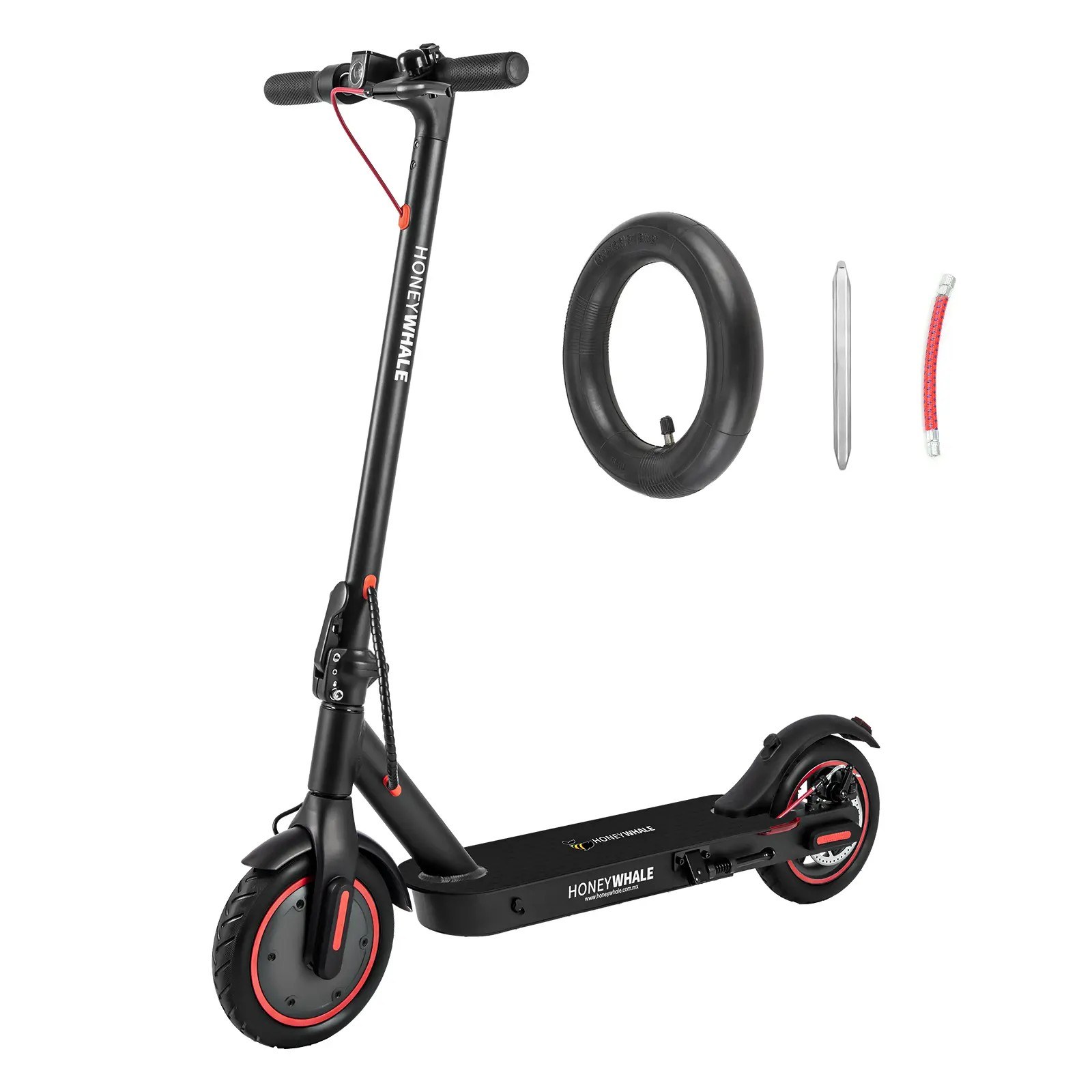 Patín eléctrico Honey Whale M2 Pro V2 Negro (−$4,950)
Patín eléctrico / scooter eléctrico Honey Whale M2 Pro V2 Negro, motor 500W, autonomía hasta ~25 km
Patín eléctrico Honey Whale M2 Pro V2 Negro (−$4,950)
Patín eléctrico / scooter eléctrico Honey Whale M2 Pro V2 Negro, motor 500W, autonomía hasta ~25 km
 HUAWEI Mate 80 Pro 16+512 GB (dorado)
Smartphone HUAWEI Mate 80 Pro 16 GB RAM + 512 GB, color dorado, tienda oficial HUAWEI México
HUAWEI Mate 80 Pro 16+512 GB (dorado)
Smartphone HUAWEI Mate 80 Pro 16 GB RAM + 512 GB, color dorado, tienda oficial HUAWEI México
 Bicicleta eléctrica urbana City Bikeon (−$12,170)
Bicicleta eléctrica urbana City Bikeon 800W, autonomía hasta 50 km, rodada 26"
Bicicleta eléctrica urbana City Bikeon (−$12,170)
Bicicleta eléctrica urbana City Bikeon 800W, autonomía hasta 50 km, rodada 26"
 Jeans Levi's 721 High Rise Skinny (blanco)
Jeans Levi's 721 High-Rise Skinny para mujer, mezclilla stretch color blanco, estilo 18882-0204
Jeans Levi's 721 High Rise Skinny (blanco)
Jeans Levi's 721 High-Rise Skinny para mujer, mezclilla stretch color blanco, estilo 18882-0204











0 Comentarios