
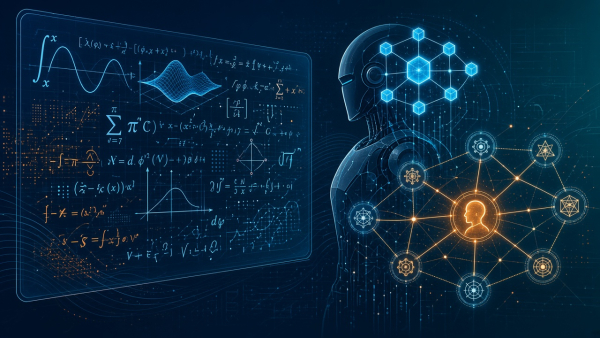







GPT-6 arrives across ChatGPT, Microsoft and Nvidia reinvent the PC with local AI, and Manus raises $500 million after breaking with Meta
Artificial intelligence underwent a complete transformation in just 24 hours. OpenAI began rolling out GPT-6 to the more than 1.2 billion people who use ChatGPT every week, offering responses that go beyond text. Microsoft and Nvidia unveiled a new generation of computers in San Francisco designed to run AI models and agents without relying on the cloud . And in China, the agent startup Manus raised over $500 million months after Beijing forced it to reverse its sale to Meta.
GPT-6 reaches all of ChatGPT and makes its responses interactive
OpenAI announced on Wednesday, October 7, that it is bringing its GPT-6 family to all ChatGPT plans, including the free ones. It arrives in two versions optimized for everyday conversation: GPT-6 Sol , for the Plus, Pro, Business, and Enterprise plans, and GPT-6 Luna , a more efficient variant for the Free and Go tiers. According to the official OpenAI blog, the rollout began on Wednesday for paid plans and will expand to free and Go users on Thursday, October 8.
What is Intelligent UI?
The most visible new feature is called Intelligent UI . According to OpenAI, it allows ChatGPT to respond with fully interactive interfaces: graphics, tappable buttons, forms, diagrams, and small tools created on the spot to solve a task. According to The Verge, the company trained GPT-6 to decide when a visual response is more appropriate than text and how to format it. Examples include an interactive diagram of a seven-speed bicycle, a retirement savings calculator, a bill divider, and even a retro game generated within the chat.
In a call with journalists reported by TechCrunch, product manager Aarush Selvan explained that, when planning a recipe, a trip, or learning something new, “the most helpful answers aren’t just text.” During the demonstration, he asked the chatbot to explore how an airplane wing generates lift, and it instantly created several diagrams.

Faster, better search, and more controls
MacRumors details that Intelligent UI uses a library of native components that are streamed in real time, with a compiler processing the interface as the model generates it. One example: a recipe widget that adjusts quantities based on the number of guests. GPT-6 can also begin responding while it's still "thinking," which speeds up responses.
The Verge adds that, according to OpenAI, the new model performs better web searches and “showed greater resilience to attempts to evade its security training.” Sun and Moon replace GPT-5.6 within ChatGPT. For now, the change is limited to the chat tab: the Codex and ChatGPT Work models remain unchanged. Those who prefer more understated responses can reduce the number of visual elements in the personality settings.
Why is this important? Because it's one of the most visible changes in how ChatGPT is used, and it's hitting hundreds of millions of free users at once, many of them in Latin America.
Microsoft and Nvidia are betting on the PC with local AI: the Surface Laptop Ultra is here
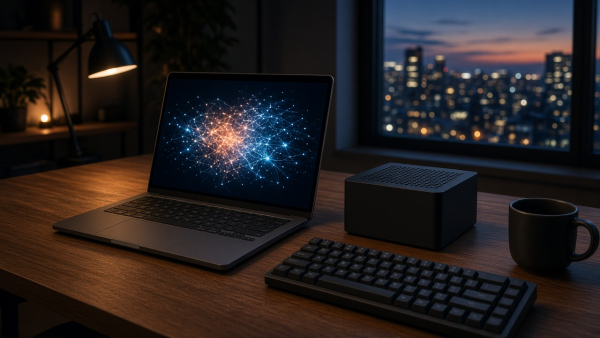
At its first live event in two years, Microsoft unveiled the Surface Laptop Ultra on Wednesday in San Francisco, its first computer powered by the new Nvidia RTX Spark chip. Microsoft CEO Satya Nadella, Nvidia founder and CEO Jensen Huang, and Nvidia president of Windows and Devices Pavan Davuluri took the stage. “We’ve completely reinvented the personal computer,” Huang said, according to Tom’s Hardware.
A chip to run huge models on a laptop
According to Microsoft's devices blog, the Surface Laptop Ultra combines an Nvidia Blackwell RTX GPU with up to 6,144 cores, an Nvidia Grace processor with up to 20 cores, and up to 128GB of unified memory. According to Ars Technica, by allocating that memory based on the task, it's suitable for both local AI and demanding video games: Gears of War: E-Day was demonstrated running on it at the event. "With up to 128 gigabytes of unified memory and up to a petaflop of AI computing power, you can run models on this laptop that simply won't fit on a traditional machine," Davuluri stated, according to the Nvidia blog.
The laptop starts at $2,599, is already available for pre-order, and begins shipping on October 16. Alongside it came the Surface RTX Spark Dev Box , a $5,999 black aluminum developer box with 128GB of unified memory, a petaflop of AI performance, and support for models with over 120 billion parameters; it will ship in November, only in the United States. According to Tom's Hardware, Asus, Dell, Lenovo, HP, and MSI will also release devices with RTX Spark.
Windows 11 prepares for agents
The hardware update was accompanied by changes to Windows 11 planned for this fall. Ars Technica reports that Copilot is being reorganized into three tabs: Home , for interacting with models; Code , where Microsoft promises that even inexperienced users will be able to create widgets and applications with natural language instructions; and Autopilot , for monitoring AI agent tasks.
To allay security concerns, Microsoft released Microsoft Execution Containers (MXC) for developers, a framework that encapsulates agent activity in isolated environments and allows organizations to set limits on what each agent can access. This is all part of what the company calls “Hybrid Intelligence,” which combines the power of the PC with the cloud and offers native support for local tools like llama.cpp and models from the DeepSeek and Nvidia Nemotron families. The big question, as Ars Technica points out, is whether users will accept so much AI on their operating system.
Manus raises over $500 million after splitting with Meta
Butterfly Effect, the parent company of Chinese AI agent startup Manus , announced on WeChat Thursday that it has completed a funding round of more than $500 million, according to Reuters, CNBC, and TechCrunch. The round was co-led by Boyu Capital and IDG Capital, with participation from Tencent, HSG (formerly Sequoia China), and ZhenFund. The company did not disclose its valuation; Bloomberg reported last month that Manus was seeking to double its valuation to $4 billion, which would make it China's most valuable AI agent maker.
From failed purchase to independence
Manus went viral in early 2025 with a demonstration of an agent capable of performing tasks such as in-depth investigations and presentations with minimal human intervention. It then relocated most of its staff to Singapore after receiving investment from the US fund Benchmark, and in December, Meta announced its acquisition for over $2 billion. But in April, Chinese authorities ordered the deal to be reversed: the National Development and Reform Commission decided to “prohibit foreign investment in the Manus project,” according to CNBC.

Since then, Manus has unveiled Manus 2.0, built on its proprietary execution system called Cascade, and launched Cue, a personal agent app where each agent has their own email address, phone number, and mobile wallet, according to CNBC. Reuters notes that The Information reported in June that its annualized revenue was around $500 million, up from $100 million when Meta acquired it, and that the company is exploring a structure that would allow it to list in Hong Kong, although a source cited by the agency indicated that this process would not begin before 2027.
A signal for the brokerage market
For Dan Wang, China director at Eurasia Group, the funding round demonstrates that “the short-term fallout from the Meta case has been contained” and that investors are willing to back Manus as an independent company. Han Lin of The Asia Group told CNBC that the immediate task now is “to demonstrate scale, profitability, and regulatory alignment.” The case illustrates the plight of startups caught between Beijing and Washington.
In summary
These three news items paint a picture of where AI is headed: assistants that respond with interactive tools instead of paragraphs, computers designed to run agents at home or in the office, and an agent market that continues to attract hundreds of millions of dollars despite geopolitical tensions. The next milestones are already scheduled: the first RTX Spark laptops arrive on October 16, and GPT-6 finishes its rollout to free users today.
Sources:
- OpenAI
- The Verge
- TechCrunch (GPT-6)
- MacRumors
- OpenAI Deployment Safety Hub
- Microsoft Devices Blog
- NVIDIA Blog
- Ars Technica
- Tom's Hardware
- CNBC
- TechCrunch (Manus)
- Reuters (via KELO)
Deja un comentario
Enviando comentario…
Herramientas
 EmiteDocs
Diplomas en lote: 3/semana gratis, hasta 1000 por $500. Contratos: desde $199, hasta 100.
EmiteDocs
Diplomas en lote: 3/semana gratis, hasta 1000 por $500. Contratos: desde $199, hasta 100.
 CrearPlantillas
Editor visual. 2 gratis/mes, 5/semana con cuenta, o 20 descargas por $69 MXN.
CrearPlantillas
Editor visual. 2 gratis/mes, 5/semana con cuenta, o 20 descargas por $69 MXN.
 TuRSVP
Invitaciones con RSVP. Desde $299 MXN, pago único.
TuRSVP
Invitaciones con RSVP. Desde $299 MXN, pago único.
 Minitareas
Tableros con Google. Libre: 1 tablero. Pro: $249 MXN al mes.
Minitareas
Tableros con Google. Libre: 1 tablero. Pro: $249 MXN al mes.
 Cotización de páginas web
Arma tu sitio por módulos y cotiza en MXN. Usarlo no tiene costo.
Cotización de páginas web
Arma tu sitio por módulos y cotiza en MXN. Usarlo no tiene costo.
 Convertidor de formatos
Convierte Excel, Word, PDF e imágenes. $150 MXN al mes, hasta 200.
Convertidor de formatos
Convierte Excel, Word, PDF e imágenes. $150 MXN al mes, hasta 200.
 Monitor Global
Clima, sismos, huracanes y tsunamis. Consulta gratis.
Monitor Global
Clima, sismos, huracanes y tsunamis. Consulta gratis.
 Promo a la vista
Catálogo gratis. Resumen gratis o desde $200/mes. Comida destacada: $500/mes.
Promo a la vista
Catálogo gratis. Resumen gratis o desde $200/mes. Comida destacada: $500/mes.
 Ravicom
Restaurantes y platillos. Buscar y registrar es gratis.
Ravicom
Restaurantes y platillos. Buscar y registrar es gratis.
Articulos recomendados


Landing pages especializadas
¿Proyecto totalmente personalizado? Contáctanos.
Si tu proyecto requiere una solución más enfocada, entra directo a la landing ideal para tu negocio y envíanos tu información en el formulario correspondiente.
Startups
MVP, validación de idea, producto digital y escalabilidad.
Pymes
Marketing digital, captación de clientes y crecimiento comercial.
E-commerce
Tiendas en línea, catálogo, checkout y ventas automatizadas.
Soluciones empresariales
Sitios corporativos, automatización y soluciones digitales a medida.
Promo a la vista
Promociones más recientes
Ofertas vigentes del catálogo, de la más nueva a la más antigua.
Ver promociones Bicicleta eléctrica plegable BikeOn Life 450W, 35 km/h y 40 km de autonomía a $15,900 (−32%, antes $23,270)
Bicicleta eléctrica plegable modelo Life: motor 450W, hasta 35 km/h, autonomía de hasta 40 km, batería de litio 36V 10Ah
Bicicleta eléctrica plegable BikeOn Life 450W, 35 km/h y 40 km de autonomía a $15,900 (−32%, antes $23,270)
Bicicleta eléctrica plegable modelo Life: motor 450W, hasta 35 km/h, autonomía de hasta 40 km, batería de litio 36V 10Ah
 SaaS NEUBOX WordPress Master: hosting WordPress administrado −30% ($587.30 el primer año, antes $839)
Plan anual WordPress Master de NEUBOX: hosting WordPress administrado en la nube (1 sitio, 48 GB SSD, SSL y dominio gratis el primer año)
SaaS NEUBOX WordPress Master: hosting WordPress administrado −30% ($587.30 el primer año, antes $839)
Plan anual WordPress Master de NEUBOX: hosting WordPress administrado en la nube (1 sitio, 48 GB SSD, SSL y dominio gratis el primer año)
 LEGO One Piece Batalla en Arlong Park 75638 (−40%)
Set de construcción LEGO One Piece Batalla en Arlong Park 75638 (929 piezas)
LEGO One Piece Batalla en Arlong Park 75638 (−40%)
Set de construcción LEGO One Piece Batalla en Arlong Park 75638 (929 piezas)
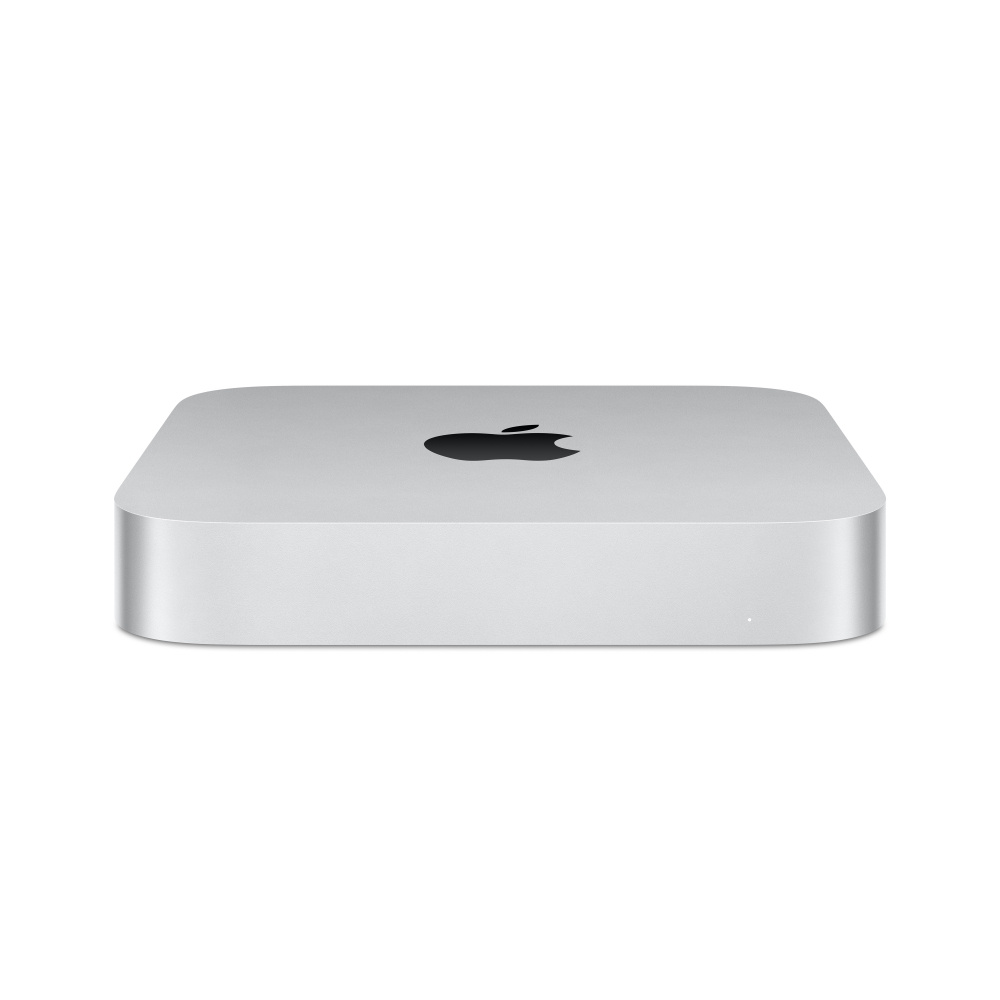 Mini servidor / Mini PC Apple Mac mini M2 Pro 16GB RAM 512GB SSD a $22,479 (−30%, antes $31,999)
Apple Mac mini con chip M2 Pro (CPU de 10 núcleos y GPU de 16 núcleos), 16GB de memoria unificada, 512GB SSD, Gigabit Ethernet, plata (MNH73E/A)
Mini servidor / Mini PC Apple Mac mini M2 Pro 16GB RAM 512GB SSD a $22,479 (−30%, antes $31,999)
Apple Mac mini con chip M2 Pro (CPU de 10 núcleos y GPU de 16 núcleos), 16GB de memoria unificada, 512GB SSD, Gigabit Ethernet, plata (MNH73E/A)








0 Comentarios