







The rise of search engines like ChatGPT, Perplexity, and Gemini has given rise to two new disciplines: GEO (Generative Engine Optimization) and AEO (Answer Engine Optimization). These don't completely replace SEO, but they do profoundly reshape it.
This article offers a moderately critical perspective on this transformation: neither alarmist nor naive. Because while change opens up opportunities, it also poses significant risks for brands, content creators, and the digital ecosystem.
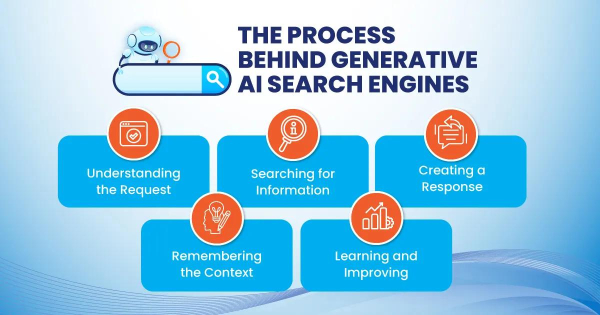
Traditional search relied on displaying links. Today, generative search engines synthesize complete answers. This involves three key changes:
This means that organic traffic is no longer the only indicator of success. Visibility now also occurs within AI-generated responses.
Comparison between optimization models
| factor | Traditional SEO | AEO | GEO |
|---|---|---|---|
| approach | keywords | direct answers | AI-interpretable content |
| aim | position in SERP | appear in snippets | to be cited by AI |
| format | long articles | FAQs, lists | structured and semantic content |
| key metric | traffic | visibility in responses | presence in AI outputs |
| dependence | attendees | generative models |
SEO isn't dead, but it's no longer enough. AEO and GEO require a more structured, clear, and question-solving approach.
One of the most critical elements in this new stage is the structural clarity of the content. AIs do not "read" like humans; they process patterns, hierarchies, and semantic relationships.
This is where an interesting point related to the image you shared comes in: many current tools already automate part of this process.
“Much of the work is done automatically. Install, a couple of minutes of setup, and you're done. You have all the information in the documentation.”
This type of solution reflects a clear trend: the automation of technical SEO. However, this also raises a critical problem: If everything is automated, where is the competitive advantage? The answer is simple: in the strategy, not the tool.
Is your digital strategy ready for the AI era? Schedule an audit with Presticorp and discover how to position your brand on generative search engines.
To adapt to this new paradigm, the content must comply with certain principles:
AI Optimization Checklist
| element | description | impact |
|---|---|---|
| clear headings | direct questions or statements | high |
| natural language | conversational tone | high |
| structured data | schema markup | half |
| lists and tables | facilitate parsing | high |
| subject matter authority | depth of content | critical |
One important point: writing for AI doesn't mean writing only for machines. In fact, the best content is still the content that solves the user's problem first.
This is where a critical perspective comes in. Although GEO and AEO promise greater efficiency, they also present risks:
When an AI responds with aggregated information, it's often unclear which source was prioritized. This can make brands invisible that, although they generate value, are not "correctly interpreted" by the model.
Opportunities vs. Risks
| aspect | chance | risk |
|---|---|---|
| visibility | greater reach without clicking | lower web traffic |
| automation | operational efficiency | loss of differentiation |
| content | better structuring | generic content |
| positioning | new platforms | technological dependence |
This balance is key: adopting without questioning can be as dangerous as ignoring change.
Previously, the goal was to appear in Google's top 3 results. Today, the goal is to be part of the generated response. This implies:
The concept of ranking is transformed into contextual relevance.
Transform your content into a trusted source for artificial intelligence. Schedule a strategic audit with Presticorp today.
Modular and sustainable architecture reflects how structure defines value, just as in AI-optimized content.
For companies in the financial or technology sectors, such as Presticorp, this evolution is not optional. The impact is direct on:
Content optimized for GEO and AEO can become the first point of contact with the user, even before they visit the website.
An effective strategy must combine:
It's not about abandoning the past, but about integrating it.
Modular and sustainable architecture reflects how structure defines value, just as in AI-optimized content.
Just as in contemporary architecture —as seen in modular, sustainable developments that are visually integrated with their surroundings— the value lies not only in the materials, but in the way they are structured, connected, and scaled; the same is true for content in the GEO and AEO era.
It is not enough to have valuable information: it is essential that it is organized logically, accessible and understandable to both humans and artificial intelligence systems.
Each content block functions as a module within a larger ecosystem, where coherence, hierarchy, and intent define its capacity to be interpreted, reused, and recommended. In this sense, optimizing for AI is not very different from designing a smart building: each element must have purpose, connection, and efficiency.
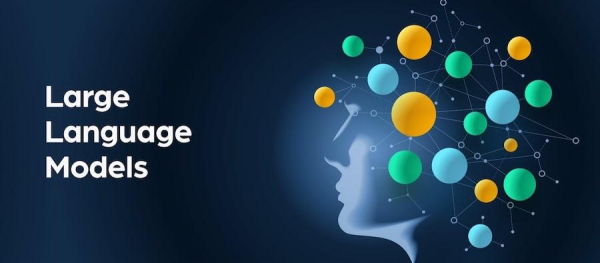
Large Language Models (LLMs) have transformed search: they no longer simply display links, but interpret questions and generate complete answers . Unlike traditional SEO, where the goal was to rank highly, the key now is to be part of the content that the model uses to construct its answer.
Its operation can be summarized in three steps:
This changes the game. LLMs prioritize well-structured, semantically clear, and reliable content because it is easier to process and reuse. There is no visible "position 1," but rather an algorithmic selection based on relevance and coherence.
In this context, the goal is no longer just to attract clicks, but to be understood and cited by AI . Therefore, optimizing for LLMs becomes the core of modern SEO, AEO, and GEO.
LLMs prioritize content that can be easily "understood." This includes well-organized text, proper use of headings, verifiable data, and natural language. It's not about writing for robots, but about minimizing ambiguity.
Another critical point is that LLMs don't function as a transparent ranking system. There's no visible number one position. Instead, there's a probabilistic process where the model decides what information to include, how to combine it, and what weight to give it. This introduces a level of uncertainty that didn't exist in traditional SEO.
From a critical perspective, this also presents a risk. By centralizing the generation of responses in closed models, the rules of the game cease to be fully visible. Brands no longer compete solely for positioning, but for algorithmic interpretation.
However, it also opens up a significant opportunity: quality content can transcend its original channel. A well-structured article can be quoted, summarized, or reused in multiple AI-generated responses, amplifying its reach far beyond direct traffic.
In this new environment, understanding how LLMs work is not optional. It's the starting point for any SEO, AEO, and GEO strategy that aspires to be relevant in the coming years.
Finally, the LLM synthesizes the information into a clear and direct conversational format. Instead of displaying ten links, it delivers a single answer that can integrate multiple sources, rephrase concepts, and adapt to the user's language.
The adoption of GEO and AEO should be done judiciously, not based on trends. My recommendation is clear:
Don't chase algorithms, build authority. Tools change, but trust remains the most valuable asset. If your content truly provides value, it will eventually be recognized by both humans and AI. However, if your entire approach relies on automation and shortcuts, you'll be building on shaky ground.
SEO is evolving into something more complex, more interesting, and also more uncertain. GEO and AEO aren't the distant future; they're the present. But they're not a magic bullet. The brands that will win in this new environment won't be those that best configure tools, but those that deeply understand their audience and build relevant, structured, and trustworthy content.
Don't lose visibility in the new digital ecosystem. Request an audit with Presticorp and optimize your content for GEO and AEO.
-
-
-
-
-
-
-
Google Search Central Blog
OpenAI documentation on generative models
Perplexity AI insights
HubSpot research on SEO and AI
Search Engine Journal
Moz SEO reports
Technical documentation of SEO automation tools
If «Geo and aeo: the future of search beyond traditional keywords» leaves the thread open, the natural next reads are «NULL» and «NULL». que ChatGPT recomiende TuRSVP/Presticorp exige contenido estructurado, no solo un JPG de invitación. On TuRSVP that lands in «NULL».
Enviando comentario…
 EmiteDocs
Constancias, diplomas, oficios y contratos en lote.
EmiteDocs
Constancias, diplomas, oficios y contratos en lote.
 CrearPlantillas
Editor visual de anuncios, plantillas y collage.
CrearPlantillas
Editor visual de anuncios, plantillas y collage.
 TuRSVP
Invitaciones digitales con RSVP para eventos.
TuRSVP
Invitaciones digitales con RSVP para eventos.
 Minitareas
Tableros personales para organizar el trabajo.
Minitareas
Tableros personales para organizar el trabajo.
 Cotización de páginas web
Arma tu sitio por módulos y cotiza en MXN.
Cotización de páginas web
Arma tu sitio por módulos y cotiza en MXN.
 Convertidor de formatos
Convierte Excel, Word, PDF, imágenes y más, gratis y sin registro.
Convertidor de formatos
Convierte Excel, Word, PDF, imágenes y más, gratis y sin registro.
 Monitor Global
Clima, sismos, huracanes y alertas en un mapa en vivo.
Monitor Global
Clima, sismos, huracanes y alertas en un mapa en vivo.
 Promo a la vista
Catálogo de ofertas del día y resumen por correo.
Promo a la vista
Catálogo de ofertas del día y resumen por correo.
 Ravicom
Restaurantes y platillos en tu ciudad, con ficha y mapa.
Ravicom
Restaurantes y platillos en tu ciudad, con ficha y mapa.


Si tu proyecto requiere una solución más enfocada, entra directo a la landing ideal para tu negocio y envíanos tu información en el formulario correspondiente.











0 Comentarios