







Esta semana Hacienda decide en qué negocios ya no podrás pagar en efectivo: lo que cambia (y lo que no) para tu negocio
If you run a corner store, a small restaurant, a repair shop or any business where customers still pay with bills and coins, this week is worth watching. Mexico's Ministry of Finance (Hacienda) has until this Friday, November 27, to announce which types of business will be allowed to make card, bank transfer or QR code payments the only way to pay.
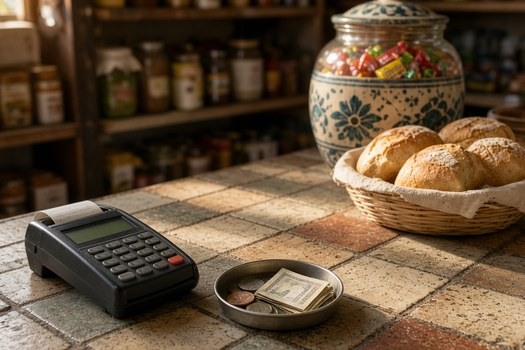
Before anyone panics: no, cash is not going away. But this is the first concrete step of a law designed to make Mexico use less of it, and it's worth understanding what's going on.

Which law are we talking about?
It's called the Digital Economy Law for Digital and Electronic Payments (Ley de Economía Digital para Pagos Digitales y Electrónicos). It was published in Mexico's official gazette on November 4 and took effect on the 5th. Its core goal is to get more people paying and getting paid without cash, both at businesses and for government services.
The law counts almost any cash-free method as a "digital payment":
- Debit and credit cards.
- Bank transfers from your banking app, including automatic charges (what banks call "direct debit": when you authorize a monthly charge for a service).
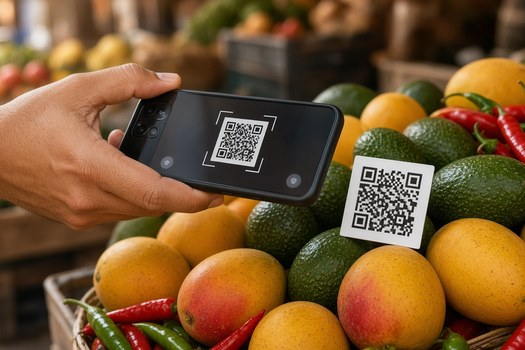
- QR codes, those little squares you scan with your phone's camera to pay.
- Tap-to-pay with your phone or card at the terminal, which works with a technology called NFC.
What does Hacienda have to decide this week?
The text of the law gives Hacienda 15 business days from its entry into force to define the "strategic sectors and relevant activities" where digital payment can be the only option. Counting Monday to Friday, and skipping the November 16 holiday, that deadline falls on Friday, November 27 (some readings put it on Thursday the 26th).
So which sectors will they be? Officially, there's no list yet. There are hints, though: since September, the head of Mexico's Digital Transformation Agency, José Antonio Peña Merino, and President Claudia Sheinbaum have pointed to gas stations and highway toll booths as the first candidates, as compiled by Infobae. On Tuesday, the newspaper La Jornada also reported that tolls and gasoline are expected.
Keep in mind: that's what officials have said, not what the law says. The published text doesn't name any specific type of business.

What happens next?
Hacienda publishing the list doesn't mean a gas station will refuse your cash the next day. A second stage follows: the authority in charge of each sector will have another 15 business days to issue the rules, and those must include gradual transition periods from cash to digital payment, as El Economista explained.
The law also includes a safety net: if the system goes down, the internet drops or the terminal fails, cash or check payments are allowed. In the chosen sectors, however, those outages can't become a permanent excuse to keep taking cash only.
What does NOT change (for now)
This is the part that matters most to most businesses:
- If your type of business isn't on the list, accepting cards or QR remains optional. The law says businesses "may" use digital payments, not that they must.
- Nobody banned cash. The president said so herself in September: "It's not that cash is going to be banned, far from it."
- The law doesn't add new taxes. According to an analysis by the consulting firm Grupo Cervel, it doesn't change the income tax or VAT laws, nor does it give new powers to the SAT, Mexico's tax authority.

Why it still makes sense to get your business ready
Even if your business isn't on the first list, the direction is clear. Peña Merino noted that in Mexico 85 out of every 100 purchases under 500 pesos (roughly 26 US dollars) are still paid in cash, and the government wants that number to drop. The law requires federal, state and municipal governments to accept digital payments for their services, and it allows Mexico's central bank (Banxico) to require bank terminals to accept QR payments too. Hacienda can also expand the list of sectors later on.
There's another side to this: getting paid digitally leaves a record of your sales, and that history can help you get a loan. Pablo Pérez Akaki, a specialist at Tecnológico de Monterrey, told Conecta that the law is a challenge for small businesses that depend on cash, and that without financial education for the public the measure could fall flat.
A few simple ideas while the list comes out:
- Have at least one way to get paid without cash. It can be a card terminal, a QR code or simply your bank account number (CLABE) for transfers. If you want to know what's coming to banking apps, read .
- Compare fees. Not every payment method costs the same: card terminals usually keep a percentage of each sale, while transfers from a phone (via SPEI or CoDi) can arrive with no fee.
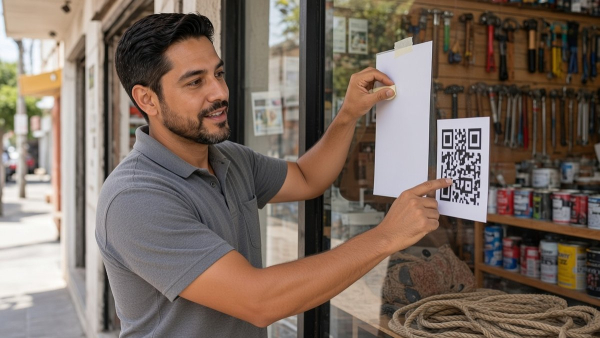
- Let your customers know. A simple "we accept transfers and cards" sign helps more than you'd think.
- If you sell fuel or run a toll booth, pay extra attention to what Hacienda publishes this week and to the rules that follow.
Bottom line: this week we'll learn which businesses may be required to take digital payments, but the change will come in stages and cash will still exist. The smart move is not to wait until it's your turn.
If you want your business to get paid, sell and stay organized online, Presticorp can help with your website and digital tools. Take a look at our solutions for small businesses.
Sources: Digital Economy Law for Digital and Electronic Payments (Official Gazette, November 4, 2026), El Economista (November 5), Infobae (November 5), Conecta from Tecnológico de Monterrey (November 5), Grupo Cervel and La Jornada (November 24, 2026). At the time of publication, Hacienda had not yet released the list of sectors.
Deja un comentario
Enviando comentario…
Herramientas
 EmiteDocs
Diplomas en lote: 3/semana gratis, hasta 1000 por $500. Contratos: desde $199, hasta 100.
 CrearPlantillas
Editor visual. 2 gratis/mes, 5/semana con cuenta, o 20 descargas por $69 MXN.
 TuRSVP
Invitaciones con RSVP. Desde $299 MXN, pago único.
 Minitareas
Tableros con Google. Libre: 1 tablero. Pro: $249 MXN al mes.
 Cotización de páginas web
Arma tu sitio por módulos y cotiza en MXN. Usarlo no tiene costo.
 Convertidor de formatos
Convierte Excel, Word, PDF e imágenes. $150 MXN al mes, hasta 200.
 Monitor Global
Clima, sismos, huracanes y tsunamis. Consulta gratis.
 Promo a la vista
Catálogo gratis. Resumen gratis o desde $200/mes. Comida destacada: $500/mes.
 Ravicom
Restaurantes y platillos. Buscar y registrar es gratis.
 Menciones
Escucha social en 7 redes con tono medido. Desde $9,900/mes.
Articulos recomendados


Landing pages especializadas
¿Proyecto totalmente personalizado? Contáctanos.
Si tu proyecto requiere una solución más enfocada, entra directo a la landing ideal para tu negocio y envíanos tu información en el formulario correspondiente.
Startups
MVP, validación de idea, producto digital y escalabilidad.
Pymes
Marketing digital, captación de clientes y crecimiento comercial.
E-commerce
Tiendas en línea, catálogo, checkout y ventas automatizadas.
Soluciones empresariales
Sitios corporativos, automatización y soluciones digitales a medida.
Promo a la vista
Promociones más recientes
Ofertas vigentes del catálogo, de la más nueva a la más antigua.
Ver promociones Jeans Levi's 511 Slim para hombre a $600 (antes $1,499, −60%) en Levi's México
Jeans Levi's 511 Slim Fit para hombre, modelo 04511-6365
 Cupón AI Toolbox BLACKFRIDAY: 50% en la extensión para ChatGPT, Claude y Gemini — All Access de por vida a USD 99.50 (antes USD 199), vence 30 nov 2026
Código BLACKFRIDAY: 50% en AI Toolbox Lifetime (USD 99→49.50) y All Access Lifetime (USD 199→99.50), extensión para ChatGPT, Claude, Gemini y Grok
 Cupón TypingMind BLACKFRIDAY2026: 60% en Premium de por vida, app de chat para Openai (ChatGPT), Claude y Gemini — USD 79.20 (antes USD 198), vence 30 nov 2026
Cupón de descuento para la licencia Premium de por vida de TypingMind (interfaz de chat de IA con tu propia API key)
 Tenis Reebok x Botter Energia Bo Kets 'Yellow and Black' a $2,849.50 (antes $5,699, −50%)
Tenis Reebok x Botter Energia Bo Kets 'Yellow and Black' (RMIA04GC99MAT0021800) para hombre











0 Comentarios