







This analysis examines the current state of the market, identifies the dominant players, and proposes entry routes for entrepreneurs seeking to capitalize on this expanding opportunity.
The global market for e-invitation software is experiencing rapid growth. According to recent data, the sector reached a value of approximately $5.8 billion in 2024, with projections estimating it will reach $15.3 billion by 2033, representing a compound annual growth rate of 10.2%. Other, more conservative estimates place the market at $780 million in 2024, with expectations of reaching $2.103 billion by 2032.
This disparity in the figures reflects the fragmented nature of the market and the different segmentation methods used by research firms. What is indisputable, however, is the direction: sustained growth driven by the adoption of digital tools for event planning, the proliferation of smartphones, and the growing environmental awareness that favors paperless alternatives.
-16-58-24-0417175831.png)
Global market growth projection for electronic invitation software 2024-2032. Source: Verified Market Research.
North America currently leads the market with approximately 45% share, driven by high digital adoption, strong internet penetration, and widespread use of cloud-based communication tools. However, Asia-Pacific is emerging as the fastest-growing region, anticipating the highest compound annual growth rate due to rapid digital transformation, increasing smartphone penetration, and growing demand for cost-effective digital event management solutions.
The digital invitation market presents a diverse competitive landscape, with established players and new platforms vying for specific segments. Consistently identified leaders include:
Evite is one of the most recognized names in the space, having established an early presence in the digital invitation market. Its strategy focuses on mass accessibility, offering a robust free platform with premium options for advanced features. The key to its longevity lies in user familiarity and integration with digital calendars and social networks.
Paperless Post has built its position by differentiating itself through premium designs and collaborations with luxury brands and renowned designers. Its business model combines design credits with memberships, appealing to segments that prioritize aesthetics over cost. The platform has successfully positioned itself at high-value events, including elite weddings and exclusive corporate events.
Punchbowl has cultivated a dominant position in the personal and family celebrations segment. Their focus on themed templates for children's parties, baby showers, and family gatherings has allowed them to capture a loyal niche. Integration with gift services and automatic reminders further strengthens their value proposition.
While not exclusively an invitation platform, Canva has captured significant market share by offering accessible design tools, including invitation templates. Its massive freemium model and user familiarity with the platform for other uses make it a natural choice for those seeking free customization.
At Presticorp, we help entrepreneurs and businesses navigate the complexities of the digital marketplace. Our team of experts can evaluate your value proposition, identify profitable niche opportunities, and develop the technological architecture to support your growth.
-17-23-37-0417182344.png)
Example of a platform interface for creating professional digital invitations. Source: Issuu.
Greenvelope, Smilebox, Hobnob and RSVPify complete the list of significant players, each occupying specific positions based on differentiated characteristics such as sustainability, mobile ease of use or advanced guest management.
Book your appointment now and take the first step towards building your digital invitation platform.
Comparison of market leaders in digital invitations
| Platform | Main fortress | Pricing model | Target segment | Distinguishing feature |
|---|---|---|---|---|
| Avoid | Brand recognition and massive reach | Freemium with Premium options | General social events | Integration with calendars and social networks |
| Paperless post | Sophisticated and premium aesthetic design | Design credits + memberships | Luxury and corporate events | Collaborations with high-end designers |
| Punch bowl | Specialization in family celebrations | Monthly/annual subscription | Families and personal celebrations | Integration with gift and reminder services |
| Canva | Democratization of graphic design | Freemium with Pro version | Multipurpose users | Design versatility and user familiarity |
| Greenvelope | Sustainability and operational simplicity | Flat rate per invitation | Eco-conscious users | Focus on sustainable, paperless invitations |
| Hobnob | Optimized mobile experience | Freemium | Primary mobile organizers | Native application with real-time management |
The dominance of these platforms is not accidental. Critical analysis reveals common strategic patterns:
First , early investment in technological infrastructure that enables scalability. Leading platforms operate on cloud architectures that support peak demand during event seasons without service degradation.
Second , a deep understanding of user psychology. Digital invitations are not merely functional communications; they are expressions of social identity. Successful platforms invest substantially in template libraries that reflect diverse aesthetics, occasions, and demographics.
Third , the building of integrated ecosystems. Successful platforms offer more than just invitation creation: guest list management, RSVP tracking, automated reminders, gift registry integration, and post-event analytics. This integration increases user retention and justifies premium pricing.
Fourth , adapting to emerging trends. The incorporation of artificial intelligence for design suggestions, optimization for hybrid and virtual events, and responding to the demand for mass customization keep these players relevant in the face of market evolution.
Schedule a free audit with Presticorp today. We'll analyze your proposed business model, assess its technical feasibility, and provide you with a clear roadmap for entering the digital invitation market.
The market exhibits diversity in pricing strategies, reflecting the heterogeneity of users and use cases:
Freemium models dominate the mass-market segment, offering basic features for free with limitations that incentivize upgrades. Premium subscriptions typically range from $10 to $30 per month, unlocking exclusive templates, advanced guest management, and brand customization.
Credit-based models, popularized by Paperless Post, allow users to purchase credit packages redeemable for specific designs. This model is attractive to casual users who don't want a subscription commitment.
Event fees, common on platforms specializing in weddings or corporate events, can range from $50 to several hundred dollars depending on the number of guests and the features required. Large-scale corporate events represent the highest-priced segment.
For independent designers operating on these platforms or through marketplaces like Etsy, prices for personalized invitations typically range from $5 to $50, with experienced designers commanding higher rates.
The appeal of the digital invitation market lies in its relatively low barriers to entry compared to other technology sectors. However, success requires a deliberate strategy:
The white label model allows entrepreneurs to launch invitation platforms under their own brand without developing technology from scratch. Providers like InviteCrafter offer complete solutions that include drag-and-drop invitation builders, pre-designed templates, customer management, and payment integration.
This approach reduces the initial capital required and accelerates the launch time. The entrepreneur focuses on branding, marketing, and customer service, while the white-label provider manages the technological infrastructure. The initial investment can remain below $5,000, compared to the hundreds of thousands required for in-house development.
Instead of competing directly with generalist giants, new players can thrive by specializing deeply in specific niches: invitations to corporate events in regulated industries (healthcare, finance), specific cultural celebrations, or sustainable events with environmental certification.
Specialization allows for premium pricing and superior customer loyalty by addressing needs not met by mass-market platforms.
Combining digital tools with personalized design services represents another viable option. Freelance graphic designers can use platforms like Canva Pro or Adobe Express to efficiently create semi-custom invitations, charging rates that fall between those for generic templates and fully custom designs.
| Entry route | Initial investment | Time to market | Main advantage | Main challenge |
|---|---|---|---|---|
| White label platform | Low (1,000 - 5,000 USD) | 2-4 weeks | Speed and reduced cost | Dependence on the technology provider |
| In-house development | High (USD 50,000 - 200,000) | 6-12 months | Total control and technological differentiation | Technical risk and capital intensive |
| Niche specialization | Media (5,000 - 15,000 USD) | 1-3 months | Less direct competition and premium prices | Limited market size |
| Hybrid model: design + digital | Low-Medium (500 - 3,000 USD) | Immediate | Differentiation through personalized service | Scalability limited by dependence on the designer's time |
| Marketplace (Etsy, Fiverr) | Very low (0 - 500 USD) | Immediate | Access to existing traffic | High competition and platform fees |
Achieving leadership positions in the digital invitation market requires more than simply replicating existing models. Aspiring leaders must consider:
Leading platforms continue to invest in intuitive interfaces that reduce friction in the creation process. The incorporation of artificial intelligence for the automatic generation of designs based on user preferences represents the current frontier of differentiation.
Platforms that cultivate communities where users share designs, templates, and experiences generate organic engagement and reduce customer acquisition costs. User-generated content serves as social proof and a source of inspiration for new users.
Digital invitations don't operate in a vacuum. Integration with event registration platforms, catering services, travel planning, and venue management creates composite value that isolated platforms cannot replicate.
As environmental awareness grows, platforms that effectively communicate their contribution to reducing paper waste capture valuable demographic segments, particularly millennials and Generation Z.
-17-28-13-0417182820.png)
Example of a user experience in a mobile application for managing invitations and events. Source: Dribbble.
| Critical factor | Recommended implementation | Evaluation metric |
|---|---|---|
| Creation speed | Reduce invitation creation time to less than 5 minutes . | Creation flow completion rate. |
| Template quality | Library of 500+ templates updated monthly. | Template usage rate vs. design from scratch. |
| Delivery rate | Guarantee 99.9% successful delivery to inboxes. | Bounce rate and non-receipt claims. |
| Social integration | Share natively on 5+ social platforms . | Volume of organic shares per event. |
| Analysis and monitoring | Post-shipment engagement metrics dashboard. | Opening fee and confirmation of attendance. |
| Customer support | Response in less than 2 hours during business hours. | Net Promoter Score (NPS). |
After extensively analyzing this market, I believe the digital invitation space presents an interesting paradox: it is simultaneously saturated and underexplored. Saturated in the sense that numerous general platforms compete aggressively for the attention of the mass consumer. Underexplored because significant opportunities persist in vertical niches and in the integration of emerging technologies.
My main recommendation for those considering entering this market is to avoid the temptation to compete directly with Evite, Paperless Post, or Canva on their own terms. These platforms have built substantial defensive advantages through network effects, brand recognition, and economies of scale that are prohibitively expensive to replicate.
Instead, I identify three particularly promising opportunities:
First , the corporate B2B segment remains fragmented. While existing platforms serve corporate events, few have developed solutions specifically for enterprise event planning workflows, including compliance approvals, integration with customer relationship management systems, and event ROI analysis.
Second , AI-powered personalization represents a genuine frontier of differentiation. Current platforms offer static templates; the next generation could generate fully customized designs based on user preference analysis, event history, and real-time design trends.
Third , emerging markets, particularly in Latin America, Africa, and South Asia, present first-enter opportunities for platforms that understand the cultural nuances of celebrations in these regions. Localization goes beyond linguistic translation; it involves understanding social protocols, regional aesthetics, and specific consumer behaviors.
Finally, I suggest seriously considering the business model before the technology. Too many entrepreneurs in this space invest disproportionately in platform development before validating demand. White-label solutions allow for proof of concept with minimal investment, enabling pivoting based on real market feedback before committing significant resources.
The digital invitation market will continue to grow, but the benefits of this growth will accrue disproportionately to those who identify specific segments where they can deliver superior value, rather than those who simply replicate already available functionalities.
The digital invitation market offers substantial opportunities for strategic entrepreneurs, but success requires more than just a good idea. You need a deep understanding of your target market, a clear differentiation strategy, and the right technological infrastructure to scale.
Book your appointment now and take the first step towards building your digital invitation platform.
The time for courageous entrepreneurs is now. While you contemplate the opportunity, others are already moving forward. The difference between those who lead markets and those who follow often comes down to the speed of informed execution.
The digital invitation market will continue to expand over the next decade, driven by favorable demographic, technological, and environmental trends. Players who achieve leadership positions will be those that combine a deep understanding of their users' needs, excellence in technological execution, and sustainable differentiation strategies.
For entrepreneurs evaluating this opportunity, the message is clear: the space exists, growth is guaranteed, but success depends on strategy more than pure technology. Barriers to entry are low, but the barriers to reaching the top are substantial and require disciplined strategic thinking.
Today's leading platforms are not invincible, but neither are they vulnerable to direct imitation. Their position is the result of years of investment in technology, brand building, and operational optimization. The new competitors that will thrive are those that redefine the terms of competition, identifying areas where the leaders' strengths become weaknesses and building genuinely differentiated value propositions.
The future of the digital invitation market belongs to those who understand that it's not simply about replacing paper with pixels, but about completely reimagining how people connect, celebrate, and create memories through shared events.
-
-
-
-
-
-
-
-
-
-
-
-
Data Insights Market. Innovation Trends in Electronic Invitation Software. 2026. https://www.datainsightsmarket.com/reports/electronic-invitation-software-1936996
OpenPR. Electronic Invitation Software Market Set for Rapid Expansion, Expected to Grow at a CAGR of 10.2% from 2025 to 2033. DataHorizzon Research. 2025. https://www.openpr.com/news/4309174/electronic-invitation-software-market-set-for-rapid-expansion
Amiboda.app. Platforms for creating digital invitations. https://amiboda.app/blog/invitaciones-digitales/plataformas-para-crear-invitaciones-digitales/
Verified Market Research. Electronic Invitation Software Market Size, Share & Forecast. 2025. https://www.verifiedmarketresearch.com/product/electronic-invitation-software-market/
CyberLink. The best app for creating free digital invitations [2026]. 2026. https://es.cyberlink.com/blog/edicion-de-video/2423/disenar-invitaciones-digitales
InviteCrafter. How to Start a Digital Invitation Business with InviteCrafter. 2025. https://invitecrafter.com/blog/how-to-build-your-own-invitation-brand-with-a-white-label-platform-at-invitecrafter
DataHorizon Research. Electronic Invitation Software Market Size, Growth, Share, & Analysis Report. 2025. https://datahorizzonresearch.com/electronic-invitation-software-market-44212
ProfitDuel. How to Make Money Online by Selling Personalized Digital Invitations. 2025. https://www.profitduel.com/ways-to-make-money-online/inviting-profits-by-selling-personalized-digital-invitations
InviteCrafter. Digital vs. Printed Invitations: Which Business Model Wins in 2025. 2025. https://invitecrafter.com/blog/digital-vs-printed-invitations-which-business-model-wins-in-2025
Jim.com. How to start a wedding invitation business your first steps. 2025. https://www.jim.com/blog/how-to-start-a-wedding-invitation-business
Gelato. How To Start An Invitation Business Step-By-Step. 2023. https://www.gelato.com/blog/invitation-business
If «The digital invitation market: leaders, opportunities, and strategies to scale your business» leaves the thread open, the natural next reads are «These are the 5 platforms that dominate digital invitations in Mexico» and «The emotional scam of free digital invitations: why the freemium model is killing creativity?». . On TuRSVP that lands in «NULL».
Enviando comentario…
 EmiteDocs
Constancias, diplomas, oficios y contratos en lote.
EmiteDocs
Constancias, diplomas, oficios y contratos en lote.
 CrearPlantillas
Editor visual de anuncios, plantillas y collage.
CrearPlantillas
Editor visual de anuncios, plantillas y collage.
 TuRSVP
Invitaciones digitales con RSVP para eventos.
TuRSVP
Invitaciones digitales con RSVP para eventos.
 Minitareas
Tableros personales para organizar el trabajo.
Minitareas
Tableros personales para organizar el trabajo.
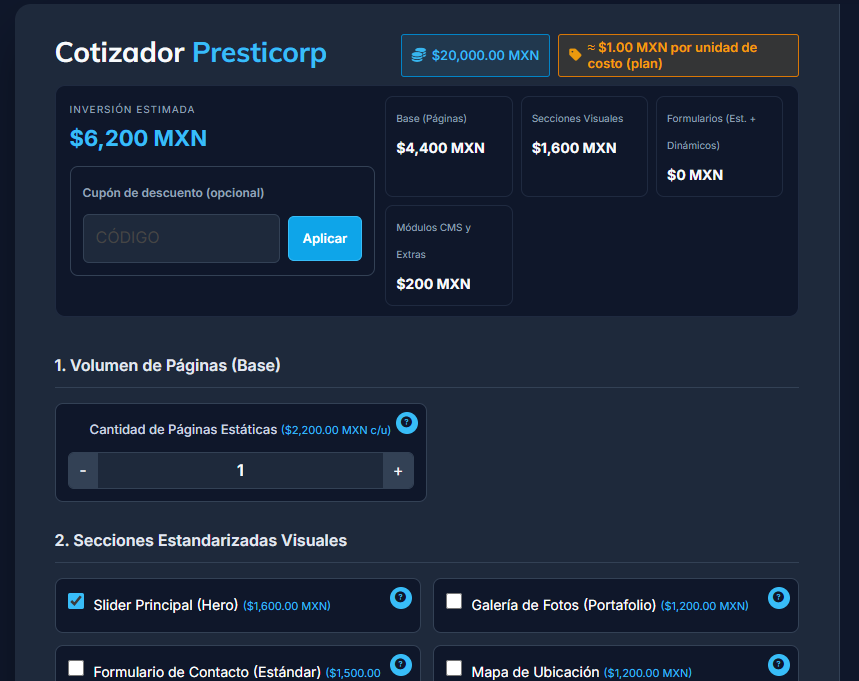
 Cotización de páginas web
Arma tu sitio por módulos y cotiza en MXN.
Cotización de páginas web
Arma tu sitio por módulos y cotiza en MXN.
 Convertidor de formatos
Convierte Excel, Word, PDF, imágenes y más, gratis y sin registro.
Convertidor de formatos
Convierte Excel, Word, PDF, imágenes y más, gratis y sin registro.


Si tu proyecto requiere una solución más enfocada, entra directo a la landing ideal para tu negocio y envíanos tu información en el formulario correspondiente.










0 Comentarios