
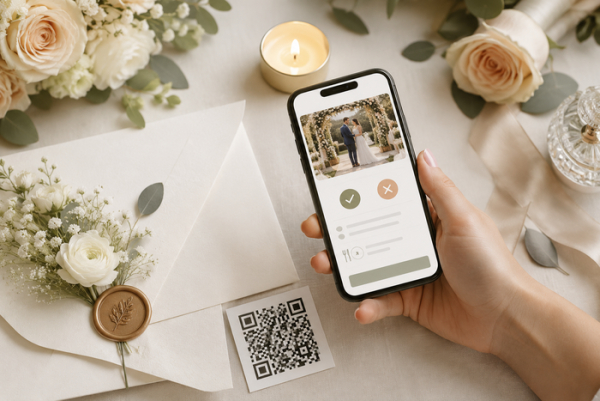

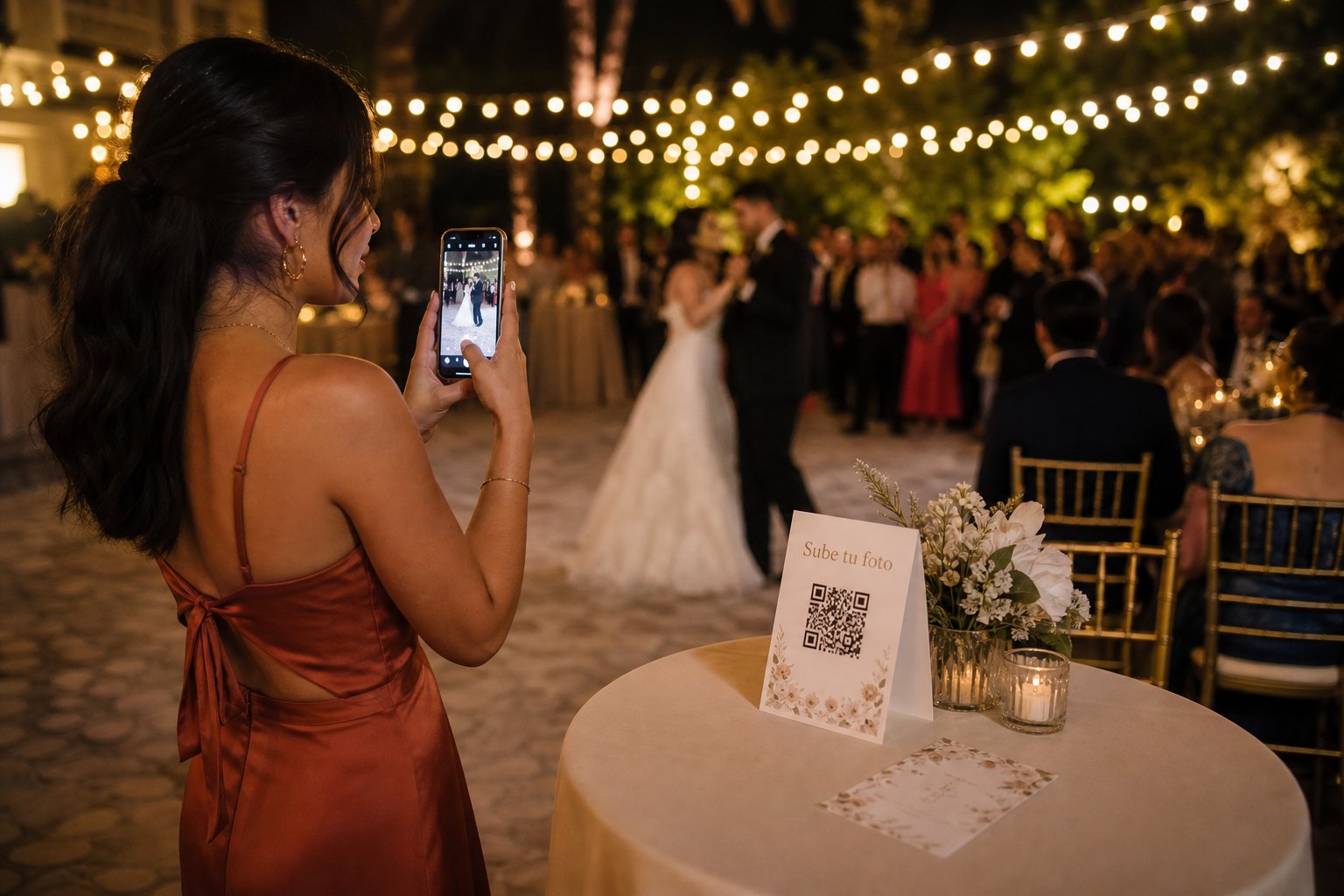




The product question isn't "Do they have a gallery?". It's: Can the guest record the toast, scan a QR code, and leave the file on the same domain where they already saw the map and dress code?
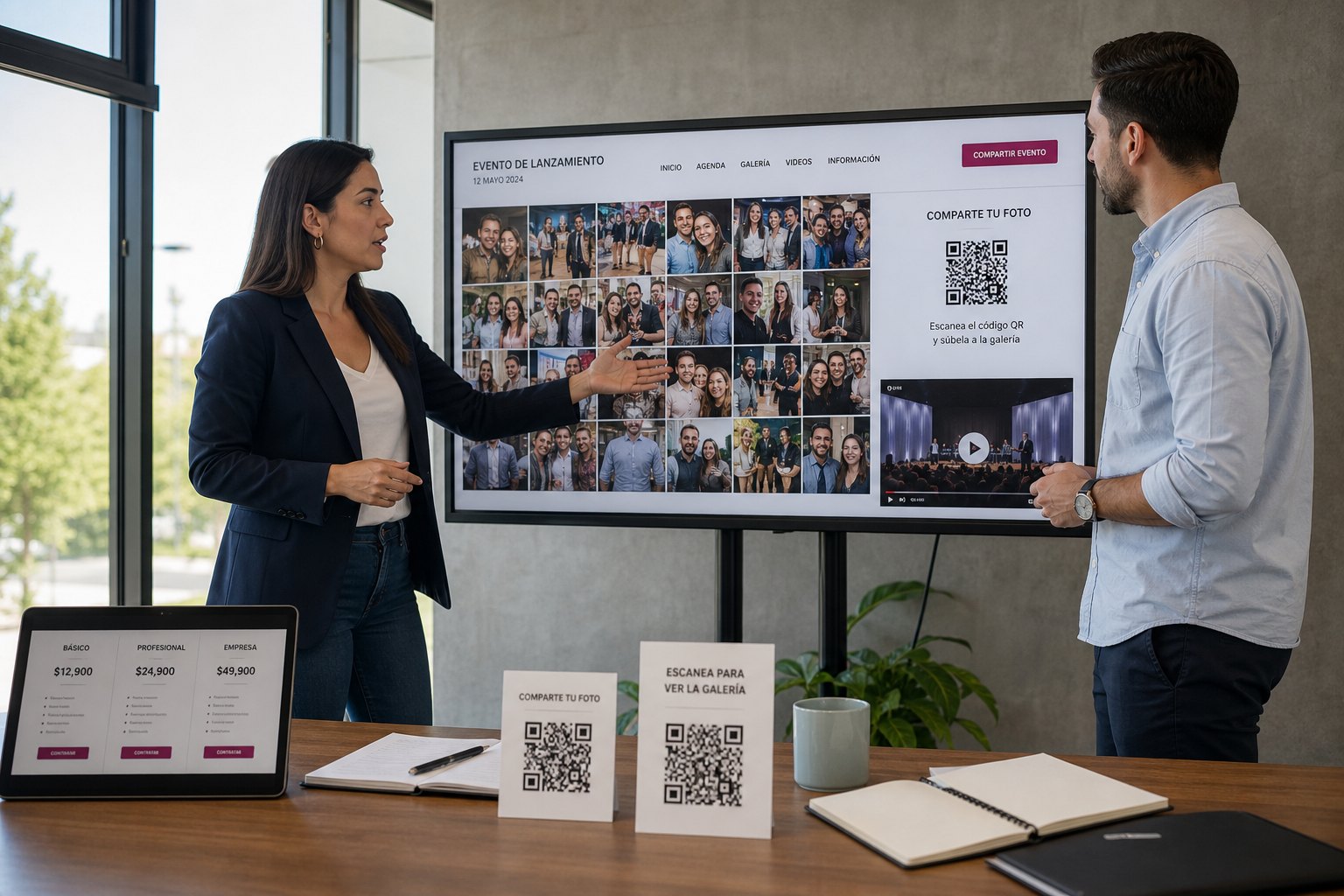
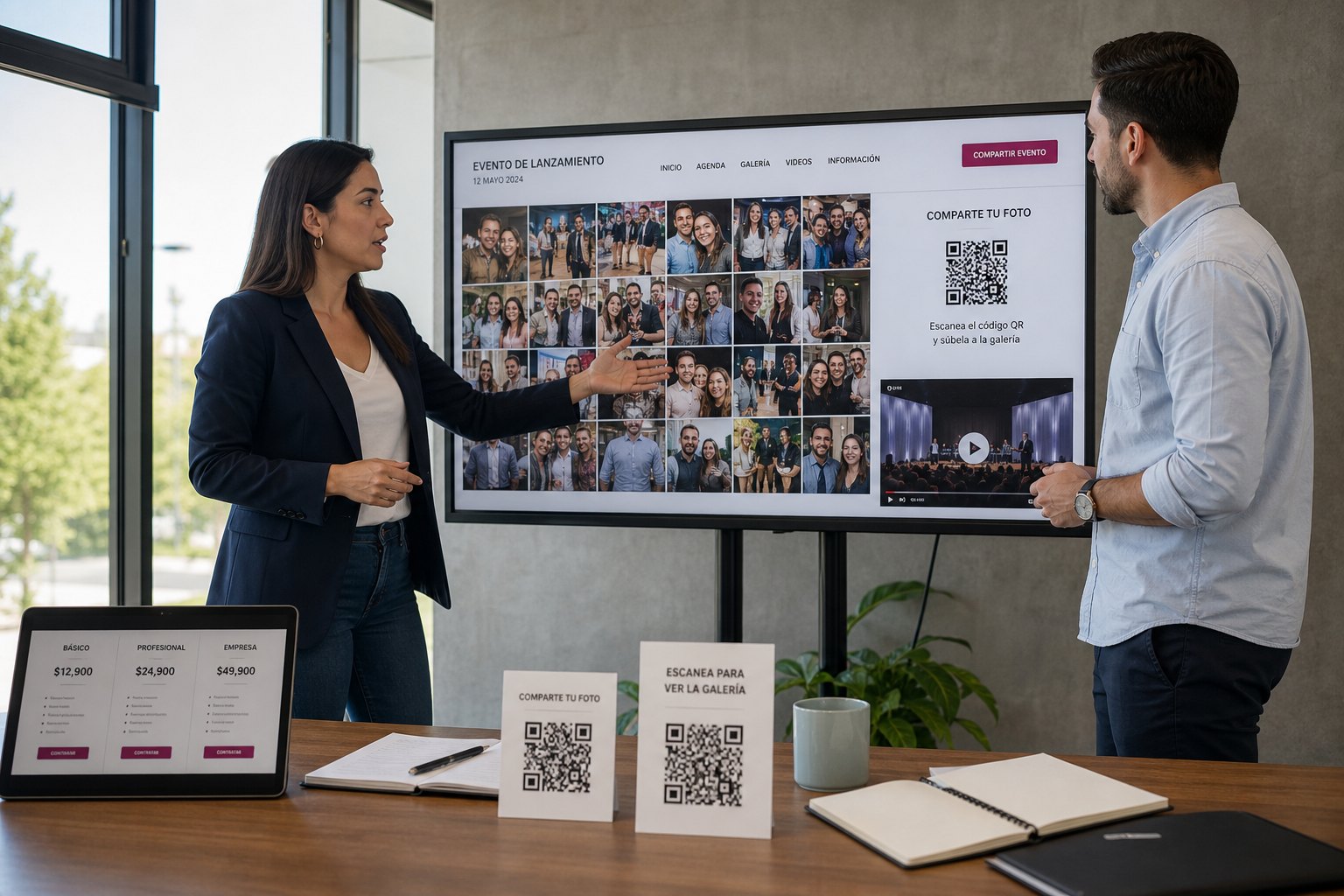
The wall is not a decorative extra: it is a function of the page, tied to the plan, with a quota for photos and videos.
Organizers are improvising folders, expiring links, and groups of 80 people where the 4K video never finishes downloading. That's not a "lack of enthusiasm" problem; it's an architectural problem. An event needs a single destination, with a clear host identity, moderation, and limits that the business can sustain (storage, duration, abuse).
That's why at TuRSVP the event wall is integrated into the digital invitation. Guests don't create a new social media account. They simply follow the event flow, upload their content, and that's it. The host views the material on the panel and posts it to the page they've already shared. The product focus is explained to the end user on the TuRSVP blog: photos and videos in real time on the event wall .
Printing a code at the entrance or on the souvenir table reduces friction. The guest scans it, opens the upload, and chooses a photo or video. It's the same principle we use when designing RSVPs: fewer steps, less explanation. If you're interested in the RSVP side (WhatsApp vs. link or QR code), you can find it in
.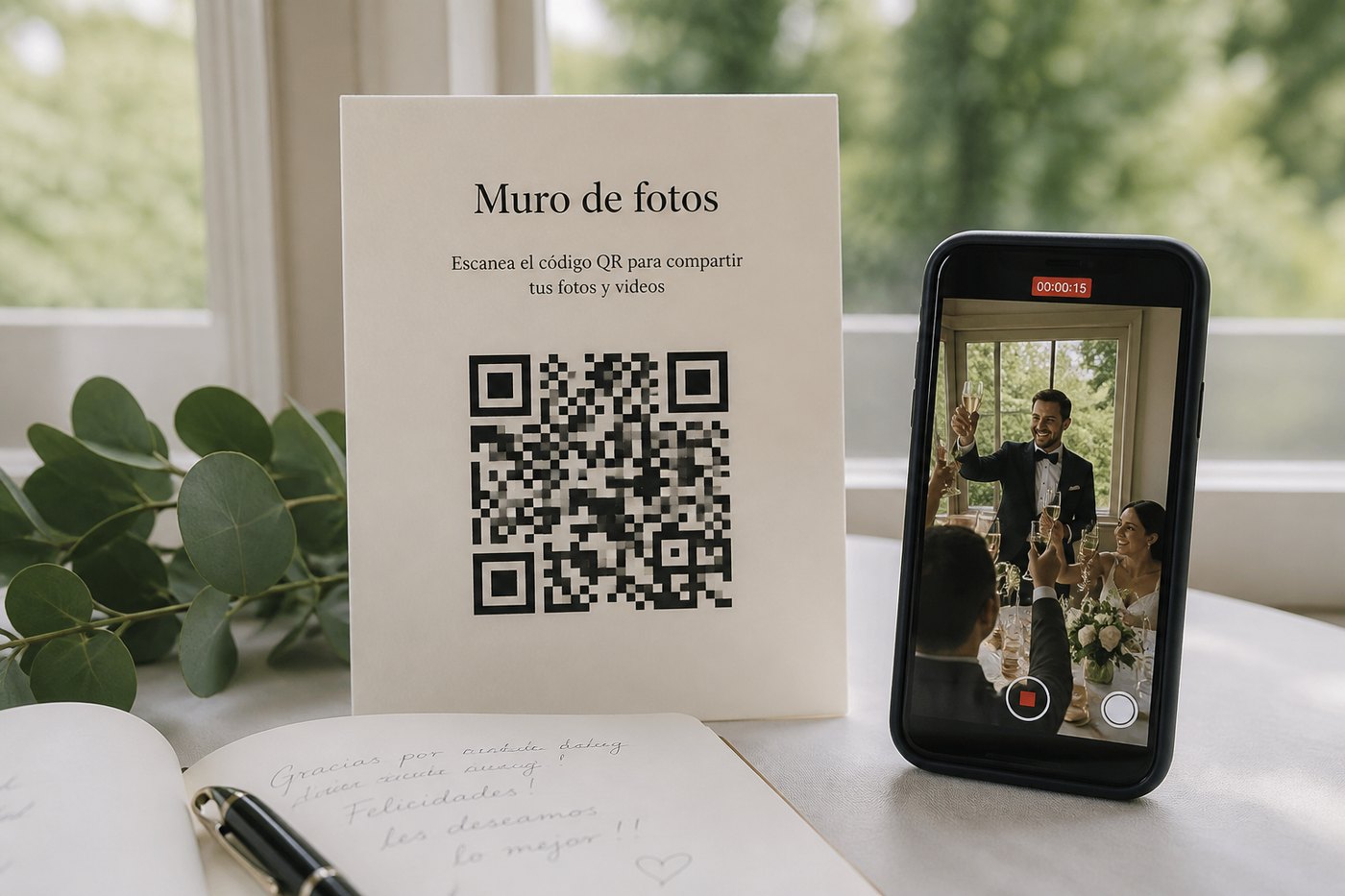
The QR code does not replace the invitation: it is the shortcut to leaving a memory on the site.
An event site needs to be honest about its upload limits. At TuRSVP, the upload wall is listed in the published plans, but the limit varies: from 30 photos without video in the smallest plan, to thousands of photos and hundreds of videos in the top plan. The clip length also varies: one minute in most packages and up to twenty minutes in the highest plan. This is by design: storage and transcoding can't be "unlimited" if the product is to remain stable on Saturday at 11 p.m.
When a client requests a 100% custom design, that conversation remains a separate process. TuRSVP covers the case of publishing with a template and fields; a custom design is a full-fledged website project. Both approaches are explained in this TuRSVP article , and, from a web investment perspective, in
.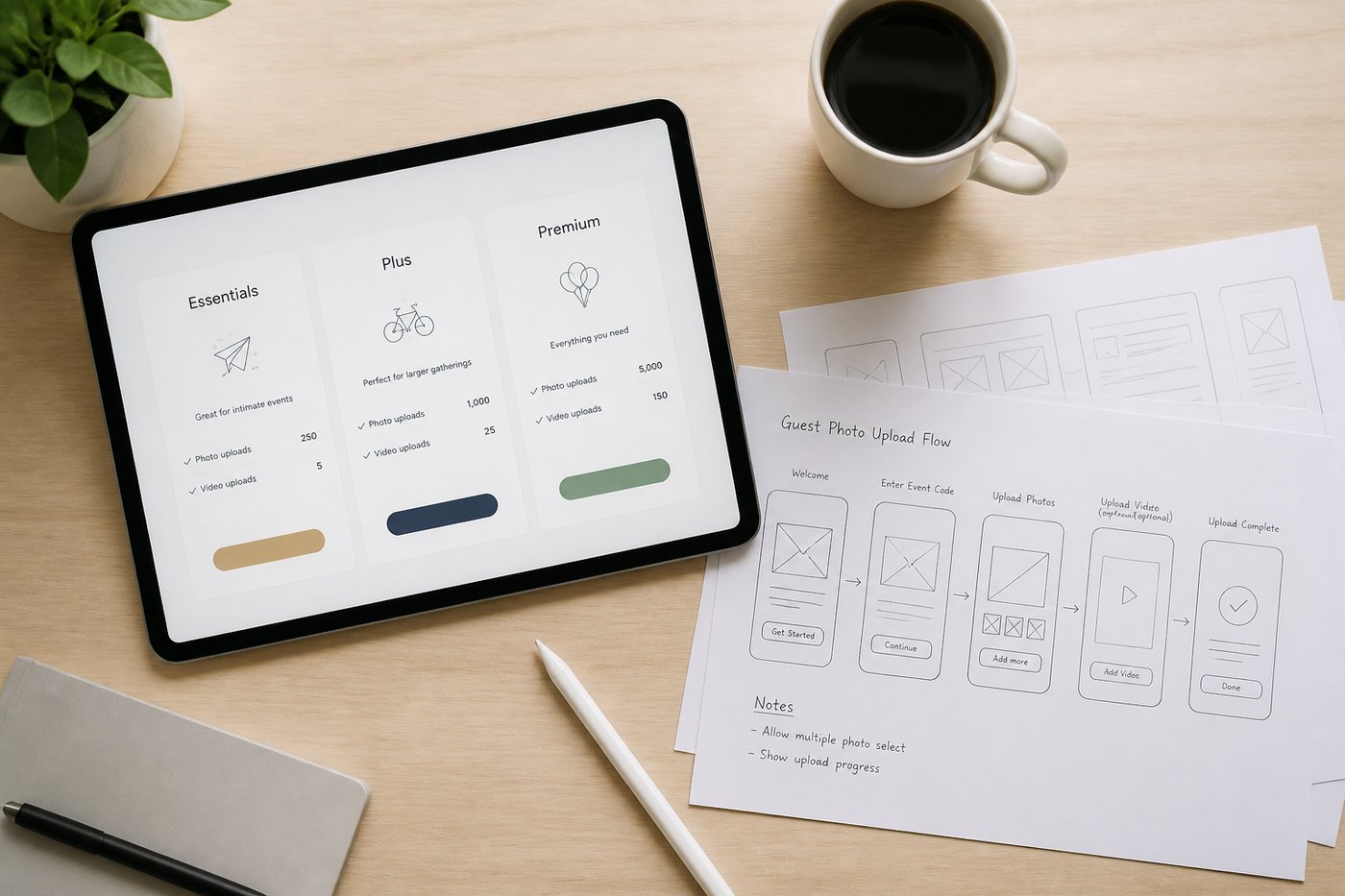
Choosing a plan means choosing the capacity of the wall, not just the price of the invitation.
If you're evaluating platforms, ask to see three things in a demo: real-time uploads from your phone, a printable QR code, and the exact number of photos and videos included in the plan. A vague "unlimited gallery" claim often hides limitations later on. With TuRSVP, these limits are clearly displayed when you sign up.
The platform's user experience is reflected in everything you can do on TuRSVP . If your event needs a website, even if you're unsure whether to use a template or a custom design, start by understanding why a wedding needs an event page .
Enviando comentario…
 EmiteDocs
Constancias, diplomas, oficios y contratos en lote.
EmiteDocs
Constancias, diplomas, oficios y contratos en lote.
 CrearPlantillas
Editor visual de anuncios, plantillas y collage.
CrearPlantillas
Editor visual de anuncios, plantillas y collage.
 TuRSVP
Invitaciones digitales con RSVP para eventos.
TuRSVP
Invitaciones digitales con RSVP para eventos.
 Minitareas
Tableros personales para organizar el trabajo.
Minitareas
Tableros personales para organizar el trabajo.
 Cotización de páginas web
Arma tu sitio por módulos y cotiza en MXN.
Cotización de páginas web
Arma tu sitio por módulos y cotiza en MXN.
 Convertidor de formatos
Convierte Excel, Word, PDF, imágenes y más, gratis y sin registro.
Convertidor de formatos
Convierte Excel, Word, PDF, imágenes y más, gratis y sin registro.


Si tu proyecto requiere una solución más enfocada, entra directo a la landing ideal para tu negocio y envíanos tu información en el formulario correspondiente.









0 Comentarios