




Altman, Musk y Zuckerberg revelan el futuro de la IA: fechas, dinero real y lo que su pyme debe saber
If you run a small business, serve customers, or simply use WhatsApp and a computer for work, artificial intelligence is no longer a “programmers only” topic. It is a conversation about productivity, the rules of the game, and tools that in a few years could cost less and reach more people.
This article summarizes, in plain language and with links to primary sources, what eight industry leaders — from Sam Altman to Jensen Huang — have said publicly, and pairs it with events that already happened: European laws, mega infrastructure projects, models that surprised the market, and plans for robots and agents. No rumors: just useful signals for calm decision-making.
Sam Altman: a “gentle singularity,” agents, and cheap access
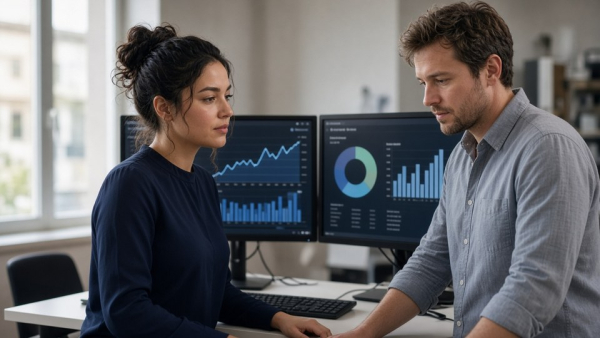
Sam Altman, CEO of OpenAI, published the essay The Gentle Singularity, describing AI progress as a takeoff that has already begun — but one that feels less “weird” than movie plots suggest. His rough timeline is concrete: in 2025, agents that do real cognitive work; in 2026, systems that contribute novel insights; around 2027, robots that perform tasks in the physical world.
The practical takeaway for non-technical readers: first align AI (so it does what people really want over the long term), then distribute access so intelligence is cheap and not concentrated in a few hands. Altman talks about intelligence “too cheap to meter”: the cost of using AI could approach the cost of electricity.
Source: blog.samaltman.com — The Gentle Singularity.
Mark Zuckerberg: personal superintelligence for everyone
Mark Zuckerberg of Meta argues another thesis: “personal superintelligence” — highly capable systems serving each person — should reach billions of users, not only those who pay expensive APIs. Meta stresses that open source (models whose weights can be downloaded and run) matters so power does not concentrate.
On Meta’s superintelligence page and in The Future is for Everyone, the company argues that distributing leading systems helps more people and businesses participate. In June 2025, Zuckerberg announced Meta Superintelligence Labs to accelerate that vision.
Sources: meta.com/superintelligence; about.fb.com — The Future is for Everyone; CNBC — Meta Superintelligence Labs.
Elon Musk / Tesla: AI leaves the cloud for the physical world

Elon Musk and Tesla talk less about chatbots and more about machines that move. Tesla’s Master Plan Part 4 describes AI entering the physical world: vehicle autonomy and the humanoid robot Optimus. In plain terms: the bet is that AI will not only write text, but also drive, manufacture, and do repetitive or dangerous work.
In January 2026, Reuters reported that Tesla put about $2 billion into xAI, Musk’s AI company. That figure signals that Tesla links its physical future (cars and robots) to language models and digital agents.
Sources: tesla.com — Master Plan Part 4; Reuters — Tesla and xAI investment (Jan 2026).
Demis Hassabis and Dario Amodei: AGI timelines and powerful AI
Demis Hassabis, CEO of Google DeepMind, told CNBC (March 2025) that human-level AI — AGI — could arrive in about 5 to 10 years. That is a window, not a calendar date. In simple words, “human level” means systems that perform many intellectual tasks as well as an average trained person.
Dario Amodei, CEO of Anthropic, has written that very powerful AI systems could appear as early as 2026. In Machines of Loving Grace he describes possible benefits in health, the economy, and science if the pace is managed well. Message for SMBs: prepare for tools that improve quickly, not for a magical “day zero.”
Sources: CNBC — Hassabis on AGI; darioamodei.com — Machines of Loving Grace.
Satya Nadella and Sundar Pichai: agents and a platform shift
Satya Nadella, CEO of Microsoft, at Build 2025 spoke of the “age of AI agents” and an “open agentic web”: an internet where assistants make decisions and perform tasks for you or your company, with open protocols. Build highlighted that hundreds of thousands of organizations already use tools such as Copilot Studio to build agents.
Sundar Pichai, CEO of Google, has described AI as a platform shift bigger than the PC or mobile. Translation: just as moving from desktop to phone transformed commerce, AI could reorder how we search, sell, and serve customers.
Sources: Microsoft Blog — Build 2025 / agents; blog.google — Sundar Pichai, AI Action Summit.
Jensen Huang: compute demand “100×” higher
Jensen Huang, CEO of NVIDIA, has said that agentic AI — systems that not only answer but plan and act — can drive compute demand up to about 100 times what was previously expected. In plain English: one hundred times more computing capacity means far more chips, data centers, and energy. That is why hardware and cloud became as strategic as electricity for a factory.
Source: Reuters — NVIDIA / agentic compute demand.
Real cases that already happened (and why they matter)

1) The EU AI Act entered into force on August 1, 2024. It classifies risk and requires more transparency depending on use. If you sell software or use AI for customers in Europe, follow the application calendar.
Source: European Commission — AI Act enters into force.
2) Stargate Project: up to $500 billion, with $100 billion immediate. OpenAI announced Stargate for U.S. AI infrastructure: up to $500 billion over four years, starting with $100 billion. In everyday numbers: the scale of “many power plants and data centers,” not a few computers.
Source: openai.com — Announcing The Stargate Project.
3) The DeepSeek R1 “shock” (January 2025). The Chinese model sparked a global debate by competing on performance with different approaches from major U.S. firms. Lesson for SMBs: the model market is not a permanent monopoly; alternatives appear and price expectations fall.
Source: Reuters — DeepSeek and U.S. firms’ response.
4) EU rules for GPAI models (August 2025). The EU began applying rules for general-purpose AI models: more transparency and safety. If you use or resell those models, compliance is no longer just marketing.
Source: European Commission — GPAI rules.
5) Meta Superintelligence Labs and Microsoft Build 2025. Meta creates a dedicated lab; Microsoft pushes agents in office and development tools. For a small business: more assistants in email and spreadsheets… and a need for internal policies on who connects an agent to customer data.
Sources: CNBC — Meta Superintelligence Labs; Microsoft Build 2025.
6) Tesla Master Plan + xAI investment. The physical plan (Optimus, autonomy) and the check to xAI show convergence between intelligent software and hardware. Logistics, retail, and manufacturing SMBs should watch automation, not only chatbots.
Sources: Master Plan Part 4; Reuters — Tesla / xAI.
Where these leaders agree (and where they don’t)
There is broad consensus: AI is getting more capable, agents are becoming everyday tools, and infrastructure (chips, energy, data centers) is the bottleneck. Broad access also matters — Altman talks about making it cheap; Zuckerberg about open source; Nadella about an open agentic web.
Differences are in emphasis: Musk prioritizes the physical world; Hassabis and Amodei mark timelines and risks; Huang talks compute; Pichai talks platform shift. None offers a crystal ball. The sensible approach is a 1–3 year plan with tools that already exist, reviewed every six months.
Practical tips if you don’t code
1. Start with repetitive tasks. Email summaries, reply drafts, translations, and to-do lists often deliver quick returns at low risk.
2. Keep sensitive data separate. Don’t paste passwords, payroll, or customer medical data into public chats. Use company accounts.
3. Measure time saved, not “magic.” If an assistant saves two hours a week on quotes, it already pays for the subscription. If not, switch.
4. Watch regulation if you sell to Europe or use general-purpose models. The AI Act and GPAI rules are not only for Silicon Valley.
5. Train the team to “ask well.” Coaching sales and admin often beats buying the most expensive model.
6. Give agents brakes. An agent that sends email or changes inventory needs human approval at first.
If you want help applying AI to marketing, digital presence, or SMB processes without drowning in jargon, explore presticorp.com/landingpages/pymes/.
Sources
- Sam Altman — The Gentle Singularity
- Meta — Superintelligence
- Meta — The Future is for Everyone
- Tesla — Master Plan Part 4
- Reuters — Tesla / xAI (Jan 2026)
- CNBC — Demis Hassabis on AGI
- Dario Amodei — Machines of Loving Grace
- Microsoft — Build 2025, age of agents
- Google — Sundar Pichai, AI Action Summit
- Reuters — Jensen Huang / agentic compute
- EU — AI Act enters into force (Aug 1, 2024)
- OpenAI — Stargate Project
- Reuters — DeepSeek R1 (Jan 2025)
- EU — GPAI rules (Aug 2025)
- CNBC — Meta Superintelligence Labs
- Presticorp — solutions for SMBs
Deja un comentario
Enviando comentario…
Herramientas
 EmiteDocs
Constancias, diplomas, oficios y contratos en lote.
EmiteDocs
Constancias, diplomas, oficios y contratos en lote.
 CrearPlantillas
Editor visual de anuncios, plantillas y collage.
CrearPlantillas
Editor visual de anuncios, plantillas y collage.
 TuRSVP
Invitaciones digitales con RSVP para eventos.
TuRSVP
Invitaciones digitales con RSVP para eventos.
 Minitareas
Tableros personales para organizar el trabajo.
Minitareas
Tableros personales para organizar el trabajo.
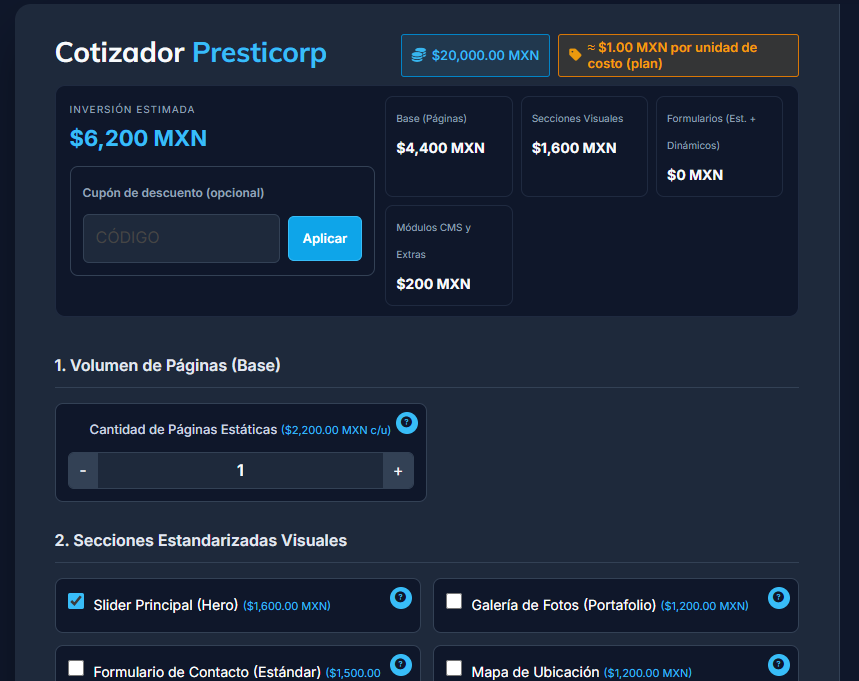
 Cotización de páginas web
Arma tu sitio por módulos y cotiza en MXN.
Cotización de páginas web
Arma tu sitio por módulos y cotiza en MXN.
 Convertidor de formatos
Convierte Excel, Word, PDF, imágenes y más, gratis y sin registro.
Convertidor de formatos
Convierte Excel, Word, PDF, imágenes y más, gratis y sin registro.
 Monitor Global
Clima, sismos, huracanes y alertas en un mapa en vivo.
Monitor Global
Clima, sismos, huracanes y alertas en un mapa en vivo.
Articulos recomendados


Presticorp
Landing pages especializadas
¿Proyecto totalmente personalizado? Contáctanos.
Si tu proyecto requiere una solución más enfocada, entra directo a la landing ideal para tu negocio y envíanos tu información en el formulario correspondiente.
Startups
MVP, validación de idea, producto digital y escalabilidad.
Pymes
Marketing digital, captación de clientes y crecimiento comercial.
E-commerce
Tiendas en línea, catálogo, checkout y ventas automatizadas.
Soluciones empresariales
Sitios corporativos, automatización y soluciones digitales a medida.









0 Comentarios