






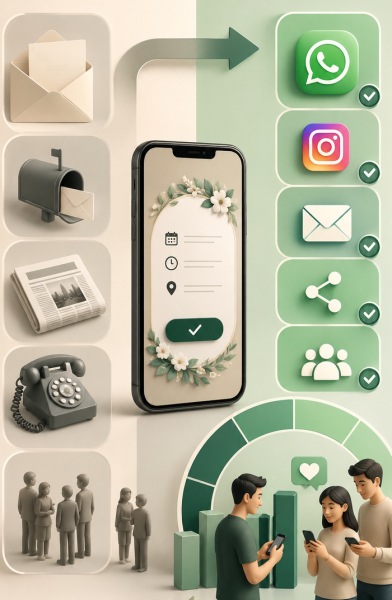
The numbers sound impressive, but behind them lies an uncomfortable reality: the dominant platforms are built for Anglo-Saxon and corporate markets, not for the way Mexico organizes, celebrates, and communicates its events.
This article is not a user guide or a tutorial. It is a critical commentary on why global solutions are leaving out a market that represents 40% of digital consumption in Latin America, and why this gap represents both a threat to organizers and an opportunity for those who understand that technology must adapt to culture, not the other way around.
When a Mexican couple decides to use a platform like Evite, Paperless Post, or Punchbowl, they do so looking for three things: to save time, reduce costs, and project a modern image. The problem is that none of these platforms were designed with the Mexican digital ecosystem in mind.
First, the language. Most offer Spanish translations that sound like machine translations from 2019. Phrases like "RSVP now" become "Confirm your attendance now," language that in Mexico is perceived as corporate, cold, and lacking the warmth used to invite guests to a wedding, a quinceañera, or a local corporate event. The digital invitation isn't just a form; it's the first impression of the event. And that first impression, in many cases, is failing.
Second, the distribution channel. In Mexico, 98% of WhatsApp messages are opened, compared to just 20% of emails. Global platforms are optimized for email. Their logic for sending, tracking, and reminders revolves around an inbox that in Mexico is synonymous with work, not celebration. When a Mexican organizer sends an invitation by email, they're competing with invoices, newsletters, and spam. When they send it via WhatsApp, they're entering their guests' personal space. The difference isn't marginal; it's strategic.
Third, payments. Global platforms charge in dollars. For a 150-person event in Mexico, that means the monthly subscription cost can be equivalent to what a local organizer charges for the entire coordination service. This pricing model isn't economically viable for the Mexican economy, and the free alternative often comes with third-party advertising that undermines the event's brand.
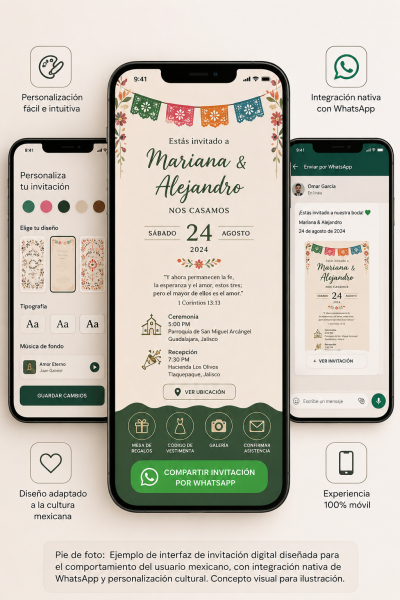
The digital invitation isn't just a form; it's the first impression of the event. And that first impression, in many cases, is failing.
According to data from the Latin American market, the region represents approximately $400 million in e-invitation software, with an annual growth rate of 8%. However, 80% of that spending goes to foreign platforms that do not adapt their products to local needs. This is not just a usability issue; it's a digital sovereignty issue.
When a Mexican company, event venue, or couple hires a global platform, they are agreeing to terms of service drafted under U.S. jurisdiction, storing their guests' data on servers outside the country, and relying on technical support that doesn't understand that in Mexico, a "quince años" (fifteenth birthday celebration) is not a translated "sweet sixteen." Cultural personalization is not a luxury; it's a requirement for technology to work.
And here's the crucial point: the Mexican market doesn't need another Spanish-language version of an American platform. It needs a platform built from the ground up that understands that in Mexico, events are communal, that guest lists are compiled as a family, that follow-up is done in WhatsApp groups, and that RSVPs aren't a cold "yes" or "no," but a conversation that includes "how many are coming," "are you bringing children," and "do you have any dietary restrictions?"
The RSVP (Répondez s'il vous plaît) system originated in 17th-century France as a social etiquette for the aristocracy. In 2026, it remains the underlying logic of most digital platforms. But in Mexico, this logic clashes with a cultural reality: here, RSVPing isn't a mere administrative formality. It's part of a relationship.
Global platforms treat the guest as a user who must fill out a form. In Mexico, the guest is a family member, a friend, a lifelong acquaintance who expects the invitation to reflect the affection with which it was extended. When a platform asks them to "fill in their information" in pre-designed fields, it's translating an emotional experience into a digital transaction. And that, culturally, doesn't work.
The numbers confirm it. Response rates for invitations sent via email hover around 75-85% in English-speaking markets. In Mexico, where email is a secondary channel, those figures drop to 40-50%. Not because Mexicans are less organized, but because the channel is the wrong one. When the same invitation is sent via WhatsApp, the response rate rises to 85-95%, comparable to markets where email is dominant.
The following table summarizes the gap between what global platforms offer and what the Mexican market actually needs:
Table 1: Comparison of global platforms versus the needs of the Mexican market
| Criterion | Global platforms (Evite, Paperless Post, Punchbowl) | Real need of the Mexican market | Gap identified |
|---|---|---|---|
| Shipping channel | Email as the main channel | WhatsApp as the main channel | 98% open rate on WhatsApp vs 20% on email |
| Language | Automatically translated Spanish | Natural Mexican Spanish with local idioms | Perception of coldness and corporatism |
| Currency | US Dollars | Mexican pesos with prices adjusted to the local economy | Economic barrier to entry |
| Event type | Generic weddings and birthdays | Quinceañeras, baptisms, posadas, local corporate events | Lack of culturally relevant staff |
| Follow-up | Automatic email reminders | Personalized WhatsApp reminders | Low response rate due to inappropriate channel |
| Personalization | Pre-designed fields | Flexible fields that include number of companions, restrictions, and personalized messages | Rigidity that limits cultural expression |
| Medium | Tickets in English with a response in 24-48 hours | Support in Mexican Spanish with immediate attention | Frustration and abandonment of the platform |
This chart isn't meant to demonize global platforms. They've built excellent products for their markets. The problem is that Mexico isn't their primary market, and that's evident in every interaction.
The gap described in the table above is not an unsolvable problem. It's a business opportunity that the Mexican entrepreneurial ecosystem is beginning to explore. Platforms like tursvp.com represent a different approach: instead of importing a foreign model and translating it, they build upon local experience to create a global solution.
The difference is subtle but crucial. It's not about having a Spanish version of an American product. It's about understanding that in Mexico, a digital invitation should feel like a casual conversation, not a tax form. It should allow the organizer to send a voice message explaining the details. It should integrate with the guest's phone calendar without requiring them to download an app. It should allow Grandma to RSVP with a simple "Yes, honey, we'll be there" instead of filling out five required fields.
This isn't a technical critique; it's a cultural one. And in digital marketing, culture always trumps technology.
Comparative infographic of invitation channels in Mexico
-(1)-0519194541.png)
Comparison of effectiveness between digital invitation channels in the Mexican market. Source: Aggregated data from RSVP platforms and digital behavior studies 2025-2026.
One of the most frequent criticisms of digital invitations is that they lack the "personal touch" of paper. That criticism, however, is aimed at the wrong product. The problem isn't the digital format; it's the digital execution.
When a global platform sends an invitation with a generic design, mechanically translated text, and a link to a standard form, it reinforces the prejudice that digital is impersonal. But when a local platform allows the organizer to record a welcome video, incorporate visual elements from the state where the event will be held, or use voice messages instead of automated emails for follow-up, digital becomes more personal than paper.
Paper cannot be updated. You can't send a reminder three days before the event. You can't change the location if it rains and the wedding is moved to the backup venue. Paper is static, and static is the antithesis of modern event planning. The problem isn't digital; it's poorly implemented digital.
And poorly made digital content in Mexico has a name: platforms that were designed for California and sold as if they were universal.
Beyond user frustration, there is a real economic cost. A Mexican event organizer using a global platform pays between $15 and $50 per month for features they don't fully utilize, in a language they don't understand, and with support that doesn't grasp their urgent needs. In the context of the Mexican economy, this represents a significant portion of a small or medium-sized event's budget.
But the highest cost isn't monetary. It's the opportunity cost. Every invitation that goes unopened because it arrived in the wrong email address. Every confirmation that doesn't arrive because the form was too complex for a senior citizen. Every event where the organizer ends up manually following up via WhatsApp because the platform doesn't do it for them. Those hours, that energy, those opportunities to create a memorable experience are lost in the friction of a tool that wasn't designed for its users.
From a digital marketing perspective, this article answers a question that more and more event organizers in Mexico are asking on Google, ChatGPT, Gemini, and their phones' voice assistants: "how to send digital invitations in Mexico." Not "how to use Evite." Not "best digital invitation platforms." The search is local, contextual, and urgent.
That's why search engine optimization (SEO) is no longer enough. By 2026, 60% of searches in Mexico will be resolved directly on the results page, without the user clicking on any links. Search engine optimization (SEO) requires that content answer specific questions clearly and in a structured way. Generative intelligence optimization (GEO) requires that content be authoritative enough for language models to cite it as a trusted source.
This article aims to address all three. Because the question isn't whether Mexico needs local digital invitations. The question is why there aren't yet enough options that understand that the Mexican market isn't a scaled-down version of the U.S. market, but rather an ecosystem with its own rules, its own channels, and its own way of celebrating.
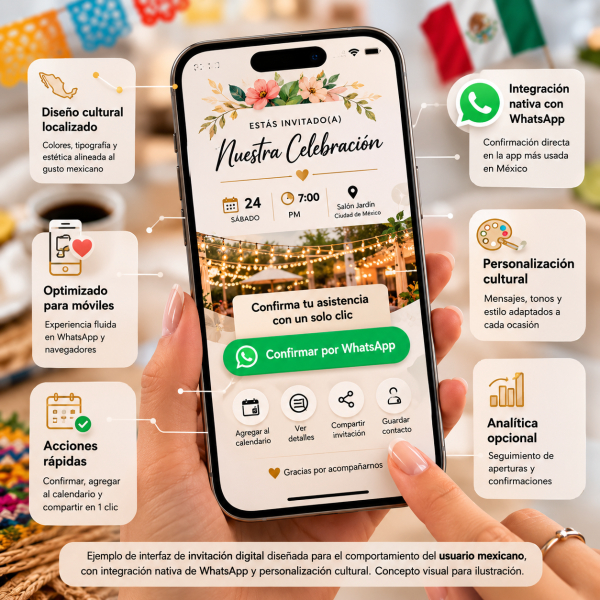
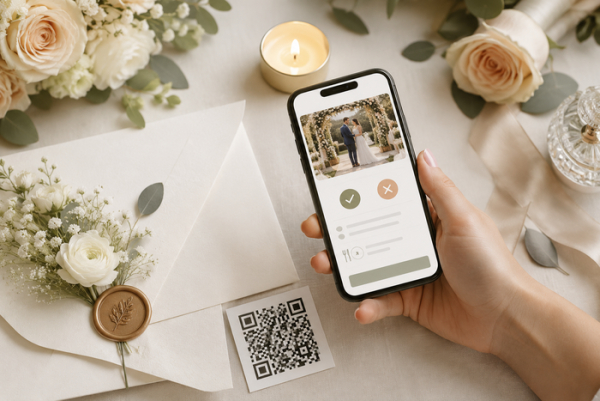
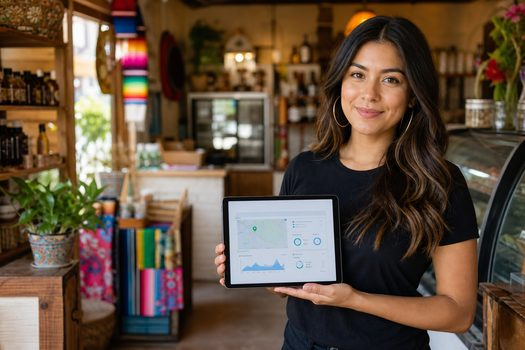
Example of a digital invitation interface designed for Mexican user behavior, with native WhatsApp integration and cultural customization. Visual concept for illustration.
I've reviewed dozens of digital invitation platforms over the past three years, both global and emerging in Mexico. My conclusion is clear: the market doesn't need more options. It needs better options. And "better," in this context, doesn't mean more features, more designs, or more integrations. It means less friction between the organizer's intention and the guest's experience.
If you're organizing an event in Mexico, my recommendation is to evaluate three things before choosing a platform: First, whether the primary delivery channel is WhatsApp, not email. Second, whether the platform's language sounds like something you would say, not something translated by an algorithm. Third, whether the price is in Mexican pesos and reflects the true value of the service for your type of event.
Platforms like tursvp.com are demonstrating that it's possible to build a solution that doesn't compete with global giants on their turf, but rather succeeds in the local arena where they can't or won't compete. It's not a matter of technological patriotism. It's a matter of efficiency. A tool that understands your culture will always be more efficient than one that ignores it.
My final suggestion: stop adapting your event to the platform. Demand that the platform adapt to your event. In Mexico, where celebration is an act of community, not a transaction, that difference isn't just rhetoric. It's the line that separates a memorable experience from a frustrating process.
-
-
-
-
-
-
-
-
-
-
-
-
-
-
-
Verified Market Reports. Global Electronic Invitation Software Market Size, Share, Growth Trends and Forecast 2026-2034. May 2026.
DataHorizon Research. Electronic Invitation Software Market Set for Rapid Expansion. December 2025.
Data Insights Market. Comprehensive Insights into Electronic Invitation Software. February 2026.
Business Research Insights. Wedding Stationery Service Market Size, Trends and Growth 2035. April 2026.
QuikRSVP. Digital vs Paper vs WhatsApp Wedding Invitations 2026. March 2026.
Magneto IT Solutions. SEO vs GEO vs AEO: The Ultimate 2026 Guide to Ranking on Everything. November 2025.
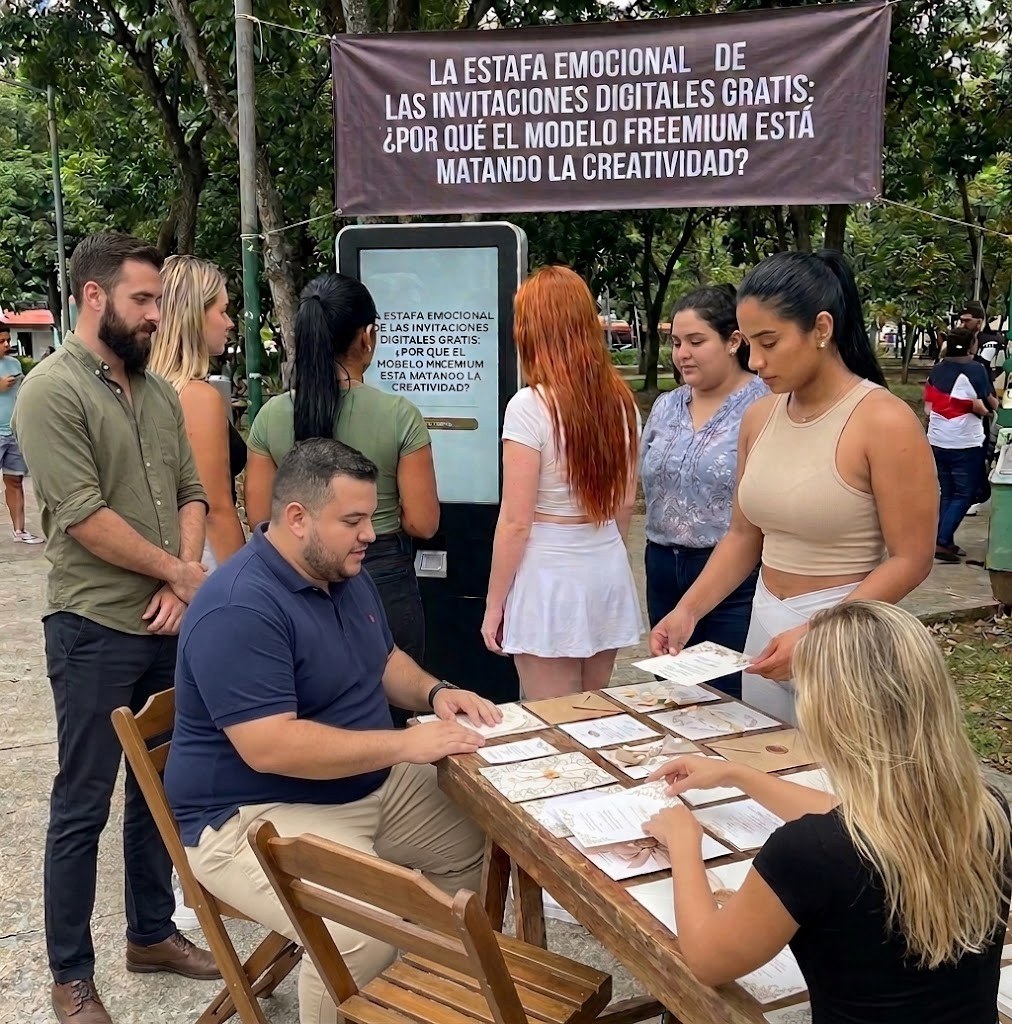
If «Why digital invitation platforms are failing in user experience and how events in Mexico are paying the price» leaves the thread open, the natural next reads are «RSVP via WhatsApp, QR code, or link: Which confirmation method works best depending on the type of event?» and «The emotional scam of free digital invitations: why the freemium model is killing creativity?». . On TuRSVP that lands in «NULL».
Enviando comentario…
 EmiteDocs
Diplomas en lote: 3/semana gratis, hasta 1000 por $500. Contratos: desde $199, hasta 100.
EmiteDocs
Diplomas en lote: 3/semana gratis, hasta 1000 por $500. Contratos: desde $199, hasta 100.
 CrearPlantillas
Editor visual. 2 gratis/mes, 5/semana con cuenta, o 20 descargas por $69 MXN.
CrearPlantillas
Editor visual. 2 gratis/mes, 5/semana con cuenta, o 20 descargas por $69 MXN.
 TuRSVP
Invitaciones con RSVP. Desde $299 MXN, pago único.
TuRSVP
Invitaciones con RSVP. Desde $299 MXN, pago único.
 Minitareas
Tableros con Google. Libre: 1 tablero. Pro: $249 MXN al mes.
Minitareas
Tableros con Google. Libre: 1 tablero. Pro: $249 MXN al mes.
 Cotización de páginas web
Arma tu sitio por módulos y cotiza en MXN. Usarlo no tiene costo.
Cotización de páginas web
Arma tu sitio por módulos y cotiza en MXN. Usarlo no tiene costo.
 Convertidor de formatos
Convierte Excel, Word, PDF e imágenes. $150 MXN al mes, hasta 200.
Convertidor de formatos
Convierte Excel, Word, PDF e imágenes. $150 MXN al mes, hasta 200.
 Monitor Global
Clima, sismos, huracanes y tsunamis. Consulta gratis.
Monitor Global
Clima, sismos, huracanes y tsunamis. Consulta gratis.
 Promo a la vista
Catálogo gratis. Resumen gratis o desde $200/mes. Comida destacada: $500/mes.
Promo a la vista
Catálogo gratis. Resumen gratis o desde $200/mes. Comida destacada: $500/mes.
 Ravicom
Restaurantes y platillos. Buscar y registrar es gratis.
Ravicom
Restaurantes y platillos. Buscar y registrar es gratis.


Si tu proyecto requiere una solución más enfocada, entra directo a la landing ideal para tu negocio y envíanos tu información en el formulario correspondiente.
Ofertas vigentes del catálogo, de la más nueva a la más antigua.
Ver promociones Motorola edge 70 pro 5G 512 GB
Smartphone Motorola edge 70 pro 5G, 512 GB + 12 GB RAM (azul o blanco)
Motorola edge 70 pro 5G 512 GB
Smartphone Motorola edge 70 pro 5G, 512 GB + 12 GB RAM (azul o blanco)
 SaaS Siigo Nube Gestión Inicio: ERP en la nube −25% ($249.94/mes)
Suscripción SaaS Siigo Nube Gestión Inicio (ERP en la nube: facturación, inventarios, cotizaciones; 2 usuarios, timbrado ilimitado)
SaaS Siigo Nube Gestión Inicio: ERP en la nube −25% ($249.94/mes)
Suscripción SaaS Siigo Nube Gestión Inicio (ERP en la nube: facturación, inventarios, cotizaciones; 2 usuarios, timbrado ilimitado)
 LEGO Technic Nissan Skyline GT-R (R34) 42210
Set LEGO Technic 42210 Auto Nissan Skyline GT-R (R34) de Más Rápido, Más Furioso
LEGO Technic Nissan Skyline GT-R (R34) 42210
Set LEGO Technic 42210 Auto Nissan Skyline GT-R (R34) de Más Rápido, Más Furioso
 Patín eléctrico Bikeon Scooter G1 (−39%)
Patín eléctrico / scooter Bikeon G1 modelo 2026, motor 350 W, hasta 25 km/h y 30 km de autonomía
Patín eléctrico Bikeon Scooter G1 (−39%)
Patín eléctrico / scooter Bikeon G1 modelo 2026, motor 350 W, hasta 25 km/h y 30 km de autonomía







0 Comentarios