







Tu próximo celular te va a salir más caro: Samsung y Google ya subieron precios (y la culpa es de un chip que escasea)
If you were thinking about getting a new phone, you might want to sit down before checking the price tag. In just five days, from October 1 to October 5, 2026, Samsung and Google raised prices on several of their phones in the United States, and it's not only the luxury models: the cheap ones went up too. The reason isn't a marketing whim but a tiny component that's now scarce worldwide: memory.
Let's break it down, with the numbers explained in plain English.

What went up (and by how much)
October 1: the Galaxy S26 family. Samsung added $100 to most Galaxy S26, S26+ and S26 Ultra models in the US, according to Investing.com and Europa Press. The base S26 now costs $999.99, the S26+ starts at $1,199.99 and the S26 Ultra at $1,399.99. The biggest Ultra, with 1 TB of space (enough for hundreds of thousands of photos), went up twice as much: $200, to $1,999.99. Amazon was among the first US stores to show the new prices.
The same happened in South Korea: Seoul Economic Daily reports the S26 line has sold for about 150,000 won (roughly $105) more since October 1.
October 2: the everyday Galaxy phones. A day later, with no announcement, Samsung also raised its mid-range and budget phones in the US by $20 to $70, as spotted by 9to5Google and PhoneArena:
- Galaxy A57 (128 GB): from $549 to $599.
- Galaxy A37 (128 GB): from $449 to $489.
- Galaxy A27: from $349 to $379.
- Galaxy A17: from $249 to $269.
The A17 stings the most: it launched in January at $199, and this is already its second increase. Put simply, the cheapest phone on that list now costs more than a third more than it did nine months ago.
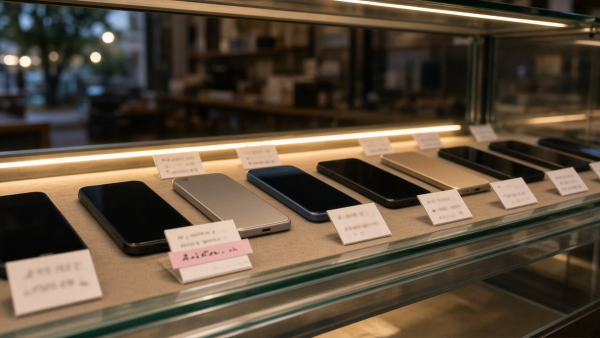
October 5: Google joins in. The Pixel 10A, Google's "affordable" model, went from $499 to $599, according to The Verge. And they're not alone: Apple had already raised older models such as the iPhone 16 and iPhone 17 by $100 last month, when it launched the iPhone 18 Pro.
What was spared? Samsung left the Galaxy S26 FE (launched in August at $700) and its newest foldables, the Z Fold 8, Z Fold 8 Ultra and Z Flip 8, untouched.
Why is everything going up at once?
Memory. Every phone has memory chips inside: "RAM," which lets you keep several apps open without the phone freezing, and storage, where your photos and videos live. Those same chips are urgently needed by huge data centers (buildings full of computers that run internet services, including artificial intelligence), and memory makers are serving those giant customers first.
The result: according to DRAMeXchange, cited by Seoul Economic Daily, the average price of memory went from $13 in March to $26 at the end of September. In other words, it doubled in six months. Research firm Counterpoint estimates that memory now accounts for $43 of every $100 it costs to build a high-end phone, up from $27 in March. When a single part is close to half the cost, the increase ends up on the store shelf.

And it doesn't look like a short-term thing. Counterpoint estimates that phones already on sale got about 15% more expensive in 2026 (about $15 more for every $100), and that new models are arriving roughly 25% pricier than last year's. Its co-founder, Neil Shah, told TaiwanPlus that global phone sales could fall 14% this year, and that many budget buyers will have to choose between paying more or going second-hand.
What about Mexico?
Here's the key part: as of today there is no confirmed price increase in Mexico. The prices above are for the US and Korea. For reference, in February the Galaxy S26 arrived in Mexico from 22,499 pesos and the S26 Ultra from 32,999 pesos, according to Xataka México.
Still, no announcement doesn't mean it won't happen: when a part gets more expensive worldwide, sooner or later every market feels it. So it pays to decide calmly, but informed.
If you plan to buy a phone soon:
- If you really need it, waiting "for it to drop" may not work this time; the trend is upward.
- Compare today's price with the launch price before trusting a "huge discount" during sale season.
- Consider last year's model or the smaller-storage version: the price jump on big versions is double.
- Look at refurbished phones with a warranty from a legitimate store, not a stranger on social media.
If you run a business that sells phones or accessories, this week is a good time to review your inventory and prices. When replacement costs rise, selling today at the old price can wipe out your margin when you restock. And if you sell online, what helps most is being able to update prices quickly and clearly explain to customers why they changed.
At Presticorp we help you build and improve your online store so that adjusting prices, showing stock and selling online doesn't mean redoing everything every time the market moves.
Sources:
- Investing.com Mexico — Samsung raises Galaxy S26 price by $100 due to chip shortage (Oct 1, 2026)
- Europa Press — Samsung raises Galaxy S26, S26+ and S26 Ultra prices in the US (Oct 1, 2026)
- Seoul Economic Daily — Samsung raises Galaxy S26 prices by 150,000 won on memory (Oct 1, 2026)
- 9to5Google — Samsung just raised the price on several more Galaxy phones in the US (Oct 2, 2026)
- The Verge — The Pixel 10A now costs $100 more (Oct 5, 2026)
- Counterpoint Research — Global existing smartphone prices climb about 15% in 2026 (Sep 3, 2026)
- TaiwanPlus — Analysis: "Chipflation" reshaping the smartphone market
- Xataka México — Galaxy S26: price in Mexico (February 2026)
Deja un comentario
Enviando comentario…
Herramientas
 EmiteDocs
Diplomas en lote: 3/semana gratis, hasta 1000 por $500. Contratos: desde $199, hasta 100.
EmiteDocs
Diplomas en lote: 3/semana gratis, hasta 1000 por $500. Contratos: desde $199, hasta 100.
 CrearPlantillas
Editor visual. 2 gratis/mes, 5/semana con cuenta, o 20 descargas por $69 MXN.
CrearPlantillas
Editor visual. 2 gratis/mes, 5/semana con cuenta, o 20 descargas por $69 MXN.
 TuRSVP
Invitaciones con RSVP. Desde $299 MXN, pago único.
TuRSVP
Invitaciones con RSVP. Desde $299 MXN, pago único.
 Minitareas
Tableros con Google. Libre: 1 tablero. Pro: $249 MXN al mes.
Minitareas
Tableros con Google. Libre: 1 tablero. Pro: $249 MXN al mes.
 Cotización de páginas web
Arma tu sitio por módulos y cotiza en MXN. Usarlo no tiene costo.
Cotización de páginas web
Arma tu sitio por módulos y cotiza en MXN. Usarlo no tiene costo.
 Convertidor de formatos
Convierte Excel, Word, PDF e imágenes. $150 MXN al mes, hasta 200.
Convertidor de formatos
Convierte Excel, Word, PDF e imágenes. $150 MXN al mes, hasta 200.
 Monitor Global
Clima, sismos, huracanes y tsunamis. Consulta gratis.
Monitor Global
Clima, sismos, huracanes y tsunamis. Consulta gratis.
 Promo a la vista
Catálogo gratis. Resumen gratis o desde $200/mes. Comida destacada: $500/mes.
Promo a la vista
Catálogo gratis. Resumen gratis o desde $200/mes. Comida destacada: $500/mes.
 Ravicom
Restaurantes y platillos. Buscar y registrar es gratis.
Ravicom
Restaurantes y platillos. Buscar y registrar es gratis.
Articulos recomendados


30-09-2026 5:48:39
Landing pages especializadas
¿Proyecto totalmente personalizado? Contáctanos.
Si tu proyecto requiere una solución más enfocada, entra directo a la landing ideal para tu negocio y envíanos tu información en el formulario correspondiente.
Startups
MVP, validación de idea, producto digital y escalabilidad.
Pymes
Marketing digital, captación de clientes y crecimiento comercial.
E-commerce
Tiendas en línea, catálogo, checkout y ventas automatizadas.
Soluciones empresariales
Sitios corporativos, automatización y soluciones digitales a medida.
Promo a la vista
Promociones más recientes
Ofertas vigentes del catálogo, de la más nueva a la más antigua.
Ver promociones Audífonos Sony WH-1000XM6 con noise cancelling (−48%)
Audífonos inalámbricos Sony WH-1000XM6 (serie 1000X) con noise cancelling
Audífonos Sony WH-1000XM6 con noise cancelling (−48%)
Audífonos inalámbricos Sony WH-1000XM6 (serie 1000X) con noise cancelling
 Patín eléctrico Honey Whale S2 V2 plegable, 25 km/h y hasta 20 km de autonomía a $4,899 (−46%, antes $8,999)
Scooter / patín eléctrico plegable Honey Whale S2 V2 negro: motor 350-500W, 25 km/h, autonomía 18-20 km, llantas neumáticas 8.5", frenos de disco y electrónico
Patín eléctrico Honey Whale S2 V2 plegable, 25 km/h y hasta 20 km de autonomía a $4,899 (−46%, antes $8,999)
Scooter / patín eléctrico plegable Honey Whale S2 V2 negro: motor 350-500W, 25 km/h, autonomía 18-20 km, llantas neumáticas 8.5", frenos de disco y electrónico
 Bicicleta eléctrica plegable BikeOn Roma 800W, 40 km/h y 50 km de autonomía a $15,900 (−35%, antes $24,570)
Bicicleta eléctrica plegable tipo fatbike modelo Roma: motor 800W, hasta 40 km/h, autonomía de hasta 50 km, batería de litio 48V 10Ah
Bicicleta eléctrica plegable BikeOn Roma 800W, 40 km/h y 50 km de autonomía a $15,900 (−35%, antes $24,570)
Bicicleta eléctrica plegable tipo fatbike modelo Roma: motor 800W, hasta 40 km/h, autonomía de hasta 50 km, batería de litio 48V 10Ah
 Lavadora Whirlpool 22 kg carga superior Xpert System 8MWTW2231WJB (−38%)
Lavadora automática Whirlpool de carga superior 22 kg Xpert System con agitador Triple Action, color blanco, modelo 8MWTW2231WJB
Lavadora Whirlpool 22 kg carga superior Xpert System 8MWTW2231WJB (−38%)
Lavadora automática Whirlpool de carga superior 22 kg Xpert System con agitador Triple Action, color blanco, modelo 8MWTW2231WJB











0 Comentarios