

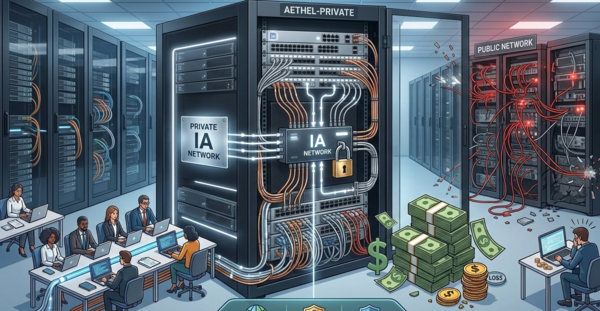





This pattern is not accidental; it is a deliberate monetization strategy that jeopardizes the sustainability of companies that build their operations on these platforms.
The OpenAI case perfectly illustrates this dynamic. Between November 2023 and December 2024, the company went from offering a single $20 monthly subscription to segmenting its offering into multiple tiers: Plus at $20, Pro at $200, and Enterprise at $60 per seat. This 10x increase in the top tier is not an anomaly; it's the norm in a market where AI providers seek profitability at any cost.
According to data from Zylo, prices for enterprise AI tools are rising in 2026, not falling as predicted by Sam Altman, with increasingly granular billing models based on tokens, tasks, or conversations.
Microsoft has followed a similar strategy. In January 2025, the company increased Microsoft 365 prices by between 16% and 33%, justifying the increase by citing the mandatory integration of AI capabilities. Business Basic plans rose from $6 to $7, Business Standard from $12.50 to $14, and frontline worker plans saw increases of up to 33%. This is not a temporary price update; it marks the end of subsidized AI and the beginning of an era where enterprise software behaves more like a utility with unavoidable and recurring infrastructure costs.
Cursor's launch of Composer 2 Fast , with claims of performance "similar to Claude Opus 4.6," reflects a worrying trend in the AI ecosystem: the accelerated commoditization of advanced capabilities without real clarity in verifiable benchmarks . While players like Anthropic have built their reputation on models like Claude, new proposals are emerging with aggressive claims that, in many cases, prioritize speed and cost over consistency, security, and governance.
For companies, this introduces a strategic risk: adopting solutions based on performance promises without assessing cost volatility, technological dependence, and lack of transparency in training and fine-tuning .
In a context where inference prices can fluctuate drastically and models evolve every few months, the decision should not focus solely on "how powerful the model is today," but on how sustainable, auditable, and controllable its operation will be tomorrow .
| 📅 Date | 🤖 Version / Product | 💰 Monthly price | 🔄 Key change | 🎯 Impact on the user |
|---|---|---|---|---|
| Nov 2023 | ChatGPT Plus (GPT-4) | $20 | Beginning of the freemium model | Limited access to GPT-4 |
| May 2024 | GPT-4o multimodal | $20 | More capabilities without an upfront increase | Gradual migration to the new model |
| Dec 2024 | ChatGPT Pro | $200 ( 10x ) | Segmentation of intensive users | Pressure to upgrade or limitations |
| Jan 2025 | Microsoft 365 Copilot | +$3 per user | Mandatory integration into Office | Increased operating costs |
| March 2025 | OpenAI (valued at $300B) | New enterprise tiers | Investor pressure for profitability | Expectation of future increases |
| Aug 2025 | ChatGPT Enterprise | $60 per seat | Advanced features restricted to high tiers | Increasing structural dependence |
Source: OpenAI announcements 2023-2025, Microsoft pricing updates, Zylo 2026.
-(1)-0321190337.png)
The acquisition and monetization cycle on public AI platforms begins with free versions that establish habits, progresses to paid subscriptions, and culminates in expensive enterprise tiers that block essential functionalities in basic plans, generating structural dependency.
The problem with this price volatility goes beyond simply increased costs. For companies, especially those with business models that rely on credit, bonuses, or deferred payments, technological unpredictability represents an existential threat to their marketing and customer loyalty operations.
When a company sells products on credit with 3, 6, or 12-month terms, its revenues are out of sync with its expenses. Cash flow becomes critical, and every dollar spent on technology is a dollar not invested in customer acquisition or retention.
If the cost of AI tools unexpectedly increases by 50%, as happened with the transition from ChatGPT Plus to Pro, the marketing budget must be cut immediately. Loyalty campaigns are frozen, retention efforts are paused, and the company is exposed to customer churn at the exact moment it most needs to retain them.
The situation is exacerbated by the nature of the pay-as-you-go model. Unlike a traditional software subscription where you pay for access, many AI tools charge for actual consumption: tokens processed, minutes of use, or number of queries. This means that a successful marketing campaign generating a high volume of interactions can be more expensive than a failed one . Commercial success is financially penalized, creating a perverse paradox that discourages scalability.
For companies like Windsurf or similar businesses that operate sales models with bonuses or credits, this scenario is particularly damaging. Their margins are already tight, typically between 8% and 15% of net profit. An unexpected increase of $20 to $60 per month in AI tools, multiplied by several users on the team, represents the difference between running a loyalty campaign or canceling it. And when these campaigns are canceled, the hard-earned customers don't receive the necessary follow-up, aren't fully engaged, and ultimately leave the platform before generating the projected revenue.
Price volatility in AI isn't a bug; it's a feature of cloud providers' business model. If you're tired of your marketing budgets being impacted by decisions beyond your control, it's time to consider alternatives. Contact Presticorp for a free assessment of your current infrastructure and discover how to stabilize your operations with predictable-cost AI.
| ⚙️ Feature | ☁️ Public AI (SaaS) | 🏢 Private AI (On-Premise) |
|---|---|---|
| Cost structure | 🔴 Variable per use / user | 🟢 Fixed monthly fee / own infrastructure |
| Annual predictability | 🟠 Low: frequent increases (20–50%) | 🟢 High: stable contracts |
| Scalability | 🟡 Automatic but expensive | 🟢 Controlled as needed |
| Effective usage time | 🔴 Limited by budget | 🟢 Unlimited, without restrictions |
| Version control | 🔴 Forced, without user control | 🟢 Internal decision |
| Personalization | 🔴 None, generic model | 🟢 Total, trained with own data |
| Supplier dependence | 🔴 Total (vendor lock-in) | 🟢 Null, full ownership |
| Total cost (3 years) | 💰 $2,160 (medium scenario) | 💰 $1,260 (same scenario) |
| Impact on companies with loans | 🔴 High: unstable budgets, paused campaigns | 🟢 Low: stable planning |
Source: Presticorp comparative analysis, Gartner 2025, Zylo SaaS Management Index 2026.
💡 Strategic insight . The SaaS model offers speed and ease of adoption , but introduces risks in costs, control, and dependence .
Conversely, private AI transforms investment into a strategic asset , enabling control, financial stability, and sustainable competitive advantage .
-(1)-0321191139.png)
The evolution of costs in public AI shows steady increases throughout the year, while private AI maintains predictable costs. For a medium-sized company, the cumulative difference over a year can exceed 70%, money that could be allocated to customer loyalty programs.
Companies that sell using vouchers, discount coupons, or internal credit systems face an additional challenge: limited operating time. When you subscribe to a pay-as-you-go AI tool, you're buying processing capacity for a specific period. If your monthly budget runs out in week three, your marketing operations grind to a halt, even if you have customers waiting to be served or campaigns ready to launch.
This problem doesn't exist in cash sales models, where revenue is recognized immediately and cash flows are positive. But in models with vouchers or credit, the conversion cycle is extended. A customer can redeem a voucher today, but the company only receives the actual revenue months later. During that interval, it must maintain all support, loyalty, and retention functions, without any certainty that the customer will ultimately pay or remain active.
Pay-as-you-go AI isn't designed for this time asymmetry. If your ChatGPT Plus subscription runs out because you processed more conversations than anticipated, you can't tell the platform you expect to charge your customers in 90 days. The tool crashes, your team loses productivity, and your loyalty campaigns are interrupted precisely when customers most need the support to complete their first purchase or renewal.
Furthermore, these companies depend critically on customer loyalty. A customer acquired through a discount or voucher has an uncertain lifetime value.
If a customer isn't properly engaged, educated about the product, and retained through personalized communications, they simply won't return. AI is crucial for scaling these communications, but if its cost is volatile and unpredictable, the company can't commit to systematic retention programs. It ends up reactivating and deactivating campaigns based on the available budget, resulting in an inconsistent customer experience that reduces retention rates and invalidates the business model.
| 🔍 Vulnerability indicator | 🔴 High risk level | 🟢 Low risk level | 💡 Recommendation |
|---|---|---|---|
| Revenue model | Sales on credit, vouchers or installments | Cash sales or subscriptions | Migrate to private AI urgently |
| Conversion cycle | 3–6 months (lead → collection) | Immediate payment or ≤30 days | Plan cash flow with predictable costs |
| Operating margin | < 15% | > 25% | Protect margins with a fixed cost structure |
| Marketing budget | Fixed quarterly, rigid | Variable, adjustable monthly | Decouple from external variables |
| Current AI dependency | High: Operation depends on AI | Down: AI as support | Reduce dependence or internalize |
| Contracts with clients | Long, with penalties | Flexible, renegotiable | Include technological clauses |
| Seasonality | High, unpredictable | Stable, plannable | Controlled escalation |
| Cash reserve | < 3 months of operation | > 6 months of operation | Invest in own infrastructure |
Source: Presticorp evaluation framework, retail sector case studies 2024-2025.
-(1)-0321191753.png)
Companies that operate with bonds or credits face a structural dilemma: their deferred revenues cannot absorb unforeseen increases in technological costs, forcing the cancellation of loyalty campaigns essential to their business model.
Faced with this volatility, companies have an alternative that few consider due to the inertia of favoring mainstream solutions: private artificial intelligence, deployed on their own infrastructure or in virtual private clouds. This option eliminates dependence on third parties, guarantees predictable costs, and allows for the planning of long-term customer loyalty strategies without fear of disruptions due to price increases.
The economic model for private AI is radically different. Instead of paying for variable usage, the company makes an initial investment in infrastructure and then assumes fixed monthly operating costs. This structure allows for accurate annual budget planning, regardless of how many interactions the model processes or how many users utilize it. For a company with 500 active users, the break-even point between public and private AI typically occurs between 18 and 36 months. From then on, the private option generates substantial savings, but more importantly, it provides predictability.
Predictability is the most valuable asset for companies with credit or bond models.
Being able to say with certainty that the cost of technology will be the same for the next 12 months allows for the construction of coherent loyalty plans, the allocation of resources to retention campaigns knowing that they will not be interrupted, and the scaling of operations without fear that commercial success will translate into unsustainable technology costs.
Furthermore, private AI offers additional strategic advantages. The model can be trained on the company's historical data, learning industry-specific terminology, customer base characteristics, and behavioral patterns that indicate churn risk. This deep customization is not possible with generic public cloud models, which treat all users the same and cannot adapt to the specific needs of a particular business.
If your company sells on credit, vouchers, or installments, and currently relies on public AI tools like ChatGPT, Claude, or similar services, you're exposing your customer loyalty campaigns to unnecessary risk. Schedule a free audit with Presticorp to assess your level of technological dependence and discover cost-predictable alternatives that protect your marketing operations.
After analyzing dozens of cases of companies with deferred payment models, I have identified a critical pattern that their managers often underestimate: in these businesses, continuous operating time is more valuable than any short-term cost savings.
When you purchase AI on a pay-as-you-go basis, you're buying limited time. If your budget runs out, that time runs out. And in a model where your customers take 90 or 180 days to pay, every day without the ability to retain customers is a day those customers might leave before generating revenue. The opportunity cost of a technological disruption far outweighs any price difference between public and private AI.
My specific recommendation for these businesses: never, under any circumstances, rely on pay-per-use tools for critical customer loyalty processes. If you can't afford a full year of service today, regardless of how much you use the tool, it's not the right tool for your business model. Operational stability should take precedence over the convenience of popular solutions.
A particularly insidious tactic used by AI vendors is the cycle of free versions that become obsolete. They release a free version with attractive capabilities, users adopt it en masse, and then they release an "improved" version that renders the previous version limited or obsolete. Non-paying users are then forced to migrate to paid versions to retain the functionality they previously had for free.
This pattern repeats itself constantly. GPT-4 was initially a paid exclusive, then limited free versions were released, but advanced reasoning capabilities remained locked behind the $200 Pro subscription. Users who developed workflows dependent on a certain level of response quality were forced to pay or downgrade their operations.
For businesses, this is especially problematic because they can't simply "revert" to manual methods. Once you integrate AI into your customer service, content creation, or data analysis processes, your customers and your team expect that level of service.
Reducing quality or speed because of an inability to afford the new tier is perceived as a deterioration of the brand, not as a cost adjustment.
The only defense against this dynamic is owning the technology. When your company operates its own proprietary AI, no one can downgrade your version, block your features, or unilaterally raise your prices. You have control over the technology roadmap, and upgrade decisions are based on your business strategy, not pressure from third-party investors.
How much money have you lost this year due to canceled or interrupted loyalty campaigns caused by price increases in AI tools? Schedule an appointment with Presticorp and receive a diagnosis of your critical workflows, along with a roadmap to stabilize your technology costs within 90 days.
The artificial intelligence market is undergoing a consolidation phase where dominant providers are maximizing value extraction from their captive users. For companies with traditional business models based on cash sales or simple subscriptions, this volatility is manageable. But for organizations that operate with credit, bonds, or deferred payments, it represents an existential threat.
The inability to plan for medium-term technology costs translates directly into an inability to implement consistent customer loyalty strategies. And without loyalty, these business models simply don't work. Customers acquired through discounts aren't retained solely because of the initial price; they're retained because of the ongoing experience they receive after the purchase. If that experience depends on tools whose cost can double without warning, the company is building on sand.
Migrating to private AI infrastructures is not a technical option; it's a strategic necessity for certain types of businesses. It's not about rejecting artificial intelligence, but about harnessing it, bringing it under corporate control where it serves business objectives rather than dictating them. Companies that understand this distinction and act accordingly will be the only ones capable of building lasting customer relationships in an increasingly volatile market.
-
-
-
-
-
-
-
-
-
-
: DigidAI. (2026, March 20). OpenAI 2024-2025: From Valuation Spike to Operating-System Economics. Retrieved from https://digidai.github.io/2026/03/20/openai-2024-2025-valuation-products-governance-compute-reset/
:Zylo. (2026, February 24). AI Pricing: What's the True AI Cost for Businesses in 2026? Retrieved from https://zylo.com/blog/ai-cost/
: CloudWars. (2026, March 20). OpenAI Faces 5 Big Questions, Starting Here: $140 Billion Enterprise Revenue by 2030? Retrieved from https://cloudwars.com/ai/openai-faces-5-big-questions-starting-here-140-billion-enterprise-revenue-by-2030/
: Reworked. (2025, December 18). The AI Bill Comes Due: Why Enterprise Software Pricing Will Never Be the Same. Retrieved from https://www.reworked.co/digital-workplace/the-ai-bill-comes-due-why-enterprise-software-pricing-will-never-be-the-same/
: Robinhood. (2026, January 1). Will OpenAI raise the cost of ChatGPT this year? Retrieved from https://robinhood.com/us/en/prediction-markets/technology/events/will-openai-raise-the-cost-of-chatgpt-in-2025-oct-31-2025/
: My AI Frontdesk. (2025, November 28). AI Chatbot Free vs Paid Services: Unpacking the Real Value and the Differences. Retrieved from https://www.myaifrontdesk.com/blogs/ai-chatbot-free-vs-paid-services-unpacking-the-real-value-and-differences
: SaaStr. (2025, August 21). OpenAI Crosses $12 Billion ARR: The 3-Year Sprint That Redefined What's Possible in Scaling Software. Retrieved from https://www.saastr.com/openai-crosses-12-billion-arr-the-3-year-sprint-that-redefined-whats-possible-in-scaling-software/
Reddit, March 2026.
If «Regarding AI pricing: Why can't companies with bonds and loans rely on AI for payments?» leaves the thread open, the natural next reads are «NULL» and «NULL». no atar el envío de 500 invitaciones a una API que sube 50%. On TuRSVP that lands in «NULL».
Enviando comentario…
 EmiteDocs
Constancias, diplomas, oficios y contratos en lote.
EmiteDocs
Constancias, diplomas, oficios y contratos en lote.
 CrearPlantillas
Editor visual de anuncios, plantillas y collage.
CrearPlantillas
Editor visual de anuncios, plantillas y collage.
 TuRSVP
Invitaciones digitales con RSVP para eventos.
TuRSVP
Invitaciones digitales con RSVP para eventos.
 Minitareas
Tableros personales para organizar el trabajo.
Minitareas
Tableros personales para organizar el trabajo.
 Cotización de páginas web
Arma tu sitio por módulos y cotiza en MXN.
Cotización de páginas web
Arma tu sitio por módulos y cotiza en MXN.
 Convertidor de formatos
Convierte Excel, Word, PDF, imágenes y más, gratis y sin registro.
Convertidor de formatos
Convierte Excel, Word, PDF, imágenes y más, gratis y sin registro.
 Monitor Global
Clima, sismos, huracanes y alertas en un mapa en vivo.
Monitor Global
Clima, sismos, huracanes y alertas en un mapa en vivo.
 Promo a la vista
Catálogo de ofertas del día y resumen por correo.
Promo a la vista
Catálogo de ofertas del día y resumen por correo.
 Ravicom
Restaurantes y platillos en tu ciudad, con ficha y mapa.
Ravicom
Restaurantes y platillos en tu ciudad, con ficha y mapa.


Si tu proyecto requiere una solución más enfocada, entra directo a la landing ideal para tu negocio y envíanos tu información en el formulario correspondiente.











0 Comentarios