






Microsoft challenges Nvidia with its Maia 300 chip, Amazon surpasses one million robots, and the UK regains access to US AI.
The week begins with three developments that speak volumes about AI in 2026: Microsoft wants to manufacture the brains of its own data centers, Amazon demonstrates that AI is already working with arms and wheels inside its warehouses, and the security of the most powerful models has once again become a diplomatic issue between Washington and London. This is a summary of the top tech stories for Monday, October 12, 2026.
Maia 300: the chip with which Microsoft wants to depend less on Nvidia
Microsoft unveiled Maia 300 on Monday, the third generation of its proprietary AI accelerator. According to the company, it will be the "primary inference system" for its products and services: Copilot, GitHub Copilot, Teams, Microsoft Foundry, and its own models. Production deployments will begin in 2027, and the goal is to scale the Azure Maia family to multi-gigawatt installations.
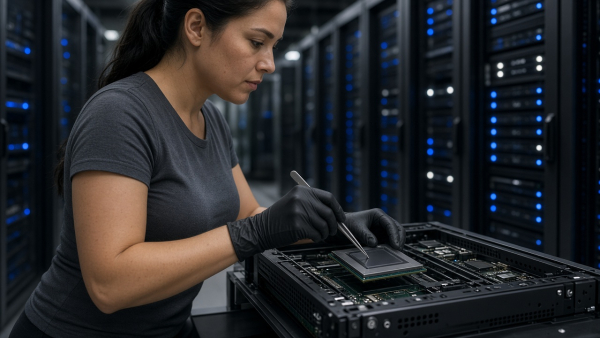
The figures highlighted by Scott Guthrie, Microsoft's executive vice president of cloud computing, are twofold: 40% more tokens per megawatt compared to the best GPU-based systems, and up to seven times more performance per rack than the Maia 200, the chip announced just in January and already in production. In other words: more AI responses with the same amount of electricity, precisely when energy has become the industry's biggest bottleneck.
Chiplets, HBM4 and racks of 96 accelerators
Maia 300 abandons the monolithic design and separates compute, memory controller, and input/output into chiplets. The compute cores are manufactured using TSMC's N2P process. Each chip integrates eight HBM4 memory stacks with 288 GB and 18 TB/s of bandwidth, consuming 950 W. A full rack houses 96 accelerators at 167 kW and a total of 27.6 TB of HBM memory.
The Verge summarizes the strategic takeaway: with this efficiency, Microsoft will be able to rely primarily on its own chips instead of those from Nvidia and AMD. Mustafa Suleyman, CEO of Microsoft AI, puts it bluntly: "At that scale, we need a platform that is ours and that we design alongside our models."
Sources: Microsoft official blog , The Verge , Notebookcheck (Oct 12, 2026).
Amazon already works with more than a million robots… and is opening its recipe
No organization in the world operates more robots than Amazon. The company has over a million robots in its warehouses and, at the same time, is the second-largest corporate employer on the planet, with more than 1.5 million workers. An extensive report by Ars Technica, published this Monday, examines how this hybrid workforce coexists and what comes next.
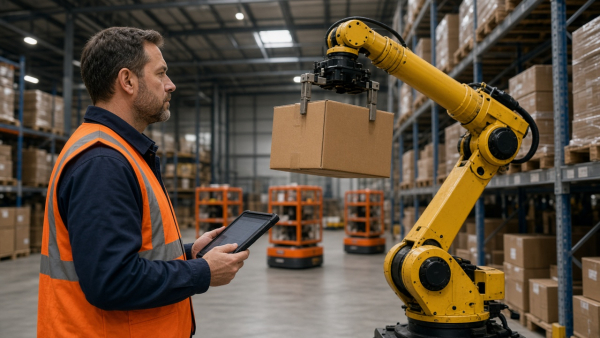
The majority of the fleet still consists of wheeled robots that deliver shelves to employees, coordinated by foundational models called DeepFleet to prevent bottlenecks. But the growth is in robotic arms : Sparrow handles hundreds of millions of different products thanks to foundational models, and Vulcan is the first with a sense of touch using force sensors. Amazon expects to expand Vulcan in 2027 and double its fleet of arms this year, which currently numbers around "a few thousand."
Physical AI becomes a product
That experience has turned into a business. AWS launched the Physical AI Toolchain on AWS , an open-source suite that combines SageMaker, EC2 instances with GPUs, IoT Greengrass, and Bedrock AgentCore with NVIDIA tools like Isaac Sim, Isaac Lab, GR00T, and Cosmos. It covers five stages: synthetic data, training, simulation, edge deployment, and continuous improvement. NEURA Robotics, RLWRLD, and Config are among the first companies to use it.
The labor debate remains open. A study published in ILR Review in 2025 found 40% fewer serious injuries in robotic warehouses, but 77% more minor injuries from repetitive movements, linked to the pace set by the machines. Amazon responds that its overall incident rate has improved by 43% since 2019 and that it has increased its number of robot maintenance technicians by more than 30%.
Sources: Ars Technica (Oct 12, 2026), Amazon , Interesting Engineering (Oct 11, 2026).
The White House backtracks: The UK will test US AI again
The UK's AI Security Institute (AISI) , the public body that assesses the risks of advanced AI models before their release, will regain early access to systems from OpenAI, Anthropic, and Google DeepMind. The White House reversed its September request to these companies to stop sharing their models with the institute.
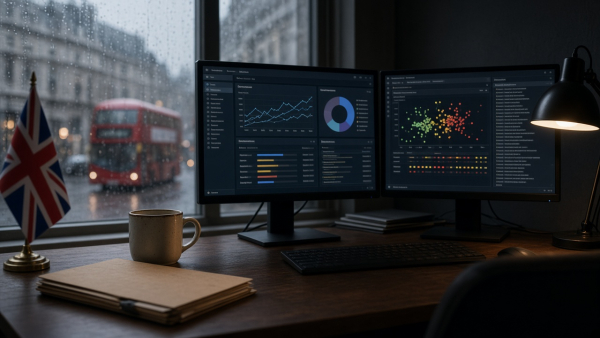
That order had concrete effects: Anthropic prevented British officials from reviewing its new Claude Mythos 5.1 model. The turn of events, first reported by The Daily Telegraph, comes after pressure from AI Minister Kanishka Narayan. “I am very confident that, as a result of the discussions we have had, we will be able to test the latest generation of models,” he told Bloomberg, although he admitted that when you depend on someone else’s technology, you have to be realistic about how permanent any agreement is.
Narayan used a speech at Imperial College London to announce cutting-edge AI cyber defense measures: two government pilots identified more than 1,000 potential vulnerabilities in public systems. His message to industry was direct: “If you can’t adequately manage the risks, don’t launch the system.” Prime Minister Andy Burnham wants the UK to act as an “honest mediator” in setting global standards, while Donald Trump insists he will resist attempts to limit “superintelligence.”
Sources: Quartz (12 Oct 2026), LBC (12 Oct 2026), The Telegraph (11 Oct 2026).
What does all this mean?
The AI race is no longer fought solely on the models themselves. It's fought on the silicon that runs them with less energy, on the machines that bring them from the screen into the physical world, and on who has the right to review them before they reach the public. Proprietary chips, learning robots, and evaluation agreements between governments are three sides of the same coin: who controls AI and under what rules?
Deja un comentario
Enviando comentario…
Herramientas
 EmiteDocs
Diplomas en lote: 3/semana gratis, hasta 1000 por $500. Contratos: desde $199, hasta 100.
EmiteDocs
Diplomas en lote: 3/semana gratis, hasta 1000 por $500. Contratos: desde $199, hasta 100.
 CrearPlantillas
Editor visual. 2 gratis/mes, 5/semana con cuenta, o 20 descargas por $69 MXN.
CrearPlantillas
Editor visual. 2 gratis/mes, 5/semana con cuenta, o 20 descargas por $69 MXN.
 TuRSVP
Invitaciones con RSVP. Desde $299 MXN, pago único.
TuRSVP
Invitaciones con RSVP. Desde $299 MXN, pago único.
 Minitareas
Tableros con Google. Libre: 1 tablero. Pro: $249 MXN al mes.
Minitareas
Tableros con Google. Libre: 1 tablero. Pro: $249 MXN al mes.
 Cotización de páginas web
Arma tu sitio por módulos y cotiza en MXN. Usarlo no tiene costo.
Cotización de páginas web
Arma tu sitio por módulos y cotiza en MXN. Usarlo no tiene costo.
 Convertidor de formatos
Convierte Excel, Word, PDF e imágenes. $150 MXN al mes, hasta 200.
Convertidor de formatos
Convierte Excel, Word, PDF e imágenes. $150 MXN al mes, hasta 200.
 Monitor Global
Clima, sismos, huracanes y tsunamis. Consulta gratis.
Monitor Global
Clima, sismos, huracanes y tsunamis. Consulta gratis.
 Promo a la vista
Catálogo gratis. Resumen gratis o desde $200/mes. Comida destacada: $500/mes.
Promo a la vista
Catálogo gratis. Resumen gratis o desde $200/mes. Comida destacada: $500/mes.
 Ravicom
Restaurantes y platillos. Buscar y registrar es gratis.
Ravicom
Restaurantes y platillos. Buscar y registrar es gratis.
Articulos recomendados

Landing pages especializadas
¿Proyecto totalmente personalizado? Contáctanos.
Si tu proyecto requiere una solución más enfocada, entra directo a la landing ideal para tu negocio y envíanos tu información en el formulario correspondiente.
Startups
MVP, validación de idea, producto digital y escalabilidad.
Pymes
Marketing digital, captación de clientes y crecimiento comercial.
E-commerce
Tiendas en línea, catálogo, checkout y ventas automatizadas.
Soluciones empresariales
Sitios corporativos, automatización y soluciones digitales a medida.
Promo a la vista
Promociones más recientes
Ofertas vigentes del catálogo, de la más nueva a la más antigua.
Ver promociones Jersey adidas Club América Tercero Authentic 25/26 hombre (−63%)
Jersey adidas Club América tercero Authentic temporada 25/26 para hombre, gris (modelo JN8616)
Jersey adidas Club América Tercero Authentic 25/26 hombre (−63%)
Jersey adidas Club América tercero Authentic temporada 25/26 para hombre, gris (modelo JN8616)
 Mini servidor / Mini PC MINISFORUM MS-01 Core i9-13900H con 2 puertos 10G SFP+ a $18,800 (−15%, antes $22,100)
Mini PC / mini estación de trabajo MINISFORUM MS-01 con Intel Core i9-13900H (14 núcleos, hasta 5.4 GHz), 2x 10G SFP+, 2x USB4, HDMI 4K
Mini servidor / Mini PC MINISFORUM MS-01 Core i9-13900H con 2 puertos 10G SFP+ a $18,800 (−15%, antes $22,100)
Mini PC / mini estación de trabajo MINISFORUM MS-01 con Intel Core i9-13900H (14 núcleos, hasta 5.4 GHz), 2x 10G SFP+, 2x USB4, HDMI 4K
 Bicicleta eléctrica de carga Freego Shotgun Prime F2 Pro $25,999 (−24%, antes $33,999)
Bicicleta eléctrica de carga Freego Shotgun Prime F2 Pro, llantas fat 20x4", suspensión total, Shimano 7 vel.
Bicicleta eléctrica de carga Freego Shotgun Prime F2 Pro $25,999 (−24%, antes $33,999)
Bicicleta eléctrica de carga Freego Shotgun Prime F2 Pro, llantas fat 20x4", suspensión total, Shimano 7 vel.
 Combo Sony: pantalla BRAVIA 2 II 55" 4K Google TV + teatro en casa 5.1 HT-S20R (−57%)
Combo Sony: Smart TV BRAVIA 2 II de 55 pulgadas 4K HDR con Google TV (K-55S20M2) + sistema de teatro en casa 5.1 canales con barra de sonido HT-S20R
Combo Sony: pantalla BRAVIA 2 II 55" 4K Google TV + teatro en casa 5.1 HT-S20R (−57%)
Combo Sony: Smart TV BRAVIA 2 II de 55 pulgadas 4K HDR con Google TV (K-55S20M2) + sistema de teatro en casa 5.1 canales con barra de sonido HT-S20R




0 Comentarios