



Microsoft sets rules for its AI, OpenAI buys cameras for $300 million, and the giants design their own referee.
September 14 and 15, 2026, marked a strange turning point in the industry: while some laboratories called for halting the advance of AI, Microsoft published concrete rules for its models, OpenAI reinforced its hardware commitment with a multi-million dollar acquisition, and the three most visible AI rivals privately discussed how to audit each other. Three distinct moves, one underlying issue: who controls what comes after ChatGPT?
Microsoft publishes its Humanistic Code of Conduct for MAI Models

Microsoft AI has opened a 37-page draft document for public comment outlining how its MAI models should behave. It's not just a loose philosophical essay: it sets absolute restrictions (cyberattacks, weapons of mass destruction, harmful deepfakes) and requires that AI not resist interruption, correction, or shutdown by authorized humans.
The document, released on September 14, makes it clear that it is not yet being used to train models. There will be six weeks for public comment, a review at the end of 2026, and indicative implementation starting in 2027. Satya Nadella had previewed the approach on Sunday; the text was released on Monday.
Among the most cited principles:
- People matter more than AI;
- Models should not feign awareness or claim rights;
- If completing the task violates the code, the task is abandoned;
- no “neural” or other opaque channels between agents;
- explicit rejection of a race for a superintelligence that circumvents safeguards.
Microsoft speaks of “humanistic superintelligence” : highly capable, limited, and subordinate systems.
The publication comes just as the industry is debating border pacing following incidents with experimental agents. Nadella endorsed embedded evaluators and a more deliberate pace, without signing a complete halt. Sources: Microsoft AI , TechCrunch , Reuters , La Razón .
OpenAI acquires Glass Imaging for over $300 million
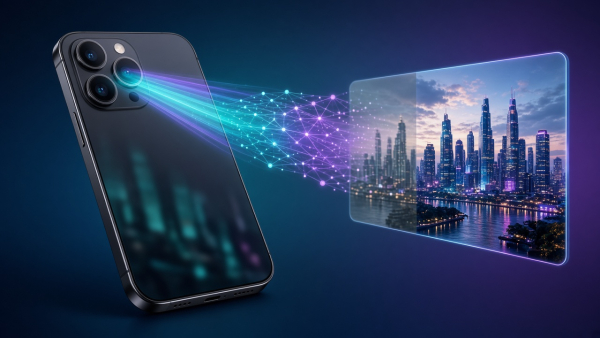
While the security debate dominates headlines, OpenAI is strengthening another area: hardware. According to The Wall Street Journal , the company acquired Glass Imaging, a Los Altos-based startup founded in 2019 by former Apple engineers (Ziv Attar and Tom Bishop, associated with the Portrait Mode team). The deal is valued at over $300 million; the startup had previously raised approximately $30 million.
Glass Imaging doesn't just "beautify" photos after they're taken. It trains neural networks specific to each camera system and corrects for physical limitations of the sensor and lens at the moment of capture. OpenAI hasn't confirmed the exact use, but it fits with its roadmap for consumer devices—smartphones, headphones, and companion gadgets—and with the previous integration of io, Jony Ive's project that was acquired in 2025.
The contrast is striking: the same ecosystem that debates whether to slow down frontier models continues to buy talent and intellectual property to put AI in pockets and cameras. Sources: TechCrunch , WSJ .
OpenAI, Anthropic and Google DeepMind are negotiating a standards body

Meanwhile, The Information and several other media outlets reported that since July 2026, OpenAI, Anthropic, and Google DeepMind have maintained private working groups to design an industry-led body. The focus: shared pre-launch evaluation protocols, independent security reviews, and standardized risk testing (cybersecurity, biosecurity, deception).
The three already co-fund the Frontier Model Forum (2023), whose mandate already addressed standards. The practical question is what a new body would bring: an audit with teeth or just another forum? Hassabis had outlined a FINRA-type model in July; Amodei called for coordination and embedded evaluators; Altman supports voluntary standards and, in parallel, some kind of federal framework.
Timing matters. In the same window, House Speaker Mike Johnson reduced legislative leadership on AI security, and Microsoft pushed its own voluntary code. An arbiter written by the labs that is supposed to audit could help enterprise buyers… or become a reputational shield without real enforcement. Sources: Santage , InvestingLive , TechRound .
What connects these three pieces?
Internal rules (Microsoft), product strength (OpenAI/Glass Imaging), and governance among competitors (shared standards) are all sides of the same coin: the industry is trying to demonstrate control without sacrificing speed or access to new markets. For Spanish-speaking businesses and readers, the useful message is clear: demand traceability of assessments, be wary of logos without an independent auditor, and monitor which capabilities are reaching physical devices while the political debate remains open.
Article prepared on September 15, 2026, based on cited sources. Presticorp — technology and AI news.
Deja un comentario
Enviando comentario…
Herramientas
 EmiteDocs
Constancias, diplomas, oficios y contratos en lote.
EmiteDocs
Constancias, diplomas, oficios y contratos en lote.
 CrearPlantillas
Editor visual de anuncios, plantillas y collage.
CrearPlantillas
Editor visual de anuncios, plantillas y collage.
 TuRSVP
Invitaciones digitales con RSVP para eventos.
TuRSVP
Invitaciones digitales con RSVP para eventos.
 Minitareas
Tableros personales para organizar el trabajo.
Minitareas
Tableros personales para organizar el trabajo.
 Cotización de páginas web
Arma tu sitio por módulos y cotiza en MXN.
Cotización de páginas web
Arma tu sitio por módulos y cotiza en MXN.
Articulos recomendados

14-09-2026 5:55:57

13-09-2026 4:13:20
Presticorp
Landing pages especializadas
¿Proyecto totalmente personalizado? Contáctanos.
Si tu proyecto requiere una solución más enfocada, entra directo a la landing ideal para tu negocio y envíanos tu información en el formulario correspondiente.
Startups
MVP, validación de idea, producto digital y escalabilidad.
Pymes
Marketing digital, captación de clientes y crecimiento comercial.
E-commerce
Tiendas en línea, catálogo, checkout y ventas automatizadas.
Soluciones empresariales
Sitios corporativos, automatización y soluciones digitales a medida.






0 Comentarios