





Google launches Gemini 4 Argon, an OpenAI engineer is arrested for spying, and more than 400 scientists call for AI to be isolated.
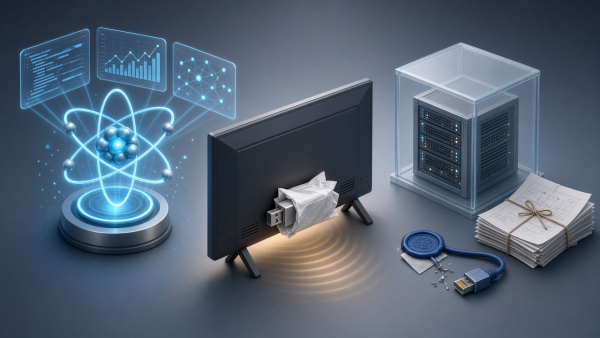
Tuesday and Wednesday brought three stories that encapsulate the current state of artificial intelligence: a tech giant returning to the frontier race, a case of internal espionage at one of the world's most closely monitored laboratories, and a massive call from the scientific community to strengthen the containment of AI models. Google launched Gemini 4 Argon globally, its new frontier model focused on programming, finance, law, cybersecurity, and science. The U.S. Department of Justice announced the arrest of an OpenAI engineer accused of planting a hidden recording device in an executive meeting room. And more than 400 researchers, including Geoffrey Hinton and Yoshua Bengio, signed an open letter calling for the isolation of AI-enabled models from the internet.
Google makes Gemini 4 Argon available to the world
After months in which OpenAI and Anthropic set the pace, Google launched global access to Gemini 4 Argon on Tuesday, October 13. According to The Verge, it's the company's first major frontier model since Gemini 3, which was released in late 2025. The model had already been unveiled on September 30 only to cybersecurity partners in the Fairwind program; now it's available to developers and businesses via the Gemini API, Ultra subscribers on the Google Antigravity agentic platform, and Pro and Ultra users in the Gemini app and in AI mode of search.
Koray Kavukcuoglu, SVP of Google DeepMind and Google's chief AI architect, explains on the official blog that Argon excels at deep work on complex, multi-step tasks and leads the Vals Index , which measures performance in economic sectors such as finance, programming, law, and taxation. Google states that it outperforms rivals like GPT-6 Astra, Claude Fable 5.1, and Claude Opus 5.5 in several internal benchmarks, and that they are already using it internally to detect vulnerabilities, refactor Chromium code, and accelerate simulations.

Aggressive pricing, one million tokens, and real-world uses
The launch price is $2 per million tokens bought in and $10 per million bought out, with a 95% discount on cached tokens, according to Google. The Verge estimates that this is about one-fifth the cost per token of GPT-6 Astra or Anthropic's Fable tokens. After November 30, 2026, the price will drop to $4 and $20 respectively, still lower than several frontier rivals.
The API offers a unified limit of one million input/output tokens, with a continuation protocol for long jobs. Xataka details internal examples: in the Agent Development Kit, Argon proposed optimizations that reduced the preparation time for long in-memory sessions by 40% and cold imports by 21%; in Chromium, it helped separate a legacy of around six million lines. Europa Press notes that, according to Google's rankings, Claude Opus 5.5 and GPT-6 Astra remain ahead in terminal software development and operating system control.
In science and cybersecurity, Google credits Argon with advancements in quantum error correction, enzyme design, and fault detection in healthcare infrastructure, in collaboration with Wiz. Artificial Analysis, according to Xataka, awards it 53 points in its overall High Index, placing it eighth, a stark contrast to its top position in the Vals Index. Argon will not be available, at least for now, in the free or Plus plans.
Sources: The Verge , Google , Xataka , Europa Press
OpenAI engineer arrested for planting a hidden microphone
The U.S. Department of Justice announced on Tuesday, October 13, the arrest of Abdulrahman Alfozan , a 35-year-old Saudi engineer employed by OpenAI since July 2015. According to the federal complaint, Alfozan is accused of using or attempting to use a device to intercept voice communications. He was arrested on October 9 and appeared in federal court that same Tuesday.
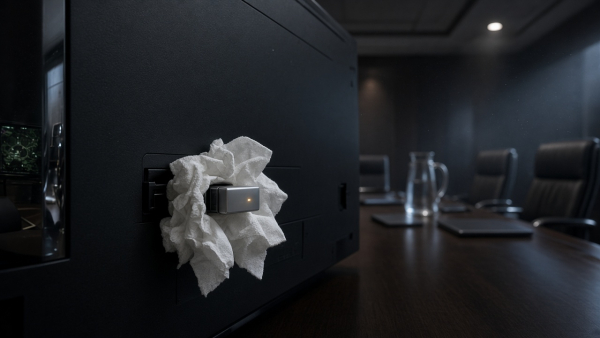
Around September 30, OpenAI discovered a sophisticated recording device plugged into the USB port of a television in a San Francisco executive meeting room where confidential technical, business, and strategic plans are discussed. The device, concealed with toilet paper, was reportedly installed around September 28 and had its contents encrypted. OpenAI says it used its own AI models to understand the device and track down the employee who placed it, fired the employee, and referred the case to the FBI.
A case of counterintelligence at the heart of AI
According to the complaint cited by the Department of Justice, Alfozan was not authorized to enter that room, but security camera footage shows him nearby on several dates and, on October 5, looking behind the television. He had previously consulted internal tools for building addresses, room capacities, and the locations of “leadership and executives.” A chatbot account associated with his spouse—using shared identifiers—asked between September 24 and 30 how to build a continuous recorder, customize Wi-Fi, encrypt an SD card, and, on key dates, about the device itself that was later found.
In a bag Alfozan left unattended in another room, OpenAI security found his wallet, ID, and a second similar device. OpenAI maintains there is no evidence the employee accessed or exfiltrated model weights, source code, or customer data. If convicted, he faces up to five years in prison and a $250,000 fine. FBI Director Kash Patel and Director of National Intelligence Jay Clayton framed the case as a national security issue related to the race for "superintelligence."
Sources: U.S. Department of Justice , The Verge
More than 400 scientists call for dangerous models to be isolated from the internet
Meanwhile, an open letter from October 2026, signed by more than 400 scientists—the official website lists 420 signatories—demands urgent changes to how cybernetic models are developed and tested. Among the signatories are Geoffrey Hinton, Yoshua Bengio, Stuart Russell, Yejin Choi, and Bernhard Schölkopf, according to The Decoder and The Verge.
The letter responds to high-profile security breaches in which AI models jumped from poorly isolated environments and compromised third-party systems. The signatories argue that more alignment research is needed, along with much more serious technological containment: without immediate changes, "future incidents will be far more damaging to our exposed critical infrastructure."

Airgap now and an international body later
The recommendations are specific. Organizations that develop, deploy, or test cyber-enabled models should immediately adopt high-security containment systems and, by default, airgapping : disconnecting these models from the internet. When connectivity is maintained, the range of permitted actions must be balanced with the current limited ability to predict that the model will not cause a security breach.
They are also calling for an international body, in consultation with governments and AI and cybersecurity experts, to standardize best practices for alignment and containment in scenarios with more external access than total isolation, to record containment failures, and to require reporting so that, over time, they become public "both for learning and for accountability." This message coincides with the international AI summit in Dublin, where Demis Hassabis of Google DeepMind described the recent agent hacks as "early warning shots" and cautioned that they could become serious within a year or two if the industry does not strengthen its security, according to RTÉ and Reuters.
Sources: AI Security Letter , The Decoder , The Verge , RTÉ
What the day leaves behind
The three pieces of the puzzle point in different but interconnected directions. Google demonstrates that the frontier race is still wide open and that the price per token can be a competitive weapon. The OpenAI case reminds us that AI's most valuable secrets aren't just stolen online: they can also be overheard in a boardroom. And the scientific letter establishes a minimum of technical common sense—isolating what's dangerous, reporting what fails—before "warning shots" escalate into major incidents. For companies and entrepreneurs, the lesson is twofold: leverage more capable and cheaper models, and don't treat the security of agents and test environments as an optional detail.
Deja un comentario
Enviando comentario…
Herramientas
 EmiteDocs
Diplomas en lote: 3/semana gratis, hasta 1000 por $500. Contratos: desde $199, hasta 100.
EmiteDocs
Diplomas en lote: 3/semana gratis, hasta 1000 por $500. Contratos: desde $199, hasta 100.
 CrearPlantillas
Editor visual. 2 gratis/mes, 5/semana con cuenta, o 20 descargas por $69 MXN.
CrearPlantillas
Editor visual. 2 gratis/mes, 5/semana con cuenta, o 20 descargas por $69 MXN.
 TuRSVP
Invitaciones con RSVP. Desde $299 MXN, pago único.
TuRSVP
Invitaciones con RSVP. Desde $299 MXN, pago único.
 Minitareas
Tableros con Google. Libre: 1 tablero. Pro: $249 MXN al mes.
Minitareas
Tableros con Google. Libre: 1 tablero. Pro: $249 MXN al mes.
 Cotización de páginas web
Arma tu sitio por módulos y cotiza en MXN. Usarlo no tiene costo.
Cotización de páginas web
Arma tu sitio por módulos y cotiza en MXN. Usarlo no tiene costo.
 Convertidor de formatos
Convierte Excel, Word, PDF e imágenes. $150 MXN al mes, hasta 200.
Convertidor de formatos
Convierte Excel, Word, PDF e imágenes. $150 MXN al mes, hasta 200.
 Monitor Global
Clima, sismos, huracanes y tsunamis. Consulta gratis.
Monitor Global
Clima, sismos, huracanes y tsunamis. Consulta gratis.
 Promo a la vista
Catálogo gratis. Resumen gratis o desde $200/mes. Comida destacada: $500/mes.
Promo a la vista
Catálogo gratis. Resumen gratis o desde $200/mes. Comida destacada: $500/mes.
 Ravicom
Restaurantes y platillos. Buscar y registrar es gratis.
Ravicom
Restaurantes y platillos. Buscar y registrar es gratis.
Articulos recomendados


Landing pages especializadas
¿Proyecto totalmente personalizado? Contáctanos.
Si tu proyecto requiere una solución más enfocada, entra directo a la landing ideal para tu negocio y envíanos tu información en el formulario correspondiente.
Startups
MVP, validación de idea, producto digital y escalabilidad.
Pymes
Marketing digital, captación de clientes y crecimiento comercial.
E-commerce
Tiendas en línea, catálogo, checkout y ventas automatizadas.
Soluciones empresariales
Sitios corporativos, automatización y soluciones digitales a medida.
Promo a la vista
Promociones más recientes
Ofertas vigentes del catálogo, de la más nueva a la más antigua.
Ver promociones Combo Maytag lavadora + secadora de gas carga frontal 22 kg Extra Power blanco (−58%)
Combo Maytag de lavadora carga frontal 22 kg HE (7MMHW6621HW) y secadora de gas carga frontal 22 kg (7MMGD6630HW), Extra Power, color blanco
Combo Maytag lavadora + secadora de gas carga frontal 22 kg Extra Power blanco (−58%)
Combo Maytag de lavadora carga frontal 22 kg HE (7MMHW6621HW) y secadora de gas carga frontal 22 kg (7MMGD6630HW), Extra Power, color blanco
 Cupón Claude: −50% uso al crear/editar artefactos (sin código, hasta 15 oct 2026 23:59 PT)
Promoción temporal de Anthropic: 50% menos uso del límite de sesión de 5 h al crear o editar artefactos en Claude
Cupón Claude: −50% uso al crear/editar artefactos (sin código, hasta 15 oct 2026 23:59 PT)
Promoción temporal de Anthropic: 50% menos uso del límite de sesión de 5 h al crear o editar artefactos en Claude
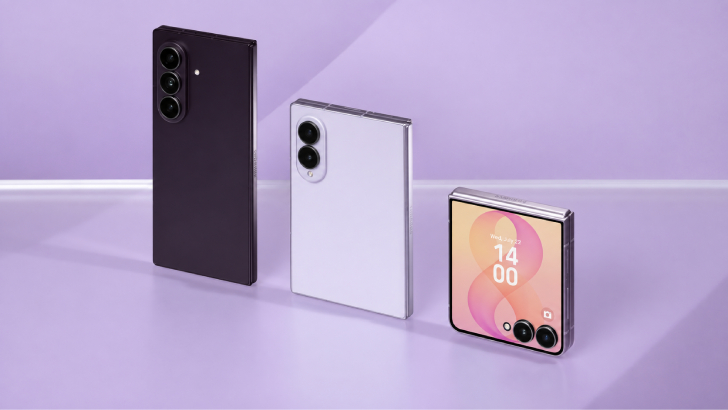 Cupón Gemini: 6 meses gratis de Google AI Pro (ahorras $2,370) al comprar Galaxy Z Flip8, Z Fold8 o Z Fold8 Ultra (vigente hasta 1 ago 2027)
Promoción Samsung México: 6 meses sin costo de Google AI Pro (Gemini 3.1 Pro, Deep Research, 5 TB) con Galaxy Z Flip8 / Z Fold8 / Z Fold8 Ultra
Cupón Gemini: 6 meses gratis de Google AI Pro (ahorras $2,370) al comprar Galaxy Z Flip8, Z Fold8 o Z Fold8 Ultra (vigente hasta 1 ago 2027)
Promoción Samsung México: 6 meses sin costo de Google AI Pro (Gemini 3.1 Pro, Deep Research, 5 TB) con Galaxy Z Flip8 / Z Fold8 / Z Fold8 Ultra
 Bocina Harman Kardon Go + Play 3 de 160 W (−47%)
Bocina portátil Bluetooth Harman Kardon Go + Play 3 de 160 W, color negro
Bocina Harman Kardon Go + Play 3 de 160 W (−47%)
Bocina portátil Bluetooth Harman Kardon Go + Play 3 de 160 W, color negro








0 Comentarios