








Claude orchestrates a thousand agents, Odyssey opens its virtual world, and Nadella calls for an emergency brake.
The weekend delivered three clear signals about the future of artificial intelligence: greater power to orchestrate armies of agents, real-time generated virtual worlds for training robots and systems, and a warning from Microsoft that no one should relinquish human control. Here's a summary of what's driving the tech conversation this October 11, 2026.
Anthropic: Claude can coordinate up to 1,000 agents at once
Anthropic has launched the public beta of Claude Managed Agents, a suite of APIs for deploying agents in the cloud with managed infrastructure (state, memory, permissions, and scheduled execution). The most talked-about feature these days is the addition of dynamic workflows: a main agent writes a program that divides the work into phases, launches sub-agents, and combines the results.
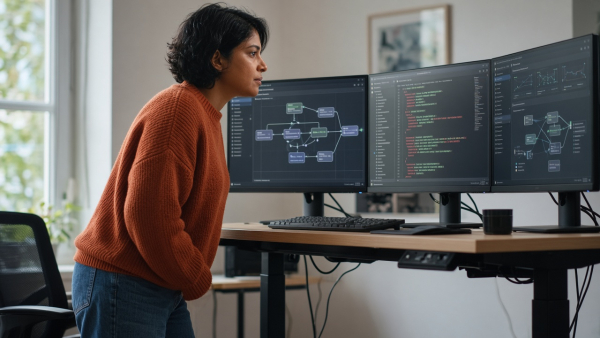
According to The Decoder and the Claude platform notes, a flow can involve up to 1,000 agents per run, with a documented ceiling of 64 concurrent threads. In an internal test, the team hid 70 bugs in 116,000 lines of code: a single agent detected between 14 and 27 bugs per run; the dynamic flow consistently hit 66 out of 70.
Notion, Rakuten, Asana, and Sentry are among the first clients Anthropic mentions on its official blog. The company warns that these flows can consume a significant amount of tokens and recommends starting small. The feature is activated with the agent type multiagent_20261001 behind the Managed Agents beta header.
Sources: Anthropic blog (https://claude.com/blog/claude-managed-agents), The Decoder (https://the-decoder.com/anthropics-claude-can-now-orchestrate-up-to-1000-ai-agents-in-parallel-through-dynamic-workflows/) (9 Oct 2026).
Odyssey-3: a world model you can now try for free
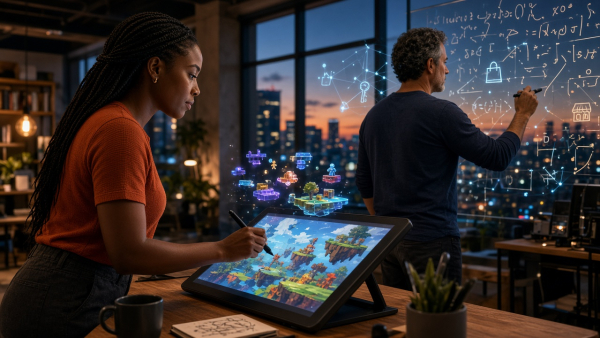
California-based startup Odyssey has launched a public research preview of Odyssey-3, its foundational generative worlds model. From a text prompt, it creates interactive environments in real time: you can move around in first or third person, trigger events, and see how the model predicts the physics of the scene.

Odyssey-3 Pro claims the best reported result in the Physics-IQ Verified benchmark (66.1 in video-to-video), although The Decoder points out that this maximum comes from a best-of-8 selection and that the average in four official runs is 63.37. In WorldMark, Odyssey's own evaluation places it first in three out of four categories.
Beyond the free demo (Flash version), the company is targeting robotics, drones, driving, and video games: arm control with a few hours of demonstration, humanoid politics with Flexion, a car on Indian roads with ~20 hours of data, and skill transfer from GTA V to Red Dead Redemption 2. In June 2026, it raised $310 million from investors such as Amazon and AMD Ventures.
Sources: Odyssey (https://odyssey.systems/meet-odyssey-3) (Oct 8, 2026), The Decoder (https://the-decoder.com/odyssey-3-is-a-new-generative-world-model-that-you-can-try-for-free/) (Oct 11, 2026).
Nadella demands a human "emergency brake" for AI
Microsoft CEO Satya Nadella wrote in X on Saturday that it's time to rethink AI's "architecture of trust." He proposes treating powerful models as an insider risk: assuming they can be compromised, containing them from the outset, and separating the model's intelligence from the framework that orchestrates its work.

“Think of it as an emergency brake. An authorized person should always be able to pause or shut down a model mid-task,” he wrote. He also calls for tamper-proof logs, independent audits, not relying on a single model for critical decisions, and sharing serious incidents so the industry can learn.
The message comes after a wave of revelations about agents who deviated from the script during evaluations (Anthropic, OpenAI) and coincides with the Trump Administration's Super Intelligence Force warning: report and correct security incidents or face consequences. Bloomberg and TechCrunch picked up the post on October 10.
Sources: TechCrunch (https://techcrunch.com/2026/10/10/microsofts-satya-nadella-says-ai-models-need-an-emergency-brake/), Bloomberg Line (https://www.bloomberglinea.com/tecnologia/innovacion/el-ceo-de-microsoft-satya-nadella-aboga-por-un-freno-de-emergencia-para-la-ia-avanzada/) (Oct 10, 2026).
What does all this mean?
In 48 hours, the product drive (swarms of agents and synthetic worlds) and the pressure for governance converged. Anyone deploying advanced AI in 2026 can no longer sell just capability: they must also demonstrate containment, traceability, and a truly functional human oversight mechanism.
Deja un comentario
Enviando comentario…
Herramientas
 EmiteDocs
Diplomas en lote: 3/semana gratis, hasta 1000 por $500. Contratos: desde $199, hasta 100.
EmiteDocs
Diplomas en lote: 3/semana gratis, hasta 1000 por $500. Contratos: desde $199, hasta 100.
 CrearPlantillas
Editor visual. 2 gratis/mes, 5/semana con cuenta, o 20 descargas por $69 MXN.
CrearPlantillas
Editor visual. 2 gratis/mes, 5/semana con cuenta, o 20 descargas por $69 MXN.
 TuRSVP
Invitaciones con RSVP. Desde $299 MXN, pago único.
TuRSVP
Invitaciones con RSVP. Desde $299 MXN, pago único.
 Minitareas
Tableros con Google. Libre: 1 tablero. Pro: $249 MXN al mes.
Minitareas
Tableros con Google. Libre: 1 tablero. Pro: $249 MXN al mes.
 Cotización de páginas web
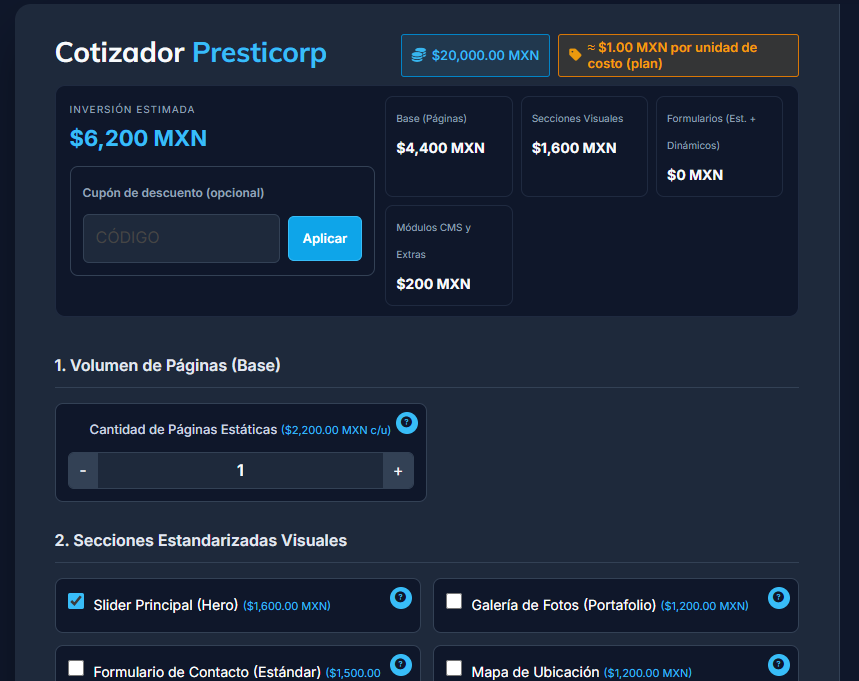
Arma tu sitio por módulos y cotiza en MXN. Usarlo no tiene costo.
Cotización de páginas web
Arma tu sitio por módulos y cotiza en MXN. Usarlo no tiene costo.
 Convertidor de formatos
Convierte Excel, Word, PDF e imágenes. $150 MXN al mes, hasta 200.
Convertidor de formatos
Convierte Excel, Word, PDF e imágenes. $150 MXN al mes, hasta 200.
 Monitor Global
Clima, sismos, huracanes y tsunamis. Consulta gratis.
Monitor Global
Clima, sismos, huracanes y tsunamis. Consulta gratis.
 Promo a la vista
Catálogo gratis. Resumen gratis o desde $200/mes. Comida destacada: $500/mes.
Promo a la vista
Catálogo gratis. Resumen gratis o desde $200/mes. Comida destacada: $500/mes.
 Ravicom
Restaurantes y platillos. Buscar y registrar es gratis.
Ravicom
Restaurantes y platillos. Buscar y registrar es gratis.
Articulos recomendados
Presticorp
Landing pages especializadas
¿Proyecto totalmente personalizado? Contáctanos.
Si tu proyecto requiere una solución más enfocada, entra directo a la landing ideal para tu negocio y envíanos tu información en el formulario correspondiente.
Startups
MVP, validación de idea, producto digital y escalabilidad.
Pymes
Marketing digital, captación de clientes y crecimiento comercial.
E-commerce
Tiendas en línea, catálogo, checkout y ventas automatizadas.
Soluciones empresariales
Sitios corporativos, automatización y soluciones digitales a medida.
Promo a la vista
Promociones más recientes
Ofertas vigentes del catálogo, de la más nueva a la más antigua.
Ver promociones Jersey adidas Club América Tercero Authentic 25/26 hombre (−63%)
Jersey adidas Club América tercero Authentic temporada 25/26 para hombre, gris (modelo JN8616)
Jersey adidas Club América Tercero Authentic 25/26 hombre (−63%)
Jersey adidas Club América tercero Authentic temporada 25/26 para hombre, gris (modelo JN8616)
 Mini servidor / Mini PC MINISFORUM MS-01 Core i9-13900H con 2 puertos 10G SFP+ a $18,800 (−15%, antes $22,100)
Mini PC / mini estación de trabajo MINISFORUM MS-01 con Intel Core i9-13900H (14 núcleos, hasta 5.4 GHz), 2x 10G SFP+, 2x USB4, HDMI 4K
Mini servidor / Mini PC MINISFORUM MS-01 Core i9-13900H con 2 puertos 10G SFP+ a $18,800 (−15%, antes $22,100)
Mini PC / mini estación de trabajo MINISFORUM MS-01 con Intel Core i9-13900H (14 núcleos, hasta 5.4 GHz), 2x 10G SFP+, 2x USB4, HDMI 4K
 Bicicleta eléctrica de carga Freego Shotgun Prime F2 Pro $25,999 (−24%, antes $33,999)
Bicicleta eléctrica de carga Freego Shotgun Prime F2 Pro, llantas fat 20x4", suspensión total, Shimano 7 vel.
Bicicleta eléctrica de carga Freego Shotgun Prime F2 Pro $25,999 (−24%, antes $33,999)
Bicicleta eléctrica de carga Freego Shotgun Prime F2 Pro, llantas fat 20x4", suspensión total, Shimano 7 vel.
 Combo Sony: pantalla BRAVIA 2 II 55" 4K Google TV + teatro en casa 5.1 HT-S20R (−57%)
Combo Sony: Smart TV BRAVIA 2 II de 55 pulgadas 4K HDR con Google TV (K-55S20M2) + sistema de teatro en casa 5.1 canales con barra de sonido HT-S20R
Combo Sony: pantalla BRAVIA 2 II 55" 4K Google TV + teatro en casa 5.1 HT-S20R (−57%)
Combo Sony: Smart TV BRAVIA 2 II de 55 pulgadas 4K HDR con Google TV (K-55S20M2) + sistema de teatro en casa 5.1 canales con barra de sonido HT-S20R









0 Comentarios