
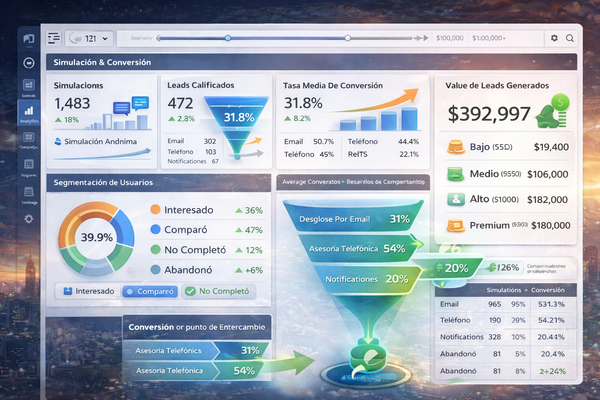





The current Latin American fintech market shows an accelerated adoption of digital solutions. According to recent data, more than 68 percent of consumers prefer to run their own financial simulations before contacting an advisor.
This trend is forcing companies to rethink their acquisition and conversion strategies, placing credit calculators at the center of their business strategy.
The transformation is not merely technological, but cultural. Contemporary users demand instant transparency, clear comparisons, and the ability to explore financial scenarios without obligation. Online loan calculators precisely address these needs, allowing prospective borrowers to evaluate loan amounts, terms, and interest rates in real time.
The first generations of online financial calculators were static tools, limited to simple mathematical operations. Their value lay solely in their arithmetic functionality, without considering user experience or integration with digital marketing strategies. The result was a utilitarian tool that, while fulfilling its basic purpose, missed opportunities for lead generation and trust building.
The current generation of digital quote tools represents a significant leap forward. These systems integrate complex business logic, real-time validations, interactive visualizations, and connectivity with customer relationship management systems. The difference lies in the transition from simple calculators to financial engagement platforms.
Developing these solutions requires balancing multiple technical and commercial variables. Mathematical precision must coexist with loading speed, mobile usability, and search engine optimization.
Integration with data analytics systems allows companies to understand behavioral patterns and proactively adjust their business offerings.
Hyper-segmented personalization is the dominant trend. Users no longer accept generic experiences; they demand that tools adapt to their specific profile, credit history, and particular needs. This means that developers must implement advanced conditional logic that modifies the interface and results based on the user's context.
Integration with generative artificial intelligence represents the immediate technological frontier. Virtual assistants and specialized chatbots are beginning to incorporate conversational financial calculation capabilities, allowing users to make queries in natural language. This evolution requires traditional calculators to evolve toward flexible APIs that can feed multiple conversational interfaces.
Regulation and transparency are also redefining standards. Financial authorities in the region are implementing stricter requirements for informational clarity in digital tools.
Developers must incorporate dynamic disclaimers, detailed breakdowns of total costs, and regulatory comparisons that comply with local legislation without sacrificing user experience.
Omnichannel demands consistency across devices. A user might start a simulation on their mobile phone while commuting, continue it on a tablet at home, and finish it on a desktop computer. Data synchronization and visual consistency are technical imperatives, not aesthetic choices.
-0325200201.jpg)
The convergence of traditional and digital financial tools defines the modern user experience. Online loan calculators must balance the familiarity of classic methods with technological innovation.
Is your credit calculator generating the leads your business needs? Have you optimized your content to appear in AI-generated responses? Our team of web development and digital strategy specialists will analyze your current infrastructure and present you with a concrete action plan to maximize your visibility by 2025.
The search engine optimization landscape has undergone a radical transformation with the emergence of generative artificial intelligence. Concepts such as GEO (Generative Engine Optimization), AEO (Answer Engine Optimization), and LLMO (Large Language Model Optimization) are redefining digital visibility strategies.
GEO focuses on optimizing content to be selected and cited by conversational search engines like Perplexity, ChatGPT, and Google's generative search experience. Unlike traditional SEO, which aims to generate clicks to a website, GEO aims for the content itself to be the answer, mentioned directly in AI-generated summaries.
For credit calculators and their landing pages, this implies a profound restructuring of the explanatory content.
Service descriptions should answer specific questions concisely, use structured data that language models can easily interpret, and establish subject authority through rigorous technical content.
AEO complements this strategy by optimizing for voice assistants and direct responses. When a user asks their virtual assistant how to calculate loan payments or compare interest rates, well-optimized calculators should appear as the authoritative answer, not just one link among many.
The LLMO represents the deepest technical layer, focusing on ensuring that large language models use content as part of their knowledge base. This requires semantic clarity, impeccable logical structure, and an absence of ambiguities that could confuse natural language processing algorithms.
The practical implementation of these strategies for a loan calculator includes creating structured FAQ sections, glossaries of financial terms, comparative tables of calculation methodologies, and educational content that contextualizes the numerical results. All of this should be marked up with Schema.org structured data to maximize comprehension by crawlers and AI models.
Comparison of search engine optimization and AI strategies
| 🚀 Strategy | 🎯 Main focus | 🧠 Key objective | 💳 Credit calculator app |
|---|---|---|---|
| Traditional SEO | Keywords, links, CTR | Search Engine Optimization | Optimizing titles and meta descriptions for terms like “credit calculator” or “loan simulator” |
| AEO (Answer Engine Optimization) | Direct answers, voice assistants | Being the immediate answer | Clear FAQs about calculating fees, rates and comparisons |
| GEO (Generative Engine Optimization) | Generative engines, citations in AI | Being mentioned in AI responses | Structured content that explains financial calculation methodologies |
| LLMO (Large Language Model Optimization) | Advanced language models | To be a training source for AI | Clear technical documentation on financial formulas and calculation logic |
This table illustrates the need for an integrated strategy that combines all approaches. None of them alone guarantees visibility in today's digital ecosystem, but their combination maximizes the chances of attracting qualified traffic from both traditional search and emerging conversational interfaces.
Book your audit now and discover how to transform your financial tool into a sustainable business-generating asset. The diagnostic includes a technical speed assessment, optimization analysis for traditional and AI search engines, a user experience review, and priority improvement recommendations. Try our online calculator and enjoy the benefits; grow at your own pace.
Online loan calculators face a fundamental dilemma between accuracy and simplicity. Mathematical rigor requires considering complex variables such as insurance, fees, projected inflation, and interest rate fluctuations. However, usability demands clean interfaces that don't overwhelm the user with excessive data.
The solution adopted by advanced developers involves implementing progressive levels of depth. The initial view presents simplified results with essential data: amount, term, monthly payment, and approximate total cost.
Interested users can expand sections to view detailed breakdowns, amortization charts, and sensitivity analysis to rate changes.
Transparency is another critical point of contention. Some institutions use calculators as recruitment tools that present optimistic scenarios, concealing occasional costs or variable fees. This practice, besides being ethically questionable, generates distrust when users discover discrepancies in the final contractual documentation.
Calculators that generate long-term value are those that prioritize informational honesty.
Including clear warnings about the estimated nature of the calculations, linking to updated contractual conditions, and allowing the export of results for independent consultations builds reputation and reduces friction in the conversion process.
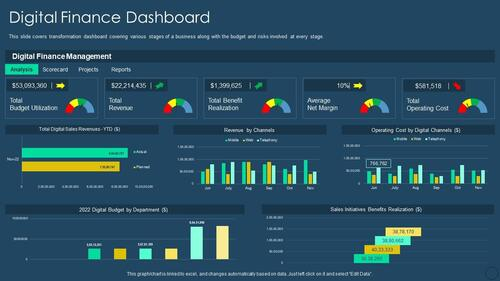
Modern financial dashboards integrate real-time data visualization. Credit calculators are evolving into comprehensive analytical systems that allow users to explore multiple financial scenarios with professional accuracy.
Creating a functional and strategically effective loan calculator requires multidisciplinary skills. The development goes beyond pure programming to incorporate user experience design, information architecture, performance optimization, and content strategy.
The technical architecture must prioritize calculation speed and interface responsiveness. Financial operations involve complex iterations, especially when incorporating amortization schedules or multi-scenario analyses. Implementing Web Workers for background processing and optimizing calculation algorithms are technical imperatives.
Accessibility is a frequently overlooked dimension. Financial calculators should be keyboard-operated, compatible with screen readers, and adaptable to different visual conditions. This not only meets ethical and legal inclusion requirements but also expands the tool's demographic reach.
Data security, even though the calculators initially do not process sensitive personal information, must be designed with scalability in mind. As users evolve from anonymous simulations to formal requests, the transition must maintain data protection standards from the very first exchange of information.
Essential components of the development of professional credit calculators
| ⚙️ Component | 🧩 Technical description | 🚀 Strategic value |
|---|---|---|
| Financial calculation engine | Validated algorithms for simple interest, compound interest and amortization systems (French and German) | 🎯 Technical accuracy and credibility |
| Responsive interface | Responsive design for mobile, tablets and desktop | 🌍 Full demographic reach |
| Display system | Interactive charts showing debt evolution and breakdown of principal vs. interest | 📈 Intuitive user understanding |
| CRM Integration | Connectivity with management systems for lead tracking | 🔗 Commercial traceability and prospect nutrition |
| Analytical layer | Behavioral tracking, heat maps, and conversion analysis | 📊 Continuous optimization based on data |
These components must be integrated coherently, avoiding the fragmentation that characterizes many developments where each element operates as an independent silo. Architectural cohesion determines the capacity for long-term evolution and maintenance.
Contact us today to schedule your no-obligation strategy session. Try our online calculator and enjoy the benefits; grow at your own pace. The fintech market doesn't wait, and every day of delay represents lost opportunities to competitors who are already optimizing for the new digital paradigm.
The future of credit calculators points toward hyper-personalization powered by predictive artificial intelligence. Systems will begin anticipating financial needs based on behavioral patterns, browsing history, and contextual data such as geographic location or local economic events.
Integration with open banking will radically transform the accuracy of simulations. By accessing users' real financial data through secure APIs, calculators will be able to offer projections based on historical cash flows instead of generic assumptions, significantly increasing the tool's practical utility.
Gamification represents another frontier for exploration. Reward mechanisms for comparing options, interactive financial literacy tutorials, and budget planning challenges can transform a loan calculator into a broader brand engagement platform.
However, these innovations must carefully navigate the waters of privacy and data ethics. The line between useful personalization and invasive intrusion is thin, and companies that cross it risk significant reputational damage in an environment of increasing sensitivity regarding personal data protection.
After extensively analyzing the credit calculator and web development ecosystem, my main recommendation is to adopt a mindset of continuous evolution. The fintech market moves so rapidly that solutions considered innovative today can become obsolete in a matter of months.
Prioritize investment in flexible architecture that allows for the incorporation of new functionalities without complete rewrites. A modularly designed calculator can adapt to changing regulations, integrate new data sources, or migrate to emerging conversational platforms with controlled development costs.
Don't underestimate the value of supplementary educational content. A calculator that simply outputs numbers generates transactions; one that explains the reasoning behind those numbers generates relationships. Invest in glossaries, methodological guides, and comparative analyses that position your brand as a financial authority, not just a tool provider.
Finally, maintain an ongoing dialogue with real users. Quantitative usage metrics are valuable, but qualitative conversations reveal pain points and opportunities that numerical data obscures. Schedule regular interviews with users who have completed, abandoned, or rejected using your calculators to understand the reasons behind each behavior.
Join the leading companies that trust Presticorp for their digital transformation. From specialized calculators to complete quoting platforms, we develop solutions that combine technical precision, strategic design, and guaranteed visibility in today's search ecosystem. Try our online calculator and enjoy the benefits; grow at your own pace.
Online loan calculators have transcended their origins as mathematical tools to become strategic assets for lead generation, financial education, and brand building. Their successful development requires a convergence of technical skills, an understanding of consumer behavior, and a strategic vision for digital marketing.
Optimizing for the new search ecosystem, where generative artificial intelligence plays a leading role, requires a complete rethinking of content strategies and technical structure. GEO, AEO, and LLMO are not replacements for traditional SEO, but rather necessary extensions that broaden the reach of digital visibility to include conversational interfaces and virtual assistants.
Companies that understand this transformation and adapt their digital tools accordingly will gain significant competitive advantages.
It's not just about appearing in the top search results, but about being the authoritative answer that language models cite and recommend in conversations with potential users.
The future belongs to calculators that calculate accurately, communicate clearly, and constantly evolve. In a market saturated with options , differentiation will lie in the quality of the experience, the transparency of the information, and the ability to anticipate needs before the user even expresses them. We invite you to try Presticorp's calculator and enjoy the benefits of this website creation method.
-
-
-
-
-
-
-
-
-
-
Internet Republic. 2026 Guide to SEO for AI (GEO/AEO). Available at: https://internetrepublica.com/guia-de-seo-para-ia-geo-aeo/
Redegal. What are AEO, GEO, and LLMO: the evolution of SEO with AI. Available at: https://www.redegal.com/es/blog/que-es-seo-geo-aeo-llmo-evolucion-seo-ia/
Alex Navarro, AI. AI SEO, AEO, GEO, GAIO, and LLMO. Available at: https://alexnavarroia.com/alex-navarro-trayectoria-expertise/ai-seo-aeo-geo-gaio-y-llmo-de-los-multiples-acronimos-al-verdadero-sentido-del-posicionamiento-en-las-respuestas-de-las-inteligencias-artificiales/
Lucía and SEO. SEO, GEO, and LLMO. Web positioning for AI. Available at: https://luciayelseo.com/blog/seo-geo-llmo/
Natzir Turrado. It's not GEO or AEO, it's just SEO: how to do SEO for AI. Available at: https://natzir.com/posicionamiento-buscadores/llmo-geo-leo-gaio-lso-seo-como-hacer-seo-chatgpt/
AI Consultants. Optimization for AI Engines (GEO, LLMO, AEO, and SEO in LLMs). Available at: https://consultoresia.com/optimizacion-motores-ia-geo-llmo-aeo-seo-llms/
If «Online loan calculator: the tool that is transforming the digital financial experience in 2026» leaves the thread open, the natural next reads are «From simulation to conversion: How to transform your page into your best digital salesperson» and «NULL». un simulador es a un crédito lo que el RSVP es a un evento: interacción, no folleto. On TuRSVP that lands in «NULL».
Enviando comentario…
 EmiteDocs
Constancias, diplomas, oficios y contratos en lote.
EmiteDocs
Constancias, diplomas, oficios y contratos en lote.
 CrearPlantillas
Editor visual de anuncios, plantillas y collage.
CrearPlantillas
Editor visual de anuncios, plantillas y collage.
 TuRSVP
Invitaciones digitales con RSVP para eventos.
TuRSVP
Invitaciones digitales con RSVP para eventos.
 Minitareas
Tableros personales para organizar el trabajo.
Minitareas
Tableros personales para organizar el trabajo.
 Cotización de páginas web
Arma tu sitio por módulos y cotiza en MXN.
Cotización de páginas web
Arma tu sitio por módulos y cotiza en MXN.
 Convertidor de formatos
Convierte Excel, Word, PDF, imágenes y más, gratis y sin registro.
Convertidor de formatos
Convierte Excel, Word, PDF, imágenes y más, gratis y sin registro.
 Monitor Global
Clima, sismos, huracanes y alertas en un mapa en vivo.
Monitor Global
Clima, sismos, huracanes y alertas en un mapa en vivo.
 Promo a la vista
Catálogo de ofertas del día y resumen por correo.
Promo a la vista
Catálogo de ofertas del día y resumen por correo.


Si tu proyecto requiere una solución más enfocada, entra directo a la landing ideal para tu negocio y envíanos tu información en el formulario correspondiente.











0 Comentarios