



Something feels off in everyday browsing: you open a search, look something up—and you never leave Google. Or TikTok. Or WhatsApp. The «web»—that network of linked sites anyone could publish and anyone could visit—still exists, but fewer people roam it. Human traffic piles up inside a handful of closed platforms; bots and AI claim much of the rest. Independent media, blogs and small sites are asking whether the model that fed them for two decades is running dry.
This is not 1990s nostalgia. It is measurable change. Chartbeat, Pew Research, Cloudflare, the Reuters Institute and DataReportal—alongside national statistics such as INEGI—sketch the same outline across countries: fewer outbound clicks, more time inside apps, more machine-generated answers that do not pay whoever researched, wrote or photographed.
This piece opens the debate—with data, not cheap doom—about what it means for the web to «die» while, globally, more people than ever are online… and the everyday experience locks into a handful of apps.

Metaphor of a walled garden versus the open web
The open web, in Tim Berners-Lee’s vision, is a space without a single owner: public protocols, two-way links, the freedom to publish a site without Meta’s, Google’s or Apple’s permission. You can leave one article for another domain, cite, archive, remix. A walled garden is the opposite: an ecosystem where almost everything—chat, news, video, shopping, search—happens under one company’s rules, algorithm and monetization. Facebook, Instagram, TikTok, YouTube, WhatsApp or Google with AI Overviews work, in practice, as those gardens.
Berners-Lee put it plainly in a 2024 essay (cited by The New York Times): walled gardens plus AI accelerate the open web’s decline. Tech giants built empires that lock users in and prioritize profit over public utility; rapid AI progress, he wrote, has exacerbated those concerns.
The difference is not only technical. On the open web, a local outlet in Latin America, an independent blog in Europe or a small U.S. publisher can compete for attention with a conglomerate if it has a good link and a good headline. In the walled garden, an opaque feed decides distribution. You lose control of the channel—and, increasingly, of the click.
Debate question: Are we still talking about «the internet» when most of our digital life happens inside five or six apps, or are we already living on a different kind of network?

Chart of Google Search referral decline to publishers (−33% global, −38% U.S.)
For years Google was the bridge between curiosity and websites. That bridge is narrowing. Chartbeat data, published in the Reuters Institute report Journalism, media, and technology trends and predictions 2026 and covered by Press Gazette, show Google Search referrals to more than 2,500 publisher sites fell 33% globally and 38% in the United States in the year to November 2025.
The hit is uneven. Per Axios with Chartbeat data, over about two years small sites lost roughly 60% of search referrals; mid-sized sites, 47%; large ones, 22%. Whoever has the least brand muscle and direct audience depends most on search—and suffers most when search stops sending people.

Pew chart: clicks with AI Overview (8% vs 15%) and session end (26% vs 16%)
Pew Research (March 2025 analysis) explains part of the mechanism with AI Overviews: when an AI summary appears, clicks on a traditional result drop to 8% of visits, versus 15% without an overview. Clicks on a link inside the overview are only about 1%. And more people end the session right there: 26% versus 16% without a summary. In short: Google answers at home; the source site gets no visit.
Editors themselves expect more of the same. In the Reuters Institute survey, they forecast an average 43% drop in search traffic over three years. Not quite «Google Zero,» but close enough to redraw entire businesses.

Visual metaphor of broken links or traffic that no longer reaches open sites
Debate question: If Google (or another AI-powered search) answers without sending you to the original publisher, should it pay for using that content—or is the «summary» a legitimate part of search?

Chart of internet uses and social time: global pattern with country examples
The pattern is global: more people than ever are connected—and it has never been clearer that «being online» usually means «being inside a platform.»
DataReportal / GWI put the worldwide average daily time on social media at about 2 h 21 m (141 minutes) in 2025. Latin America sits above that: regional averages (DWS / DataReportal) run around 3 h 20 m – 3 h 30 m. By country, daily figures often land near 3 h 34 m – 3 h 49 m in Brazil, ~3 h 33 m in the Philippines, ~3 h 22 m in Colombia, ~3 h 08 m in Argentina and ~2 h 16 m in the United States. That is not «passing through the web»; it is living inside feeds.
On that map, Brazil is a volume benchmark: DataReportal (Digital 2025: Brazil) counts 144 million social media user identities in January 2025. Mexico is one more example. INEGI’s ENDUTIH 2024 counted 100.2 million internet users; ENDUTIH 2025 raises the figure to 104.9 million (86.1% of people aged 6+), with top uses communicating (93%) and social networks (90.4%). DataReportal (Digital 2025: Mexico) reports 93 million social identities; Statista (2024) measured 45 h 25 m monthly on TikTok in Mexico, ahead of YouTube, Facebook and WhatsApp. Attention rankings—Google, YouTube, Facebook, WhatsApp, Instagram, X, marketplaces—repeat from country to country: almost all are closed or semi-closed gardens or marketplaces.

Collage of dominant everyday apps: TikTok, YouTube, WhatsApp, Instagram
For a reader in São Paulo, Manila, Bogotá or Chicago, a browser open to an independent blog is rarely the center of the experience. The center is the scroll, the chat, Reels, Shorts. The open web becomes invisible infrastructure—or a destination almost nobody reaches without a viral link inside an app.
That habit repeats across very different markets: whether you look at rankings in Brazil, Mexico, Colombia or the United States, attention stays inside the same apps. The open web is still there, but it is no longer the main room.

Everyday feed attention on the phone, outside the open web
You don’t need a white paper to see it: the everyday gesture—thumb up, thumb down, another video—lives on the phone, not in a «favorites» tab. The look of the feed (screen glow, street clothes, zero office formality) says more about where the internet moved than a thousand architecture diagrams.

Young person on a phone; everyday internet centered on feeds and apps
Debate question: If everyday «real» internet is WhatsApp, TikTok, YouTube and Instagram, does it still make sense to measure cultural or journalistic success only by visits to your own domain?

Image representing the drop in human traffic to publishing, retail and finance sites
Chartbeat’s numbers already map the losers: small sites (−60% search referrals) versus large ones (−22%). Less organic traffic means fewer display ads, fewer leads, less justification for keeping a newsroom or a well-curated archive. Independents—often without a mass newsletter or their own app—live off the click that no longer arrives.
Cloudflare, in the report cited by The New York Times and in its own «agentic internet» analysis, adds another unsettling layer: more than 50% of web traffic is now non-human. And human traffic to sectors such as finance, publishing and retail fell on the order of ~40% from June 2025 to April 2026 in the most heavily crawled categories. So it is not only fewer clicks from Google; a growing share of what «visits» your site is bots, AI crawlers and automations that never read your banner or subscribe.

Team / newsroom under pressure: fewer human visits, more app dependence
Who wins? Platforms that retain attention, AI models that summarize without redirecting, and big brands with direct audiences (apps, podcasts, paid communities). Who loses? The long tail of the web: local magazines, niche blogs, digital outlets that bet everything on SEO, shops that relied on «how to do X» queries in Google. In small newsrooms you can feel the mood: fewer human visits, more pressure to «be on every app»… and the same content fighting for a feed that isn’t theirs.
The hit is especially hard where audiences were already hyper-concentrated in social apps and where digital outlets leaned on search without the cushion of TV, radio or historic brand—a pattern visible in Latin American markets and among small publishers in Europe and the U.S.
Debate question: Is it inevitable that only outlets with strong brands and direct payment survive—or can the open web still sustain a diverse ecosystem of small sites?

Alternatives to platform dependence: newsletters, direct audience, open web
Fully reversing the web’s enclosure is unlikely in the short term: platform and AI incentives point toward retaining users, not linking out. But there are paths to depend less on someone else’s click.
Direct audience. Newsletters (Substack, Beehiiv, Mailchimp), podcasts, memberships, owned Telegram/Discord channels: places where the algorithm is not the absolute owner of reach. The Reuters Institute notes that many editors prioritize newsletters and YouTube/TikTok video while deprioritizing classic SEO.
Brand and community. Chartbeat shows large publishers fall less: they have name recognition, direct-visit habits, apps. Building that at small scale is slow—but it is the antidote to Google Zero.
Rules and compensation. Debates on copyright, licenses for AI models and «pay for use» of content in summaries will not fix TikTok’s scroll, but they can address the asymmetry of training or summarizing without returning traffic.
A better open web. Fast sites, readable on mobile, with RSS, without absurd registration walls: lower the friction for anyone who does want to leave the garden.
None of this «revives» the 2005 web. It can, however, keep «publish outside the platforms» from becoming economically and culturally pointless.
Debate question: Would you rather pay for subscriptions to three independent outlets to depend less on algorithms—or is it acceptable that information lives only inside free platforms?
The web does not shut down like a server. It empties of humans jumping from link to link. Worldwide, connectivity grows while the experience locks into apps: a global average of ~2 h 21 m daily on social, peaks above three hours in Brazil, the Philippines or several LatAm countries, and markets such as the U.S. near two hours all illustrate the same enclosure. Mexico’s rise from 100.2 to 104.9 million users between ENDUTIH 2024 and 2025 is one more data point in that tension. Google, AI and bots are rewriting the implicit pact: «you publish, I send you readers.»
The debate is not whether «everything is lost.» It is whether we want a network where publishing outside platforms still makes economic and cultural sense—and what we are willing to change (habits, payments, regulation, design) so that remains true.
The question left open, in any latitude: when you say «I’m going online,» which garden do you enter—and how many open doors do you still walk through?
If you made it here thinking «okay, but how did we get here?», here’s the express tour—no PowerPoint, more dinner-table energy.

Visual tour of the eras: from .coms to the endless feed
1) The .com / portal era (yes, Yahoo and Geocities). Everyone wanted a domain. Owning myblog.com felt like a status symbol. You hit a portal, clicked a blue underlined link, and—boom—another site. The web felt like an open city: ugly sometimes, slow other times, but yours to wander. Flash, blinking banners, «under construction» with the little hard-hat guy. Chaotic. Fun. Open.
2) Google as the main door. You stopped «strolling» and started asking. Search became the lobby: type, click, land on a publisher, a forum, a wiki. For years that deal worked for publishers: you published well, Google sent people. SEO was the new craft. The open web was still there… just filtered through one search box.
3) Social + mobile-first + apps. The phone hit your hand, and with it the infinite feed. Facebook, then Instagram, WhatsApp, YouTube, TikTok. «Being online» started to mean «opening the usual app.» DataReportal / GWI and INEGI’s ENDUTIH surveys confirm it without drama: daily hours inside social, uses dominated by messaging and scrolling. The browser slid to the background; your own domain became a nostalgia flex—or a fight for a click that rarely comes.
4) Walled gardens + AI Overviews / Google Zero (today). This is us. Chartbeat charts the referral drop; Pew explains why the AI overview eats the click; Cloudflare reminds us that more than half of «traffic» isn’t even human. The platform answers at home. The source site waits for visits that don’t arrive. The endless feed doesn’t need you to leave: it entertains, half-informs, and keeps you inside.
Four acts. Same stage (the network). Different script: from «I’m going to visit sites» to «I stay where I already am… and sometimes I never even open the link.»
Debate question: If you could «reset» just one era—back to portal hopping, to a Google that still links out, or to mobile without such tall garden walls—which would you pick… and what would you be willing to give up in exchange?

Tienes una web afín a esta temática, te recomiendo y me recomiendas?, creare una sección llamada, webs interesantes, puedes mandarme un correo por contacto
Enviando comentario…
 EmiteDocs
Constancias, diplomas, oficios y contratos en lote.
EmiteDocs
Constancias, diplomas, oficios y contratos en lote.
 CrearPlantillas
Editor visual de anuncios, plantillas y collage.
CrearPlantillas
Editor visual de anuncios, plantillas y collage.
 TuRSVP
Invitaciones digitales con RSVP para eventos.
TuRSVP
Invitaciones digitales con RSVP para eventos.
 Minitareas
Tableros personales para organizar el trabajo.
Minitareas
Tableros personales para organizar el trabajo.
 Cotización de páginas web
Arma tu sitio por módulos y cotiza en MXN.
Cotización de páginas web
Arma tu sitio por módulos y cotiza en MXN.



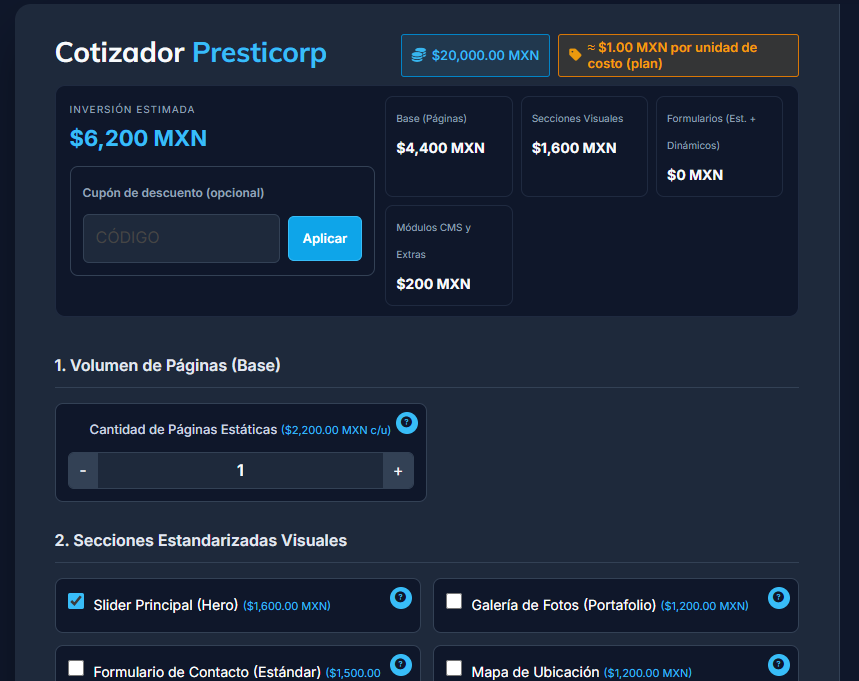
Si tu proyecto requiere una solución más enfocada, entra directo a la landing ideal para tu negocio y envíanos tu información en el formulario correspondiente.









1 Comentarios